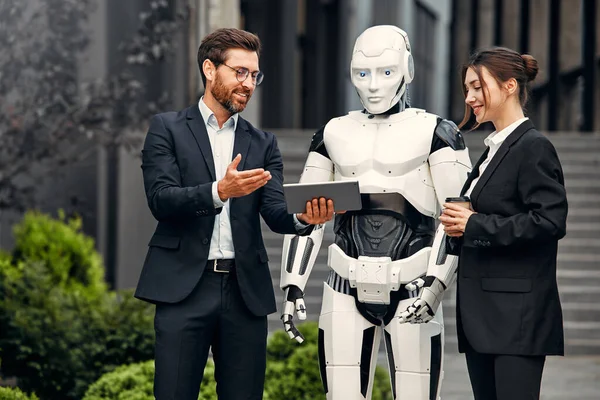
It started with a stark assertion that echoed through the Aspen Ideas Festival “Artificial intelligence is going to replace literally half of all white-collar employees in the US,” announced Jim Farley, the head of Ford. In a room full of people immersed in their own notions of corporate dreams and professional credentials, the statement was jolting. Farley was not predicting some theoretical future, but one in which the entire nature of office culture might be rearranged by technology, with the most secure port being well beyond the cube.

1. Essential Economy And A Change In Career Thinking
Farley’s comments were rooted in family experience. His paternal grandfather, raised as an orphan in Michigan, began working at Ford as a hourly employee, but ended up with a successful career there. His family background drove home the contrast: the American education system has always emphasized the bachelor’s degree over trades, but job recruitment in technology is slowing down drastically. Recruitment of new graduates by Big Tech is down 50% from pre-pandemic levels, with AI being cited as a reason, per SignalFire, a venture capital firm. Farley’s ‘essential economy’ focuses on trades, which, for now, do not see the impact of AI.

2. Split Executive View Over Impact of AI
Farley’s warning adds its voice to others from industry leaders. Anthropic’s Dario Amodei has warned that AI may wipe out half of entry-level office-based roles in finance, law, and consulting over the next five years. Amazon’s Andy Jassy warned employees that there would be job reductions in corporations because of GAIs, although he also foresees new job opportunities in robotics and AI. Others, such as Ravi Kumar of Cognizant or Nvidia’s Jensen Huang, see job-generating opportunities through AI, particularly with human-centric tasks.
3. The Numbers Behind the Anxiety
Project Iceberg, launched by MIT, calculates that existing AI technology is already capable of handling tasks worth 11.7% of their U.S. counterparts, worth some $1.2 trillion annually. Such vulnerability is most pronounced in professional, knowledge-based sectors that were once considered immune from the threat of job replacement. Financial, healthcare administration, human resource, transport, or professional services are some such sectors. However, this fact alone doesn’t portend impending job replacement, as economic viability is also a consideration.

4. Gen Z’s Shift Towards Blue-Collar Security
According to a Resume Builder survey, 42% of Gen Zers are involved in or seeking careers in the trades, driven largely by a concern with student loan debt and job security with increasing use of AI. Such careers as HVAC technicians, roofers, or nursing assistants will always be hard to automate, as there is as yet insufficient sophistication in human tasks with AI and robotics. “AI can’t replace parts, nor can it improvise,” explained a spokesman for North American Technician Excellence, Tony Spagnoli.

5. Managing Workplace Anxiety in the AI Era
Of note, as outlined in Mercer’s studies, is the leadership gap that pervades AI communications, where less than 20% of employees have been informed of AI’s effects on their job through their direct supervisor. This, in turn, breeds confusion. “To address this, we must see more leadership visibility, improved communication, and leadership’s own adaptability in the AI world. Leaders must demonstrate that they, too, value adaptability.”
6. Economic Stabilizers During Periods of Automation
Analysis from Goldman Sachs estimates that adoption of AI may result in displacing as many as 6-to-7% of the workforce in the United States, though such effects rarely last. Indeed, jobless rates increase slightly, by as much as 0.3 percentage points, with every percentage increase in productivity, though this rate soon tapers off as new job types emerge. About 60% of today’s workforce in the United States works within a field that did not even exist in 1940.
7. Augmentation vs. Automation: The Industry Divide
Whether AI will replace existing job roles or enhance them remains debated. In some industries, a blended paradigm will likely arise, where human oversight will remain relevant. Indeed found that 46% of skills required in most job ads will see a hybrid transformation. This might increase productivity without necessarily displacing existing job roles if companies focus on structuring their workflow with human oversight in mind.

8. Ready for a More Dynamic Labor Market
Experts forecast that AI will heighten job turnover, encouraging more employees to change occupations. Governments and corporations must facilitate this transition through improved retraining programs, job-matching tools, and protections in place. Research launched by the Brookings Institution suggests that if not mitigated, AI will widen inequality, particularly affecting women, who hold more admin positions with high risk levels.

9. Why Physical and Human-Centered Work Remains
Resilient Occupations that call for manual dexterity, physical presence, or strong human interaction skills, such as construction, healthcare, or trades, remain relatively protected from the current capabilities of AI. However, breakthroughs in robotics may soon close this divide, although experts such as Ken Goldberg, from the University of California, Berkeley, say that the use of humanoid robots is still some distance away.
However, the future that Farley speaks of is neither predetermined nor entirely negative. “The future course of AI will depend on rate of adoption, economic imperatives, and human decision-making. And the task for the office professional and for the young job-seeker is plain prepare your skills, hunt down resilient work, and participate in the changing workplace, before the shock gets to your desk.”