
A quiet but relentless shift is underway in the American labor market, reshaping how companies cut jobs and how workers experience job security. For 2025, U.S.-based employers announced 1,170,821 layoffs through November-a 54% increase from the same period last year-marking only the sixth time since 1993 that cuts have topped 1.1 million. Glassdoor’s chief economist Daniel Zhao warns that these figures understate the true scope, with federal JOLTS data showing roughly 1.7 million layoffs in the same period.

1. The ‘Forever Layoff’ Model
Glassdoor’s 2026 Worklife Trends analysis puts a name on this structural shift: from rare, large-scale layoffs to frequent, smaller cuts-less than 50 employees at a time. These “forever layoffs” now comprise more than half of all job cuts, up from well under half in the mid-2010s. Executives like the model because it’s flexible, cheaper in terms of severance costs, and allows them to continuously right-size their staffing in concert with market conditions and the adoption of artificial intelligence. Still, Zhao warns it fosters a toxic “slow-bleed” culture where workloads rise, colleagues disappear in silence, and nobody feels safe. “People internally know what’s up; they’re going to recognize what’s happening,” he added, describing how bad that is for morale and productivity.

2. Worker Anxiety and Declining Leverage
Data from Glassdoor shows mentions of “layoffs” and “job insecurity” in company reviews are now higher than in March 2020, at the onset of the pandemic. The trust in senior leadership has eroded, with more employees describing executives as “misaligned” or “hypocritical.” Zhao points to a falling job-rejection rate over the past two years, as workers settle for any role rather than negotiate for better offers. This erosion of bargaining power reflects a market where hiring plans-497,151 announced through November-are down 35% year-on-year, the lowest since 2010.
3. AI’s Role in Restructuring
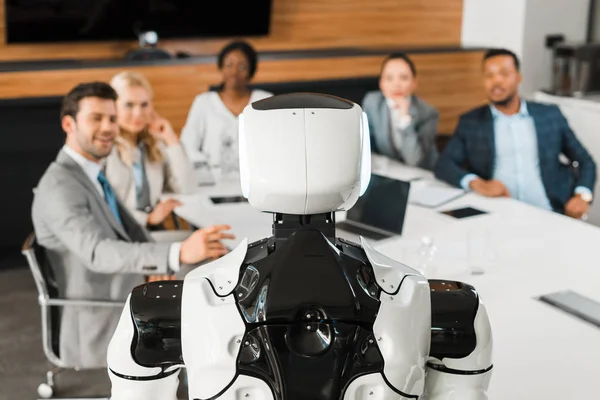
Employers have blamed AI adoption for more than 70,000 job cuts directly since 2023. Companies such as Amazon and Klarna blame automation for being an efficiency driver, though some, according to Oxford Internet Institute’s Fabian Stephany, “scapegoat” AI as a means by which they can justify their downsizing after overhiring during the pandemic era. Yale Budget Lab researchers found that thus far, little evidence exists that technological unemployment from AI has been widespread; perception feeds worker unease. The growing favor toward in-office presence means remote and hybrid staff report fewer opportunities for promotion, forcing trade-offs between flexibility and perceived security.

4. The Widening K-Shaped Economy
The economic data underlines a bifurcation: the top 10% of earners now account for nearly 50% of consumer spending, while lower-income households are under ever-increasing strain. Bankrate’s Ted Rossman points out that subprime auto loan delinquencies are worse than during the financial crisis, and one in four federal student loan borrowers is in default or near default. Inflation’s cumulative effect-prices up roughly 25% since 2021-has really bitten into the purchasing power of consumers, and high interest rates are adding to that burden.

5. Putting Pressure on Small Businesses
The ADP payroll report for November revealed that small businesses cut 120,000 jobs, while large corporations hired 90,000. Still, ADP chief economist Nela Richardson called the slowdown “broad-based,” adding that small firms, with their limited cash flow, are more susceptible than large corporations to tariffs, rising utility costs, and cautious consumers. Small business employers tend to cut staff earlier in downturns because they feel spending pullbacks sooner and lack the margins to absorb higher input costs.

6. Jobless Growth and Corporate Profitability
Goldman Sachs and Bank of America analysts have described this recovery as “financial”-one that manifests in stock prices and profits but not in job creation. White-collar jobs are being cut even while corporate earnings are going up-a perverse phenomenon Zhao links to the “do more with less” mantra. Investment in AI is driving the share prices up for major tech companies, but the richest 10% own about 87% of the stock market, meaning most households aren’t benefiting from those gains.

7. Career Resilience in the Face of Disruption
Career retraining is becoming critical in an environment where entry-level hiring for AI-exposed roles is down 13% from recent years. Experts suggest developing areas like data analysis, AI oversight, and new emerging tech fields. According to JPMorgan’s Marianne Lake, productivity via AI has risen enough to grow a business by 25% while slashing staffing by 10%. Workers able to adapt to these changes are those that will find the best positioning within a tightening market.

8. How to use Psychological Ways to Cope with Uncertainty
While careers expert Jasmine Escalera says AI will continue to be relevant in workspaces across the world, she warns that opaque corporate communication on the issue is “feeding the fear” among employees. Experts say the best way to deal with economic anxiety is to pay attention to factors within one’s control: build networks, maintain financial buffers, and update skills incessantly. Since slowdowns usually strike unevenly, employees can gain from aligning career decisions with industries that are less vulnerable to automation and have strong resistance to shifts in consumer demand.

As 2026 draws near, the normalisation of “forever layoffs” portends a work culture marked by chronic insecurity. For professionals and job aspirants alike, comprehension of such structural changes-and responding with strategic skill development and financial resilience-may be the surest path through an era where job cuts are no longer an exception but a given.