

Millennials have seen a sharp rise in layoffs, with certain sectors registering a triple-digit percentage increase in layoffs affecting millennials. This trend is no longer pegged to economic cycles but has instead been driven by the confluence of workplace expectations, technology, and cultural shifts that have left millennials highly vulnerable. Millennials were born between 1981 and 1996. They constitute 35 percent of the labor force in the US but are only 29 percent fully engaged in their workplace. This has left job security highly vulnerable for millennials.
Although previous generations tend to see millennials as entitled or impatient, it is much more complicated than that. A generation’s careers have never been impacted in the ways millennials’ careers have because of economic downturns, rapid technological change, and shifting attitudes towards work. Before millennials can adapt, or even survive, in their current job market, they need to understand what has been driving all these layoffs.

1. Technostress & Burn
Millennials entered the workplace environment during the financial crisis of 2008 and further during the period of the COVID-19 crisis. All these years of adjusting to the environment have left them under chronic stress. This ‘Techno-Stress’ is generated due to the fast pace of technological communications, the integration of AI, and the requirement to work from home. Burnout syndrome shows itself as a lack of motivation and ambition, resulting in decreased performance, making the employee more disposable.
A survey conducted by Eagle Hill Consulting revealed that 52% of millennials experience high burnout. This situation makes engaged employees also be perceived as disengaged. Layoffs are accelerated in such a situation.

2. The Soft Skills Gap
Although they are digital natives, many millennials lack skills such as communication, problem-solving, and teamwork. However, these skills that Deloitte’s global chief people officer, Elizabeth Faber, terms “the bridge between human and machine” are essential to many millennial job roles. In fact, since the pandemic, with companies embracing hybrid work models, these skills are even more apparent, as opportunities to develop them, such as through office collaboration, became minimal when working remotely.
Career counselor Eliana Goldstein points out that “investing in soft skills will not only help companies be more successful, it will help in terms of employee retention.” This is because “soft skills” are being valued by employers over “hard” skills.

3. Anxiety Undermining Performance
Economic uncertainty and downsizing have created job anxiety for millennials in the workplace. Project: Time Off research reveals that millennials are twice as likely to fear job loss as Boomers. Job loss fear can undermine confidence, hinder decision-making, and form a self-fulfilling cycle of poor performance.
Gallup sources show that the generation that fell most precipitously in feelings of being cared for in the workplace is the millennial generation, whose ratios of worker to supervisor in their employment fell from 3.3 to 1 to only 1.9 to 1 in the period from 2020 to the present.

4. Middle Management Decline
Corporate restructuring also involves the elimination of the middle management function, which has historically offered a significant career path. Layoffs of millennial managers have increased by over 400% from the early part of 2022 to the end of 2024. Flattened organizations dismantle the hierarchical structure of career paths.
For millennials who appreciate growth opportunities, this is where stagnation can occur and even redundancy if their position is determined to be nonessential.
5. Technologically Enabled Layoffs
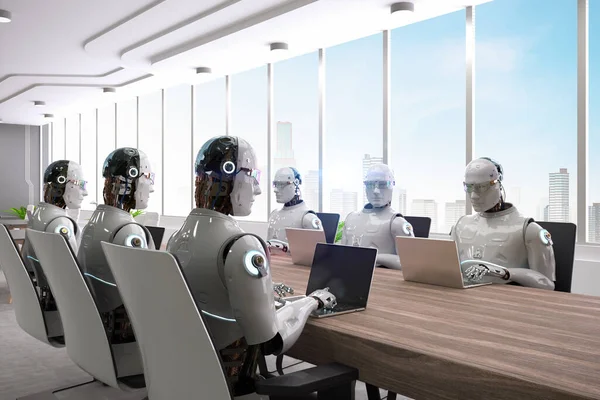
Artificial intelligence is transforming the jobs hierarchy. According to the World Economic Forum’s Future of Jobs Report 2025, “40% of companies expect a reduction in headcount where AI is capable of automating work.” Bloomberg states that for jobs such as market research analysts or salespersons, over half the work being performed is likely to be replaced by artificial intelligence.
According to the Digital Economy Lab at Stanford, there was a 20% decline in jobs available to young software developers as AI technology became more popular, and customer service jobs decreased by almost 11%. Even technology-conscious millennials can be replaced when their adaptation rate is exceeded by the rapid technological advancements.

6. Economic Fragility in Entry-Level Positions
Sectors such as manufacturing, retail, and construction traditional entry points for young professionals are cutting jobs due to fears of recession. Current mid-2025 inflation of 2.7% and labor growth of 4.2%, respectively, are compelling firms to reduce expenses. The first to face layoffs when firms cut costs are young employees who are usually millennials.
Barclays also predicts that there is a “50% chance” that there will be an “economic contraction” in the next eight quarters.

7. Unrealistic Advancement Expect
Their supervisors typically describe ‘Trophy Kid Syndrome’ for their millennial generation’s hunger for fast-track promotion. Children growing up in a ‘participation prize’ generation would like careers to follow at their heels without having to wait for decades like their predecessors.
However, being a job hopper to the point where the average tenured millennial has only been at a job an average of 2.7 years could potentially mean a lack of skillset development. As a former CEO was quoted in *The Atlantic*, “Your generation loves to lily pad, but they never learn anything beyond how to do their one job.”

8. Lack of Long-Term Vision
Millennials are more likely to value the flexibility to work on their own in the present rather than plan for the long-term in relation to their careers. “Working from home can lead to psychological distance from others in the organization,” says Gallup’s Jim Harter, “unless there are regular coaching sessions.” Employees who are unable to link their duties to the end goals face the challenge of being seen asReplaceable.

9. Clash with Traditional Hierarchies
Many millennials also yearn for independence in the timing, location, and methods of their work. The company culture, however, emphasizes well-defined hierarchies and chain of command systems. This inconsistency may give rise to miscommunications, decreased trust, and eventually, dismissal.
A Deloitte survey showed that 75% of millennials preferred reduced hours, even if that impacts their opportunities for promotion. While being attractive to employees, the needs of the firm may differ.

10. Offshoring of White Collar
Global connectivity has allowed firms to offshore even white-collar jobs. Each year, the U.S. loses approximately 300,000 jobs to foreign deliverers, and IT outsourcing alone stood at $132 billion in 2023. This outsourcing occurs primarily in either India, Mexico, or Canada.
This has increased competition for employees, thereby pushing their salaries lower, especially for millennials who are entry-level or mid-level at this stage.

11. Lack of Investment in Employer Success
Job-hopping translates to a lack of investment for millennials. Without strong networks, organizational goals might be sacrificed for self-interests. According to The Atlantic, staying for an extended period “builds situational awareness” or power, but this is difficult with frequent employment. In cases where disengagement is experienced, it becomes common for employers to choose replacement over retention, especially in instances where cultural fit is an issue.
The high rate of layoffs among millennials is a result of the comingling of economic turmoil and cultural misalignment in today’s workplace. Although factors like AI integration and offshoring are beyond one’s control as a professional, other areas like acquiring soft skills and fostering long-term thinking can be worked on. It’s not only about surviving in a workplace that is changing at a revolutionary speed; rather, it is about millennials’ readiness in this changed workplace.


