
The progression of artificial intelligence is a triggering factor for a labor market upheaval that is going to be of a kind not witnessed in the last few decades. Professor Ekaterina Abramova from London Business School sounds a cautionary note saying, “one single AI model overnight can eliminate thousands of cognitive workers in various industries,” a rate and extent that might lead to layoffs being way ahead of new job openings. History tells us that whenever economic change becomes faster than institutions can respond, social unrest is the outcome this was the case during the UK’s Enclosure Acts and the decimation of coal mining communities in the 1980s.

1. The Speed Mismatch Between Job Loss and Creation
Over the next five to ten years, Abramova predicts that unless there is aggressive intervention, layoffs due to AI will exceed the number of new jobs created. Indications of this are already visible: prominent firms have pointed to AI as one of the reasons for cutting positions, where the most at-risk are entry-level programmers, analysts, and customer support people. Lazard’s CEO, Peter Orszag, warns that “labor markets can cope nicely with small problems that occur quickly or with large problems that take a long time to unfold. However, they cannot cope with large shocks that happen quickly.”
2. Historical Parallels to Rapid Displacement
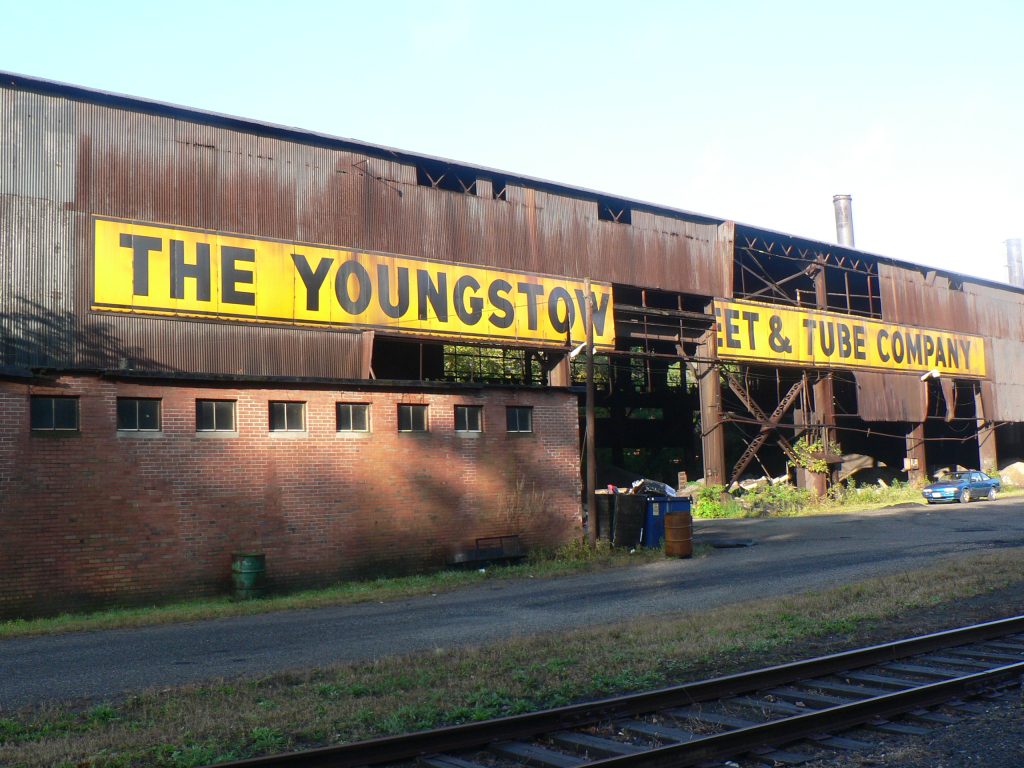
Economic history reinforces the view that these shocks have a destabilizing effect. The abrupt closure of the Youngstown Sheet and Tube plant in 1977 resulted in the loss of over 5,000 jobs in a day and initiated the long-term economic decline of Ohio’s Mahoning Valley. The same applied to the Great Recession which accounted for more than 30 million jobs lost and increased the long-term unemployment rate to twice the historical high. In both instances, the combination of high speed and large scale of dislocation was too much for the existing safety nets, thereby intensifying political and social pressures.

3. The Limits of Traditional Retraining
In spite of the fact that public opinion is very much in favor of retraining a multi-year research has shown that the majority of people in both the United States and Canada consider it the best policy to minimize AI-induced job losses the evidence from decades-long U.S. training projects such as the Workforce Innovation and Opportunity Act is quite mixed. A lot of the times, the workers that are laid-off will consist of the ones that are least able to move around, those of low-income or old workers who do not want to learn new skills. Even when retraining takes place, the workers mostly enter lower-paid service jobs and the quality of programs varies a lot from state to state.

4. Augmenting Rather Than Replacing Workers
Abramova considers AI systems that augment human capabilities to be a promising alternative, whereby humans retain judgment, ethics, and client relationships while machines take care of the data-heavy tasks. Jensen Huang, the CEO of Nvidia, also supports this idea by saying, “You are going to lose your job, but only to someone who is using AI.” The realization of this vision cannot be done without the implementation of regulatory incentives that motivate companies to responsible integration rather than layoffs. Moreover, this calls for the prevention of other issues like algorithmic bias and surveillance that have already become widespread in workplaces.

5. Proactive Policy and Regulatory Tools
One way is to update the Worker Adjustment and Retraining Notification (WARN) Act. The planned changes consist of increasing the notice periods from 60 to 90-120 days, reducing the cut-off for layoffs from 50 to 25 employees, and requiring that the integration of AI which is likely to cause displacement be disclosed. New Jersey is one of the states that have already increased the measures of protection, which entail severance pay and longer notice. By adopting predictive analytics in WARN administrative practices, it would be possible to provide communities with the necessary time to adjust.

6. Corporate Responsibility in the Transition
Leaders in business can make the layoff less painful through financing upskilling, facilitating the transfer of health benefits, cutting retirement vesting periods, and loosening the licensing of non-safety-critical personnel to the point that these changes help the employees move to other areas of work. Tax benefits governing retraining expenditure, worker retraining accounts, and monthly earned income tax credit payments could be used to ensure that displaced workers acquire not only the required skills but also the necessary financial stability during their transitions.

7. Safeguarding Worker Rights in the AI Workplace
The adoption of AI systems in workplaces for managing hiring, scheduling, and performance evaluation is causing states to come up with AI Bills of Rights that aim to protect workers from discrimination, invasive monitoring, and the loss of collective bargaining rights. The establishment of industry-specific AI standards boards could help to put a limit on such practices and monitor their effects, while the state OSHA plans could deal with the safety risks related to AI. If there are no such precautions taken, then workers under algorithmic management could end up being overworked, losing their independence, and being subjected to mistreatment more than the already marginalized people.

8. Building Psychological and Community Resilience
Resilience strategies are very important in addition to economic measures. Past research has shown that the availability of strong community ties, mental health resources, and opportunities for meaningful contributions outside of traditional employment can all act as buffers for the psychological impacts of displacement. Therefore, encouraging civic engagement, volunteerism, and local entrepreneurship can be effective social cohesion during difficult transitions.

The adoption of AI is not a linear process. Through anticipation, regulatory flexibility, and tripartite cooperation among lawmakers, businesses, and communities, the upcoming tech wave can be handled in a manner that keeps the workers’ rights, dignity, and the avoidance of social fractures that have accompanied economic shocks in the past.