“The January business blackouts speak for themselves,” declared John Schwarz, founder of The People’s Union USA, as the new year began with a fresh wave of consumer activism. For civically and politically active Americans, this month’s coordinated boycotts are less about withholding purchases than they are about delivering a message to some of the nation’s most influential corporations.
January is typically a month when spending normally decreases following the holiday rush; however, this year’s decline is exacerbated by focused boycotts for corporate accountability and DEI policies. As retail sales decreased 0.9% this past January-much greater than the forecasted decline of 0.1%-there is growing optimism among activists that consumers can be mobilized as a force for change.
The People’s Union USA, along with other grassroots movements, has targeted five household names for a spending freeze. Here’s a deep dive on the companies that have captured the attention of the protests, the motivations driving them, and the mixed evidence about whether boycotts like this actually shift the needle.
1. Amazon’s DEI Rollback Sparks Activist Pushback
Amazon has been a core target since February 2025, after the company scrubbed diversity and inclusion references from its annual report and paused DEI programming. The People’s Union USA organized several Amazon blackouts, including week-long actions in March and May. While Momentum Commerce data shows U.S. retail sales for Amazon were up 10.3% year-over-year in the first quarter, activists say the campaigns have kept DEI in the public discourse. John Schwarz has termed economic resistance “our greatest weapon,” calling on families to join in both for social impact and personal financial caution.

2. Home Depot Under Fire on Immigration, DEI
Home Depot appears on the January boycott list for both perceived DEI retreats and concerns over immigration enforcement. The company countered, “We aren’t coordinating with ICE or Border Patrol” and added that it complies with all laws. But activists see the company’s changes as part of a larger corporate pullback from diversity commitments in response to political pressure. Part of the People’s Union USA strategy has been to target firms that appear to be on board with federal rollbacks, while trying to reshape corporate influence over U.S. economic policy.
3. Starbucks and Symbolic Corporate Accountability
Starbucks, another January boycott target, has faced activist scrutiny before-most famously over its holiday cup designs. This time, the focus is on corporate values and DEI. But while Placer.ai data shows only a 0.4% year-over-year dip in foot traffic, organizers say the visibility of Starbucks as a cultural brand makes it a powerful symbol in the fight for corporate accountability.

4. Target’s DEI Retreat Triggers Multiple Boycotts
Target has become the most high-profile case in this wave of activism. After announcing the end of its DEI programs, it faced an indefinite boycott starting February 1, which coincides with Black History Month, and a 40-day boycott led by Black faith leaders during Lent. Civil rights attorney Nekima Levy Armstrong referred to the rollback as “a slap in the face” to loyal customers who believe their values align with the brand. Target’s stock fell 34.4% between late January and mid-April, and foot traffic dropped as much as 8.10% in one week, making it the boycott with the most measurable impact so far.

5. Walmart as an Economic ‘Force Multiplier’
Walmart is routinely pilloried for its labor practices and market dominance, and Schwarz calls it “one of the most exploitative companies in the country.” The retailer responds that it is among the largest corporate taxpayers, paying more than $1.7 billion in donations last year. Though Walmart’s traffic decline has been modest, at about 1.6% in some weeks, activists say targeting such a retail giant is crucial to pressuring corporate America on tax fairness and social responsibility.

6. The People’s Union USA’s Coordinated Strategy
Since its founding in February 2025, The People’s Union USA has organized a string of “economic blackouts” and weeklong boycotts of several industries. Among the targets: Nestlé, McDonald’s, and General Mills. Some calls urge supporters to divert spending during the blackout dates to independent businesses. The group’s strategy mixes quick bursts of high-profile attention with long-term organizing; ideally, corporate accountability would stay in the news cycle while grassroots involvement grows.

7. Mixed Evidence Regarding Boycott Effectiveness
Research from companies like Cardlytics and Similarweb indicates boycotts tend to have a pretty minimal direct impact on sales. For example, the February 28 blackout saw total consumer spend rise 12% compared to the same day in 2024. Northwestern University’s Brayden King says the point at which boycotts do tend to be effective is in providing media attention and reputational pressure that can result in long-term consequences, even if immediate sales data remain steady.

8. Historical Context: Boycotts as a Tool for Change
From the Boston Tea Party to the Montgomery bus boycott, U.S. history is rich in such examples of consumer activism compelling social change. The historian Lawrence Glickman has documented how boycotts have been called “weapons of the weak against the strong,” often supplementing grassroots political movements. These precedents undergird the potential of the current campaigns to change corporate behavior, even when economic results are hard to quantify.
9. Political climate and rollbacks of DEI
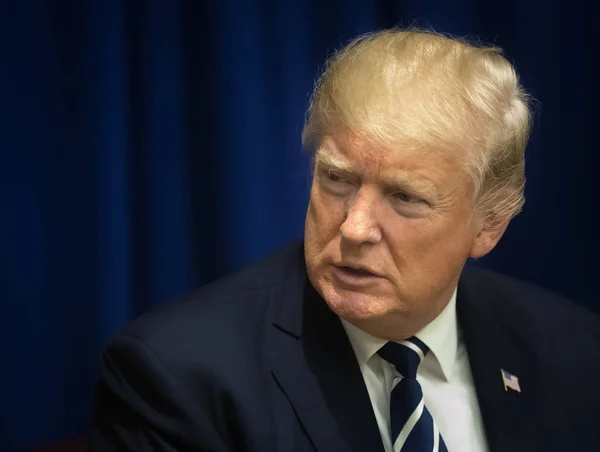
Most of these boycotts have been in reaction to corporate moves to dial back DEI programs in response to President Trump’s executive order against “illegal DEI” programs. The whole environment has polarized, with companies like Target, Amazon, and Walmart facing competing demands from progressive activists wanting restoration of DEI programs and conservative groups opposed to such programs.

10. Supporting Local Businesses during Blackouts
Economic blackouts have also been framed as opportunities to strengthen local economies. Small business owners, such as Nikki Bravo of Momentum Coffee in Chicago, have encouraged consumers to redirect spending toward enterprises that reflect their community’s values. Almost half of participants in April’s three-day blackout said they planned to shop locally rather than at targeted corporations-a blend of protest with positive economic reinforcement.
The spate of coordinated boycotts this January serve to underscore both the power and the limitations of consumer activism. Though immediate sales impacts may prove mixed, sustained attention to corporate values, tax fairness, and DEI policies keeps these issues in public debate. Engaged consumers choose participation for the narrative shaping it can achieve about impacting the bottom line, and history would indicate that such narratives, over time, drive meaningful change.