Why can one casting announcement take a comfort-watch franchise and turn it into an overnight comment-section battleground? Big studios have adopted inclusive casting over the past decade as both a creative reset and brand statement-especially when it comes to remakes, reboots, and legacy sequels, in which audiences arrive with a mental screenshot of what a character is supposed to look like. The result is a familiar pattern: a role gets reimagined, a vocal subset of viewers frames the move as Forced Diversity, and the conversation rapidly shifts away from story, craft, and performance into debates about authenticity, nostalgia, and who pop culture is for.
What really makes these flare-ups stick, though, is how they propagate: online campaigns, trailer pile-ons, and swarms on rating sites can create an appearance of unified public verdict well before a wide audience has watched a frame. In the most egregious instances, actors serve as proxy targets for arguments about canon and culture-an ugly dynamic which has repeatedly driven performers off social media and warped how films are received in their opening stretch. Even platforms have been forced to adapt: Rotten Tomatoes shifted its rules so users could only post ratings and reviews post-release, explicitly to limit coordinated pre-release manipulation tied to controversies about big titles.
1. Snow White-Live Action
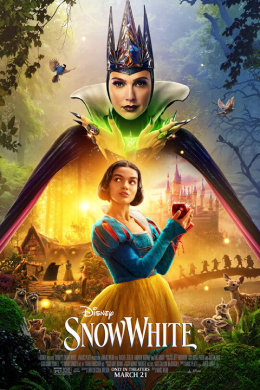
The Disney live-action Snow White had become a flashpoint well before release, mostly due to the fact that Rachel Zegler-an actor of Latina heritage-had been cast as a character traditionally defined by this skin as white as snow image within the popular memory. That debate widened when Zegler criticised parts of the 1937 original as dated and discussed the modernized characterization she would be playing. The promotional environment also shifted noticeably; Disney planned a Hollywood premiere with limited press access rather than the typical sprawling red-carpet interview line.
Another layer of scrutiny came from Peter Dinklage, questioning the very basic approach in which the film portrayed the dwarfs while professing progress in other areas. As he said in one remark, widely circulated: They were very proud to cast a Latino actress as Snow White, but you’re still telling the story of ‘Snow White and the Seven Dwarfs.’ Take a step back and look at what you’re doing there. Disney later said it was consulting with members of the dwarfism community about the seven characters.
2. Ghostbusters (2016)
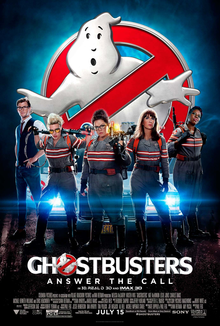
Few modern reboots have illustrated the identity-as-lightning-rod dynamics better than the all-female Ghostbusters. The movie drew heavy backlash for its gender-swapped premise, with negativity concentrating on both the trailer and the apparent feeling that the reboot represented a political statement more than it did a comedic swing. The intensity spilled past criticism and into personal harassment aimed at the cast.
The result was a case study in how online outrage can dominate a film’s public narrative. TheWrap documented that it became the most-disliked movie trailer in YouTube history at the time. Years later, Leslie Jones would go on to document the emotional toll in her memoir, recalling death threats and racist abuse tied to her participation in the film, an example of how boycott language can drift into direct harm when it attaches to a performer’s identity.
3. Captain Marvel
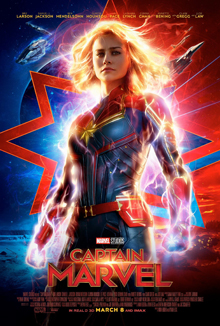
Captain Marvel arrived at a time when audience-score ecosystems were already vulnerable to co-ordinated swarms. Brie Larson found herself an especial target after remarks about the lack of diversity amongst film critics were recast online as animosity towards male viewers. Pre-emptive negative rating campaigns had already been launched before it opened in theatres, producing an early verdict that many casual observers met first.
That pressure intersected with a platform problem: Rotten Tomatoes would later say a bug had allowed huge volumes of user activity to show up in the audience-review count around release; the site also made broader policy changes designed to prevent users from leaving traditional reviews before a film opens. The larger lesson wasn’t about one superhero film’s reception so much as how quickly a culture-war framing can game the metrics that audiences treat as neutral.
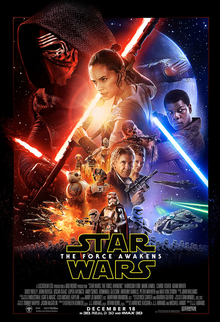
4. Star Wars: The Force Awakens
When the first teaser dropped, revealing John Boyega in his stormtrooper armor, racist commentary and claims that casting him violated Star Wars internal logic surfaced from some corners of fandom. It was argued that Stormtroopers could not be Black, despite canon shifts away from the Clone Army era being well established. The controversy marked an early example of how representation debates could attach to a single image in a trailer and then multiply across hashtags and comment threads.
The attempt at a boycott did not keep the movie from financial success, but it set in place expectations of how ugly discourse could get around the sequel era-especially for actors tasked to carry the new face of the franchise.
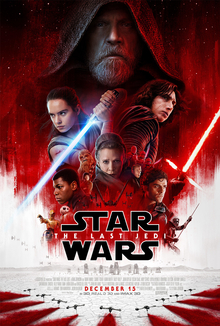
5. Star Wars: The Last Jedi
But The Last Jedi didn’t only polarize audiences when it came to plot choices-it became the impetus for a harassment campaign against Kelly Marie Tran, whose Rose Tico became the fixation point of detractors. Tran has since deleted her Instagram posts amid sustained racist and sexist abuse covered by the BBC-underlining how fan displeasure can come down to personal punishment for the performer on the receiving end.
More often invoked in combination with manipulated audience scores and review-bombing narratives, the backlash against the film most concretely took the form of a chilling effect on cast members. It also set in stone the template that would repeat elsewhere: a diverse casting choice becomes an all-purpose explanation for creative dissatisfaction, with the performer treated as the symbol of decisions made far above their pay-grade.
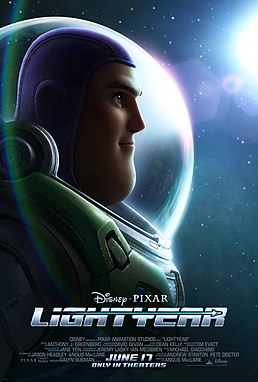
6. Lightyear
At Pixar, Lightyear triggered boycotts focused on a brief same-sex kiss, and the argument immediately left the sci-fi conceit to the question of what family films should show on screen. International market reactions were another factor in how any controversy might be framed; sometimes, treating LGBTQ+ inclusion as an export problem rather than as a storytelling decision.
A letter from LGBTQ Pixar employees in the run-up revealed that overtly gay affection had repeatedly been cut back during internal review processes. The resulting uproar led to the reinstatement of the kiss in question. Thus, this episode showed how representation debates can be shaped as much by internal corporate caution as by external outrage.
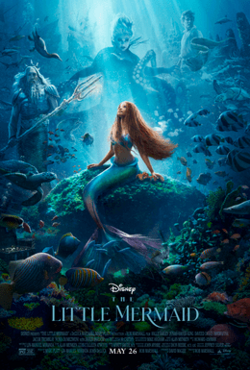
7. The Little Mermaid
live-action Disney’s The Little Mermaid became an egregious example of race-focused casting backlash, where Halle Bailey’s Ariel was maligned by onlookers who insisted the character needed to be like prior depictions. The argument often centered on faithfulness, but the volume and tone of online commentary repeatedly veered into a racist policing of who is allowed to inhabit a fairytale icon. In practice, the discourse was an early warning to other remakes that once a character has been treated as a fixed brand asset, any kind of reinterpretation-racially-based or otherwise-can be framed as an act of provocation rather than as casting.
8. The Marvels
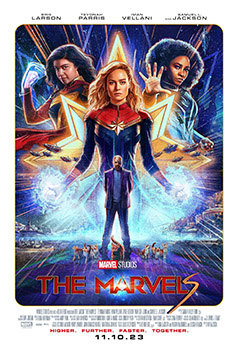
The Marvels arrived with a different kind of Forced Diversity framing: not an individual casting choice but rather in the symbolic weight placed on teaming up three female heroes from disparate backgrounds. Online narratives labeled it a peak woke entry in the franchise, while other factors – like limited publicity windows – left less room to steer the conversation back to the film itself. That is, the result was a release environment in which identity arguments became the dominant shorthand. Whether individual viewers responded this way or not, the movie’s popular image took shape around the notion that the project existed to make a statement-a storyline that tends to harden long before opening weekend.
9. The Personal History of David Copperfield
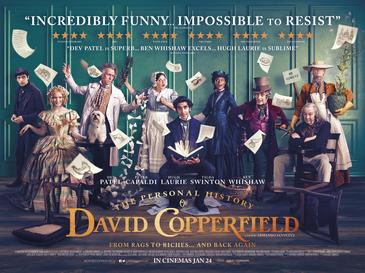
Not every casting controversy is connected to a massive franchise. Armando Iannucci’s The Personal History of David Copperfield used color-blind casting in a way that, for many viewers, disrupted period immersion through its mix of races within families. It echoed bigger arguments about when accuracy is crucial and when it functions as a tool of gatekeeping. A greater frame for making sense of these disputes arises in discussion of colour-blind versus colour conscious casting. The Guardian summed up critiques that colour-blind casting is perilous when it assumes race plays no role in opportunity or meaning, and outlined how colour conscious casting intentionally takes race into account rather than ignoring it – an approach that can clarify artistic intent even when audiences disagree.
Across all these titles, the mechanics repeat: a casting change becomes a symbol, online narratives inflate quickly, and metrics or marketing choices can amplify the effect. What changes is the collateral damage: sometimes to a box-office runway, sometimes to a franchise’s relationship with its audience, and too often to the people onscreen who absorb the backlash. For a viewer trying to make sense of the noise, the most consistent takeaway is a structural one: boycotts framed around Forced Diversity seldom stay contained to critique of the work. They often become referendum culture-on nostalgia, on ownership, and on who gets to be visible in stories that were once treated as fixed artifacts.