
Purgatory may even sound like a spiritual waiting room-near heaven, but not there. To most Christians, the question behind the picture is not theoretical and is more personal: why would God forgive and yet leave people to be purified even after death?
The term purgatory does not appear anywhere in the Bible, but the Christian tradition (particularly Catholic tradition) teaches that there is a post-death purification of those who die reconciled to God but still needing some healing of the works of sin. The concept has been justified, criticized as well as misconceived over centuries.
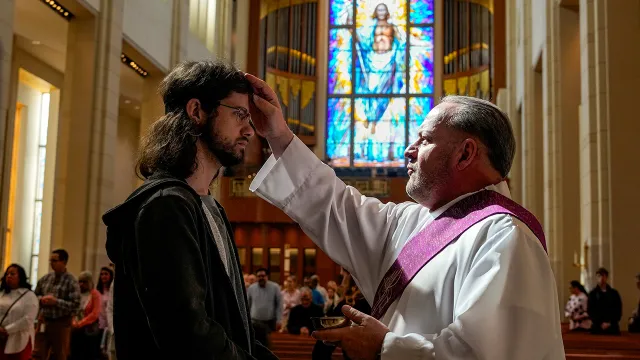
1. The meaning of purgatory by Catholics (and what it is not)
According to the Catholic doctrine, purgatory is an intermediate period when the souls who perish in the grace and love of God and were not purified perfectly await the process of final cleansing before they enter heaven. The Catechism explains this as a cleansing, with a view to attain the holiness needed to gain the delight of heaven, and demands that it is not synonymous with hell. Emphasis is placed on completion and not condemnation: the final destination of the person is heaven, and the cleansing only solves what is unorganized or unfinished.
2. Why the word does not appear in Scripture-and why that question does
The lack of the word purgatory to find in the Bible is a point of major tension in the language of Christianity especially when the concept of Scripture alone is discussed as the ultimate guide to religion. The Catholic exegeses usually mention that other important words in theology are not biblical words as well, and the concepts behind them are based on biblical motifs. Whether the Bible has the word is frequently a matter that depends on whether the Bible upholds an intermediate purification which is in accord with the holiness and mercy of God.

3. The logic is shaped by the passage in the Bible that reads nothing unclean
One of the most mentioned bases is the verse that states that nothing unclean will enter heaven (Revelation 21:27). The verse is employed in order to put into context a seemingly simple issue, that there are a number of individuals who die honestly faithful and still stained with inclinations, injury, and moral rubble that repentance has only lately commenced in repairing and not entirely completed. According to Catholic theology, the requirement of holiness is non-negotiable and post-death purification is one way of explaining how God fulfills the process of sanctification instead of lowering the bar to heaven.
4. 2 Maccabees-Prayers of the dead-and the canon query
The verse that has been quoted the most is 2 Maccabees 12:38-45, which glorifies the prayer and the atonement that are offered on behalf of the dead. The practical argument is simple: prayer to the dead implies a state in which it is possible to do so, neither the exaltation of heaven nor the cessation of the abyss. The complication is that most Protestants do not consider 2 Maccabees to be canonical Scripture and therefore the text often serves in as a historical indicator of Jewish faith and practice around the time of Jesus instead of it serving as a common proof-text.
5. The picture of Jesus as in prison, and the last penny saying
The other reading employed by Catholics in their interpretation is that of Jesus to a warning that the individual can end up in prison and when that happens, they will not leave before the final penny is paid (Matthew 5:25-26, repeated with some wording differences in Luke 12:59). Catholic interpretations of the image associate the image with effects which linger on following forgiveness-penitential reality and not eternal rejection. The effect of the metaphor is to be temporary: release is provided, but only once what is due has been paid, thus has been interpreted as indicating a purification after death.
6. Saved, but only as through fire line of Paul
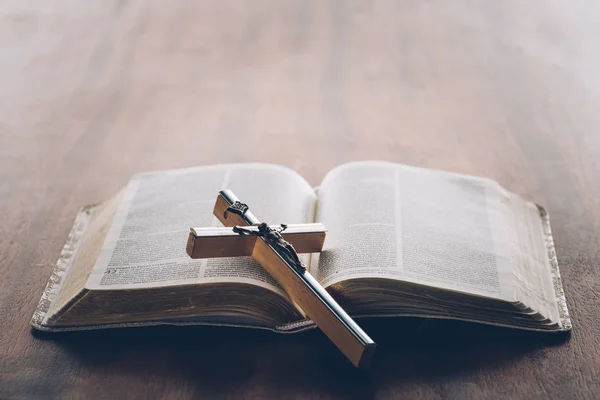
The most commonly cited passage of the New Testament describing judgment is that of 1 Corinthians 3: a person whose work is not successful will lose, but will be saved, but not as through fire (1 Cor. 3:15). The Catholic doctrine interprets this as a purification that can neither be hell (the individual is saved) nor heaven (it is loss and testing). The fire is often described as symbolical: a cleansing experience of God that reveals the weak and excludes the real.
7. The testimony of Augustine and the ancient Christian practice of praying over the dead
The desire to pray to the dead is evidenced earlier on long before the term purgatory was popularly used in the early medieval era. The example of Augustine who wrote of temporary punishments that some suffered after death, before the final judgment. It is that flow of practice which is commonly made the interpretative background: inasmuch as it was customary with the early Christians to pray to the dead as a straightforward exercise of love, the dead, it was supposed, might be helped by such intercession a supposition which is hard to fit into a rigid heaven-or-hell-only system.
8. What wanton things are said to be what maltreatment to be
Purgatory is often equated with indulgences, which are bought off within the popular memory. According to Catholic doctrine, an indulgence is the remission of temporary punishment because of sins that have already been forgiven, be it to oneself or to the faithful dead, and that the practice of paying for salvation is unacceptable. Meanwhile, Catholic sources admit historical falsification, when individuals were made to think that money is able to buy spiritual rewards. Part of this controversy has been made possible by the fact that the abuse was graphic, even where it was denied official teaching in the transactional framing.

9. The reason purgatory has to be related to mourning, burials, and continued love
The practical applicability of the doctrine is most evident in the activities of Catholics following a death: funerals, Mass intentions, the All Souls’ Day and the constant prayer of the dead. The Catholic doctrine defines prayer, penance and Eucharistic sacrifice as arbitrarily in suffrage on behalf of the dead, as it implies a belief that love and duty do not end with the tomb. An allied assertion makes its way, too, in the devotional writing, the dead, in their purification, are not insensitive of the living, and their communion with the Church exists even when the living are interceding on their behalf.
In this accounting, purgatory is not really a place so much as a statement of purity: heaven is not approached half-cured. To the question of the reader inquiring whether purgatory is found in the bible, it is best to say that the term is never found, and that much of the bible has been interpreted by the catholic tradition as referring to the fact which has since been designated by the name purgatory-purification, prayer on behalf of the dead, and being saved through fire.