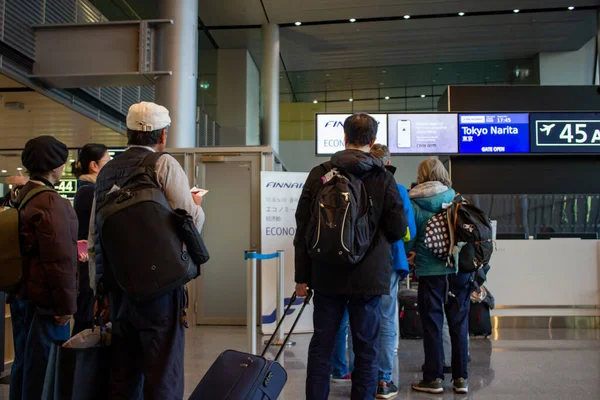
Boarding looks simple from the gate: scan, walk, sit. In practice, it is one of the tightest traffic patterns in travel, with hundreds of people moving through a narrow space on a deadline.
That is why small habits matter. Airlines typically begin boarding 30 to 50 minutes before departure, and many close boarding about 15 minutes before takeoff. A brief delay at the podium or in the aisle can ripple through the entire line.
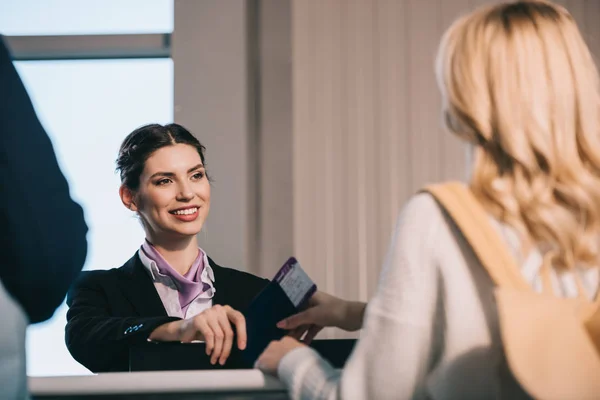
1. Waiting to find a boarding pass at the scanner
One of the most common slowdowns happens before a passenger even steps onto the jet bridge. Searching through a bag, unlocking a phone, opening an app, or flipping through papers forces the line to stop cold.
A former gate agent told Travel + Leisure that on a full flight, even five seconds per passenger adds up quickly. Having a boarding pass ready to scan before reaching the podium keeps the process moving and reduces the stop-and-start bottleneck that frustrates both staff and travelers.
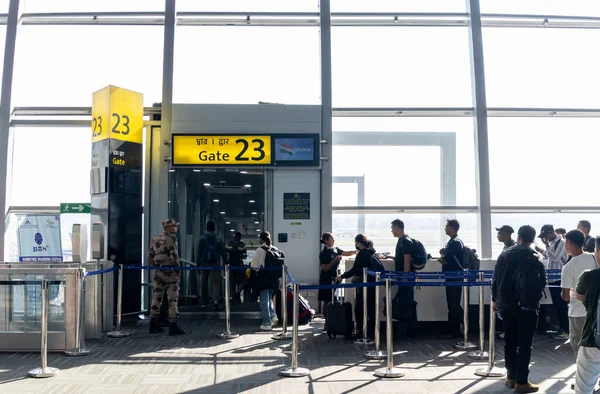
2. Crowding the gate before a boarding group is called
Many passengers drift toward the boarding lane long before their turn, creating a wall of people around the gate area. That often blocks those who are actually cleared to board and makes announcements harder to follow.
Airlines board by group for a reason. American Airlines publishes a structured boarding order by group, and United advises travelers to stay seated until their group is called. When passengers wait their turn instead of clustering at the rope line, the lane stays clearer and the gate works more like a line than a crowd.
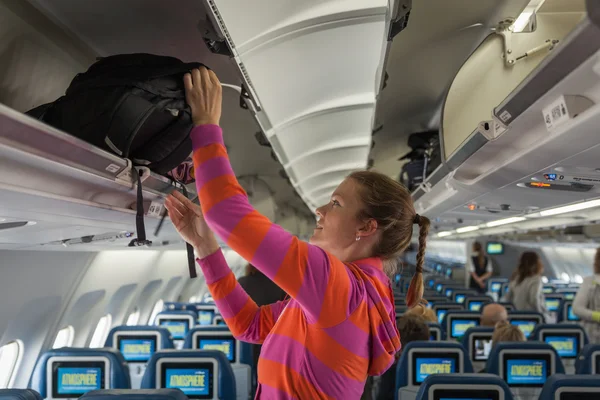
3. Bringing more carry-ons than the space can handle
Overhead bin space is limited, even on full-sized aircraft. When too many passengers bring oversized or extra bags onboard, the final stages of boarding often turn into a scramble to rearrange luggage or tag bags at the last minute.
A former gate agent described the problem as a “bulk-out,” when bins fill before everyone is seated. That moment can slow the aisle, delay departure, and force gate agents and flight attendants to solve a storage problem under time pressure. Following the airline’s baggage rules and carrying only what fits the allowance helps prevent that chain reaction.
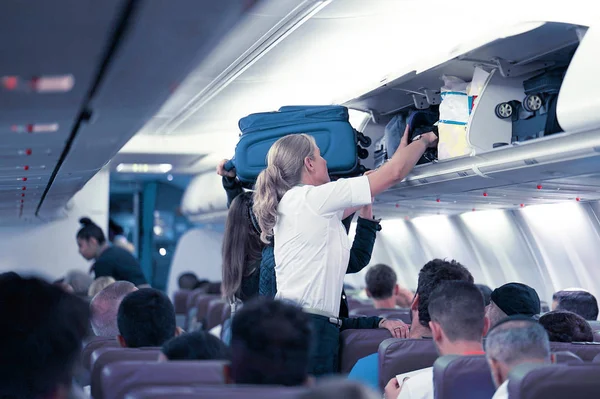
4. Packing a bag that cannot be lifted quickly and safely
A carry-on does not just need to fit the sizer. It also needs to be manageable in real time, in a narrow aisle, with other passengers waiting behind.
Heavy bags create long pauses as travelers attempt to hoist them, rotate them, or seek help once they are already blocking the row. Travel + Leisure noted that some of the most common crew injuries involve repeated lifting of passenger bags. A practical etiquette rule is simple: if a traveler cannot lift a bag into the bin without assistance, checking it usually keeps boarding moving faster for everyone.
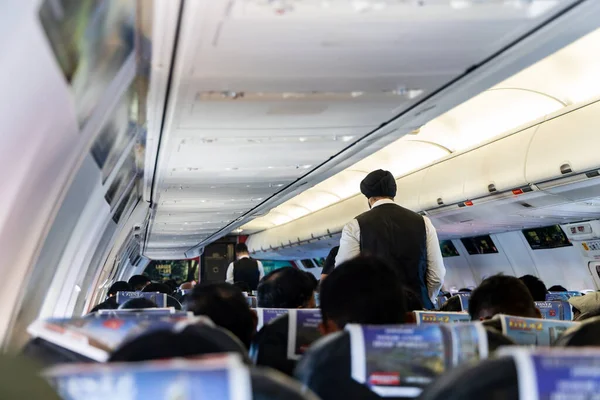
5. Stopping in the aisle to reorganize personal items
The aisle is not the best place to decide where headphones, a water bottle, a jacket, and a paperback should go. Yet that is where many mini unpacking sessions begin.
Once a passenger reaches a row, every extra moment affects the people behind them. Frequent flyers often point to the same fix: essentials should be easy to grab before boarding starts. A small personal item with the in-flight basics already separated from the main carry-on lets a traveler store the larger bag and sit down without turning a single row into a traffic jam.
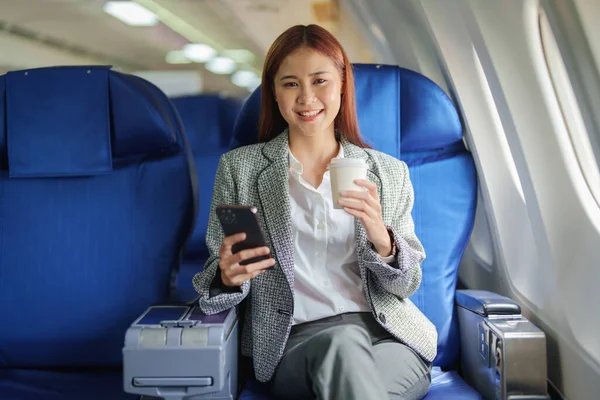
6. Boarding with too many loose items in hand
Coffee, snacks, a phone, travel documents, and a rolling bag can be a clumsy combination. When someone has no free hand at the scanner or fumbles belongings while stepping into the plane, the line slows immediately.
This mistake tends to look minor until something drops, spills, or has to be shuffled from one hand to the other. Boarding moves fastest when travelers can manage their luggage and documents without juggling. Fewer loose items mean fewer stops in the lane and fewer awkward pauses at the aircraft door.
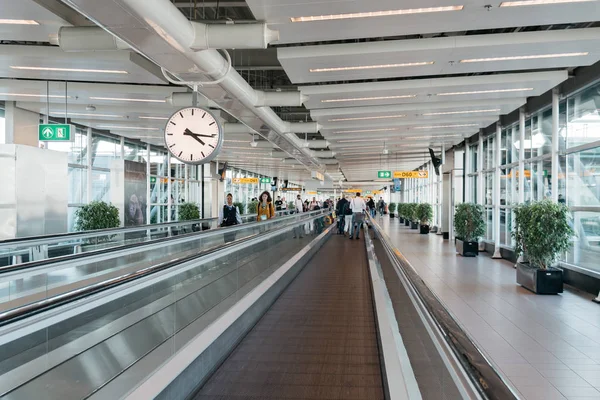
7. Blocking busy walkways before reaching the gate
Boarding delays do not always begin at the gate itself. They often start in the terminal, where slow-moving groups, stopped passengers, and bags parked on moving walkways create congestion for people trying to arrive on time.
Good airport etiquette applies long before the boarding announcement. Standing to the side instead of the middle, keeping right on walkways, and avoiding sudden stops in high-traffic areas can make a measurable difference during the final rush to the gate. Passengers trying to board on time move more smoothly when the concourse does too.
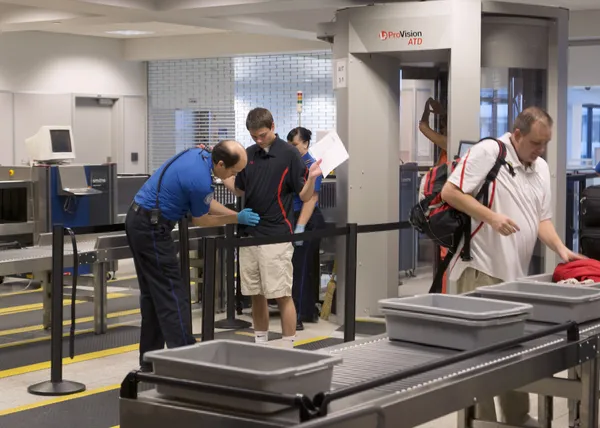
8. Taking too long to clear space after security
Security and boarding are separate steps, but they affect each other. Passengers who collect bins and then stop immediately to repack, retie shoes, or sort electronics can create backups that echo through the terminal.
Etiquette experts regularly point out that the best move is to gather belongings and step away before reorganizing. That keeps the line behind moving and helps travelers reach the gate with less stress and more time to board in an orderly way.
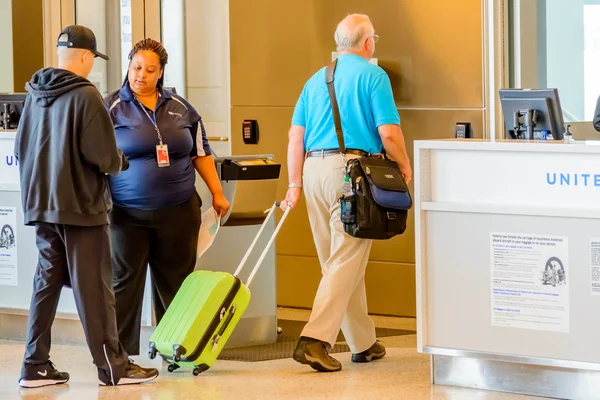
Boarding rarely breaks down because of one major mistake. More often, it slows because of a series of small pauses that stack up across dozens or hundreds of passengers.
The smoothest flights usually begin with the same simple habits: be ready, travel light, wait for the correct group, and keep moving when others need the space. In an airport, courtesy is not just polite. It is efficient.