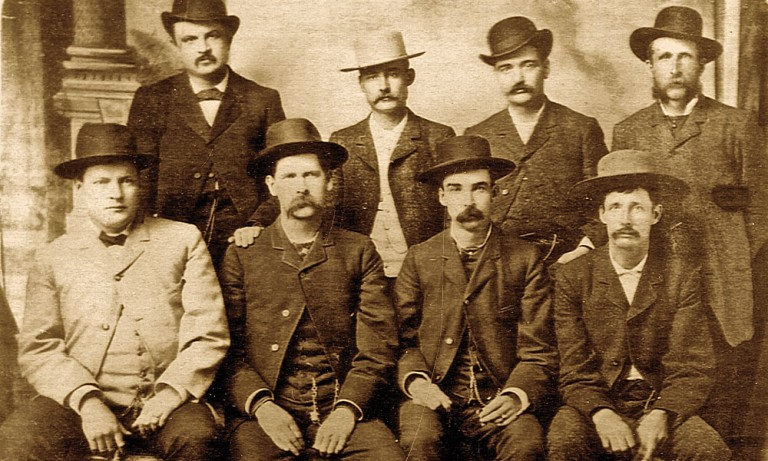
The lawmen of the American frontier have often been remembered through gun smoke, dime novels, and film mythology. The historical record, however, shows a more complicated reality: many of these men moved in and out of saloons, rail towns, mining camps, and courts, trying to impose rules in places where authority was thin and violence was common.
Some wore a badge for decades. Others carried one only briefly before drifting into gambling, politics, or journalism. Together, they reveal how fragile public order could be in the West—and how closely law, reputation, and survival were tied to one another.
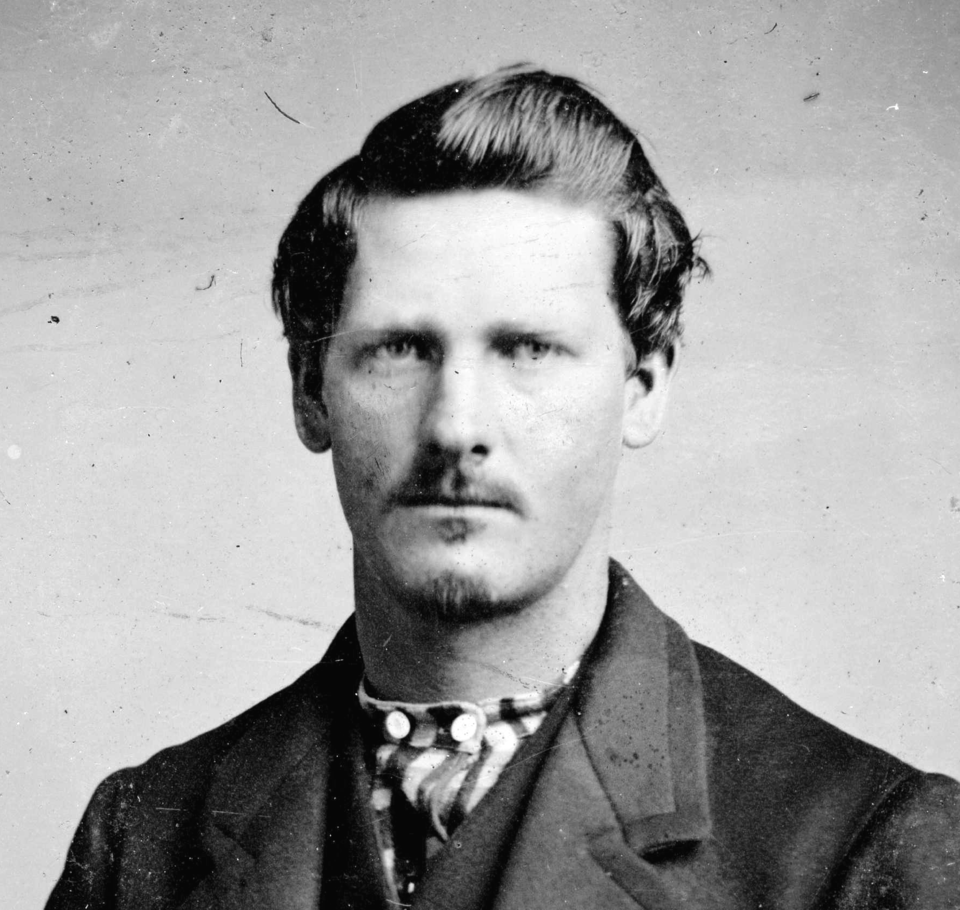
1. Wyatt Earp
Wyatt Earp became the most famous frontier lawman largely because of the gunfight at the O.K. Corral, but his career stretched far beyond that moment. He worked in Wichita and Dodge City before heading to Tombstone, Arizona, where his family’s law enforcement roles brought them into conflict with the Cowboys.
In Tombstone, Earp’s public image hardened into legend, though the record remained more tangled than the legend suggested. Virgil Earp, not Wyatt, held the senior local authority when the confrontation near the O.K. Corral took place, and the wider feud did not end with that exchange of gunfire. Virgil was later ambushed, Morgan Earp was murdered, and Wyatt joined the retaliatory pursuit now remembered as the Vendetta Ride. His later years included gambling, mining, and a long afterlife in popular culture, with biographies and films turning a flawed frontier operator into a near-mythic figure.
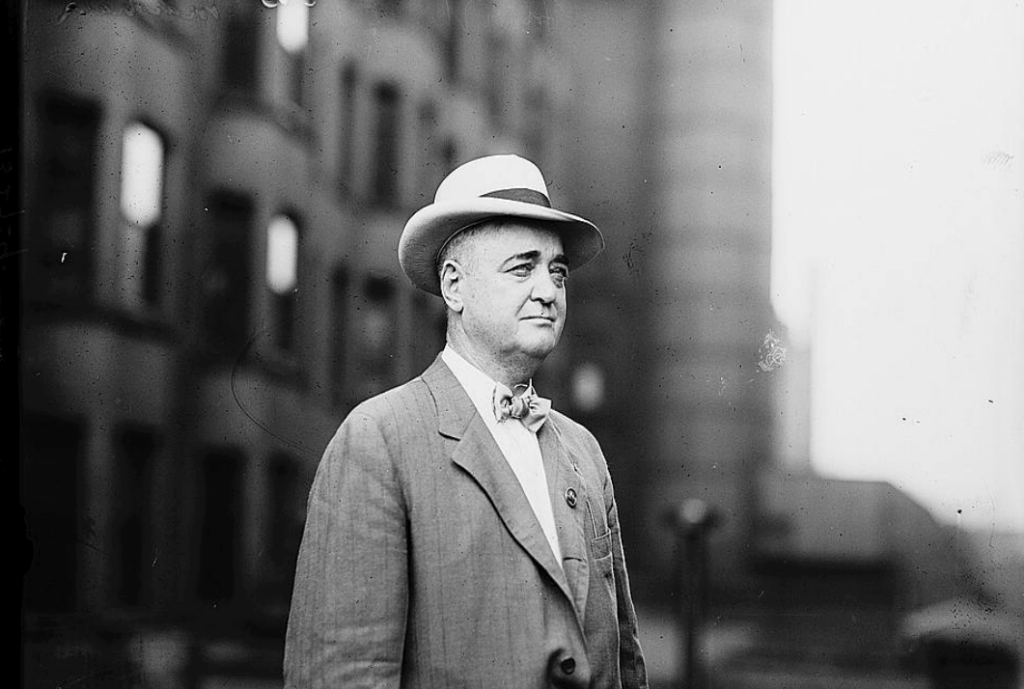
2. Bat Masterson
Bat Masterson combined several frontier identities at once: buffalo hunter, scout, sheriff, gambler, and eventually newspaperman. Born in Quebec in 1853, he moved west with his family and came into prominence in Dodge City, where he was elected sheriff of Ford County by just three votes.
His time in office included the capture of train robbery suspects and leadership of posses in high-profile cases. He also helped track down Jim Kenedy after the killing of Dora Hand, one of the most talked-about crimes in Dodge City. Masterson’s reputation grew larger than the number of his confirmed gunfights, and even in his own lifetime the boundary between fact and performance blurred. Later he moved east and reinvented himself in New York as a sports columnist for the Morning Telegraph, an unusual second act for a former frontier marshal.
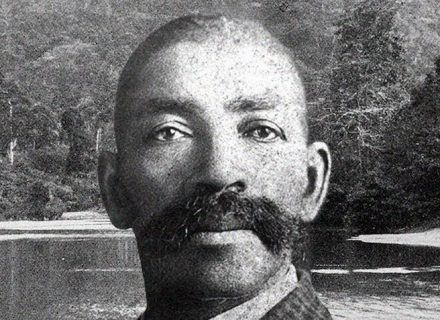
3. Bass Reeves
Bass Reeves served where federal authority was especially difficult to enforce: Indian Territory. According to one account, Judge Isaac Parker’s jurisdiction stretched across 70,000 square miles, a vast region where fugitives, bootleggers, and killers could disappear easily.
Reeves brought unusual strengths to the work. He had lived in the territory, knew the country intimately, and could speak Creek. He reportedly used disguises, appearing as a drifter, preacher, farmer, or cowboy to get close to suspects before making an arrest. His law enforcement career lasted 32 years, and accounts credit him with capturing and killing large numbers of fugitives. That longevity matters as much as any single dramatic encounter: Reeves represents the less glamorous but more demanding side of frontier law, where persistence often mattered more than notoriety.
4. Heck Thomas
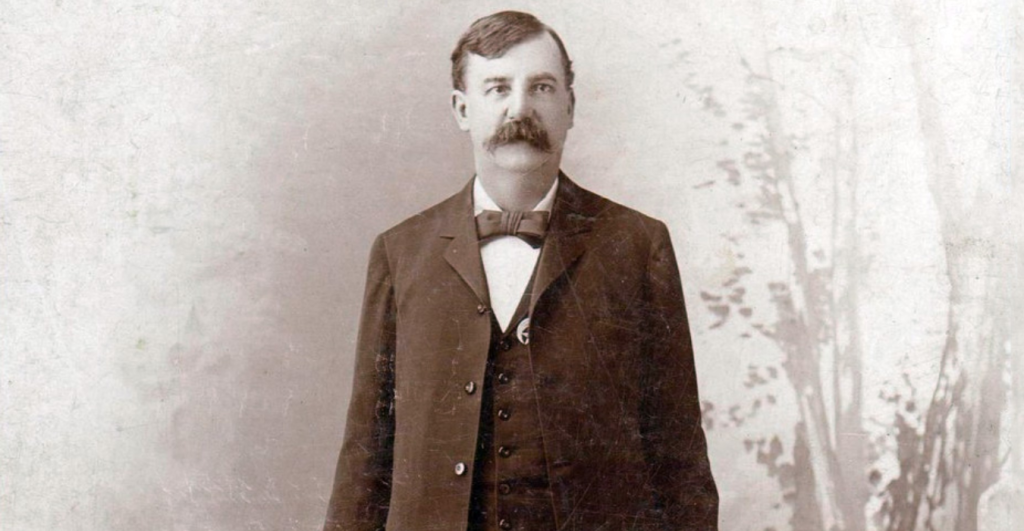
Heck Thomas built his name not in one famous showdown but in steady pursuit. After working as a railroad guard and express company agent, he became a deputy marshal under Judge Parker and later joined the trio known as the “Three Guardsmen” alongside Chris Madsen and Bill Tilghman.
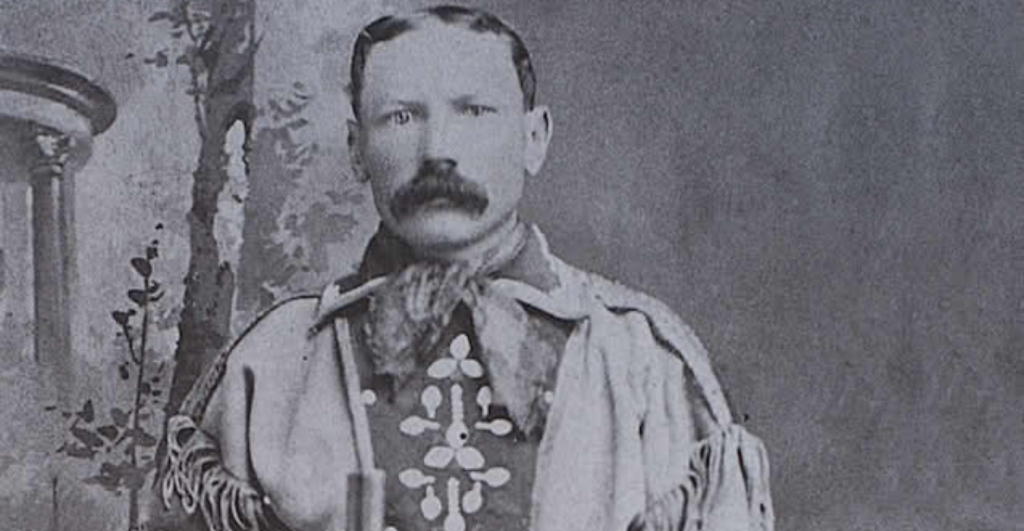
Thomas developed a reputation for relentless tracking in territory where outlaws often crossed difficult ground and jurisdictional lines. He is especially associated with the pursuit of Bill Doolin, whom he confronted after Doolin’s escape from jail. Thomas was also credited in one source with hunting down 300 outlaws before retirement. That figure reflects the scale of his reputation, but even more revealing is the kind of work he performed: less theatrical than Tombstone, more procedural, and rooted in long campaigns against repeat offenders.
5. Pat Garrett
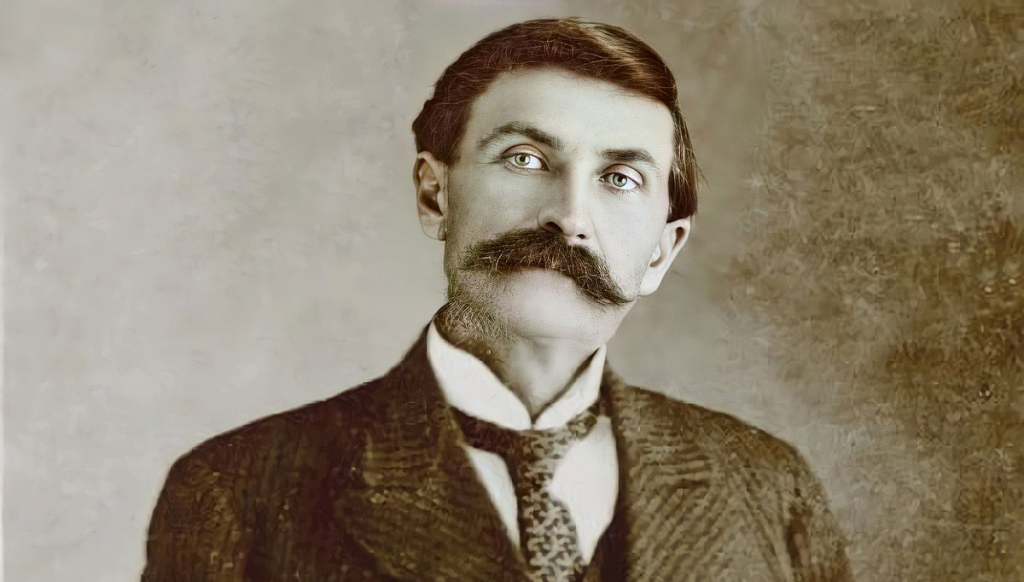
Pat Garrett remains inseparable from the killing of Billy the Kid. As sheriff of Lincoln County, New Mexico, he was assigned to pursue the outlaw and succeeded in 1881, an act that fixed his place in Western memory almost instantly.
Yet Garrett’s life did not stay inside that single story. He had also been a cowboy, buffalo hunter, and later a political figure. He published a book, The Real Life of Billy the Kid, helping shape the public understanding of the outlaw he had pursued. That combination of lawman and self-chronicler mattered. Garrett was not only enforcing the law; he was also helping write the narrative of what law enforcement meant on the frontier.
6. John B. Armstrong
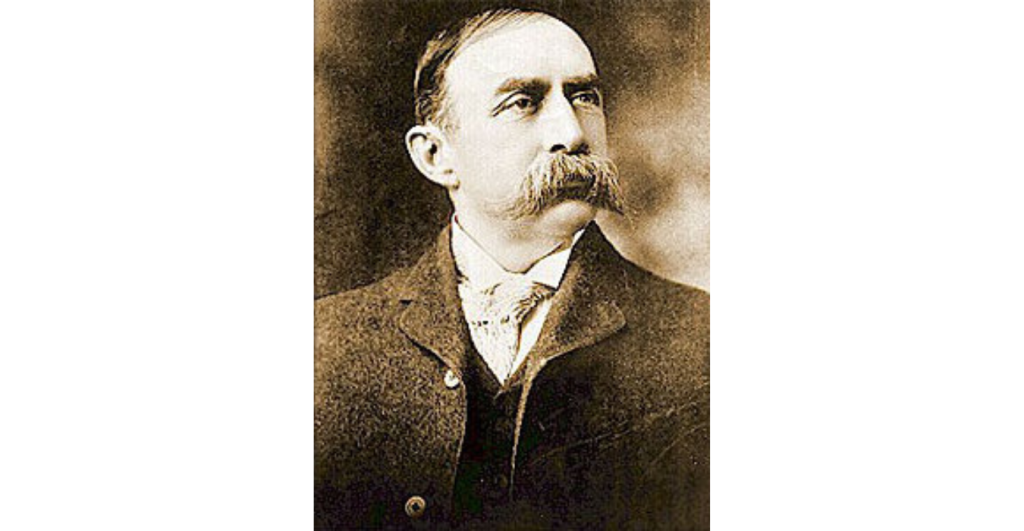
John B. Armstrong earned lasting recognition for one arrest. As a Texas Ranger in the turbulent Nueces Strip, he worked in a region defined by banditry, feuds, and shifting loyalties. His most famous moment came when he helped capture John Wesley Hardin, one of the West’s most feared outlaws.
The arrest took place aboard a train in Florida, far from the Texas landscape usually associated with Ranger lore. Armstrong entered one end of the car while other lawmen closed from the rear. During the struggle, a bullet grazed his scalp after passing through his hat, but he still subdued Hardin and took him into custody. Frontier policing often required long pursuit beyond any single county or town, and Armstrong’s career illustrates that mobile, far-reaching form of law work.
7. Bill Tilghman
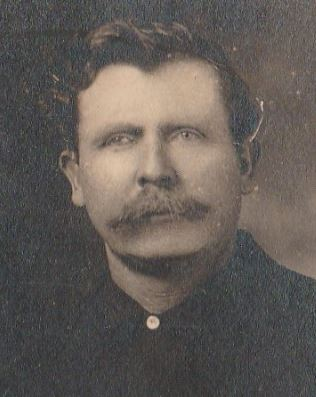
Bill Tilghman appears less often in popular culture than Earp or Masterson, but he was central to law enforcement in Oklahoma Territory. As one of the “Three Guardsmen,” he worked alongside Heck Thomas and Chris Madsen in campaigns against organized outlaw bands.
Tilghman’s importance lies in his consistency. He was part of the effort to break up gangs that had learned how to exploit rough terrain, weak communication, and scattered settlements. In that environment, lawmen needed tracking ability, local knowledge, and endurance more than spectacle. Tilghman’s career reflects the transition from the chaotic cattle-town era to a more structured kind of federal and territorial policing.
These seven men did not bring perfect order to the West, and several lived lives marked by contradiction. Some gambled, some drifted in and out of office, and some helped build their own legends after the fact.
Even so, their careers reveal a central truth of the frontier: law was rarely a settled institution. It depended on individuals moving through unstable towns and vast territories, trying sometimes successfully, sometimes not to make authority visible where it was often weakest.