
A smooth hotel stay often depends less on grand gestures and more on small moments at the desk, on the phone, and in the hallway. Front desk teams sit at the center of it all, coordinating with housekeeping, engineering, room service, and management while also fielding every request from fresh towels to billing questions.
That is why some habits that seem polite, efficient, or harmless from a guest’s side can quietly create delays, confusion, or extra work. These are eight of the behaviors hotel staff most consistently wish travelers would leave behind.

1. Apologizing excessively for routine requests
Asking for another towel, extra pillows, or a later checkout is part of the job, not an interruption. Hotel workers have noted that overexplaining or repeatedly saying sorry can make a simple interaction feel awkward and slower than it needs to be.
A direct, calm request usually helps more. Front desk staff are there to solve problems and arrange services, and the process tends to move faster when guests simply say what they need, clearly and politely.
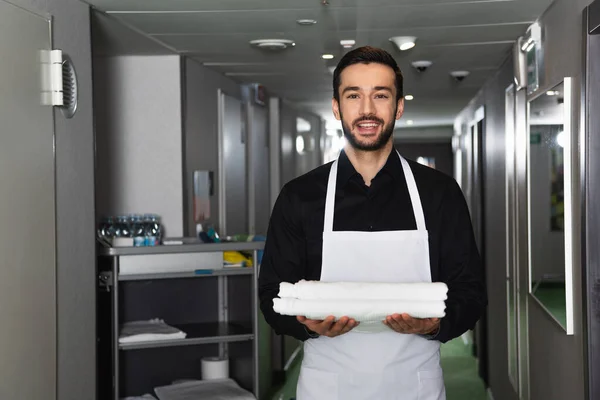
2. Grabbing supplies from housekeeping carts
Taking towels, toiletries, or pillows directly from a cart in the hallway may look efficient, but it can create inventory problems for staff. Housekeeping teams are often responsible for tracking those items, and missing supplies may have to be explained later.
If something is needed right away, the better move is to ask first or call the desk. In many hotels, the front desk serves as the main point of contact for requests, which means staff can route the request properly and make sure it is recorded.
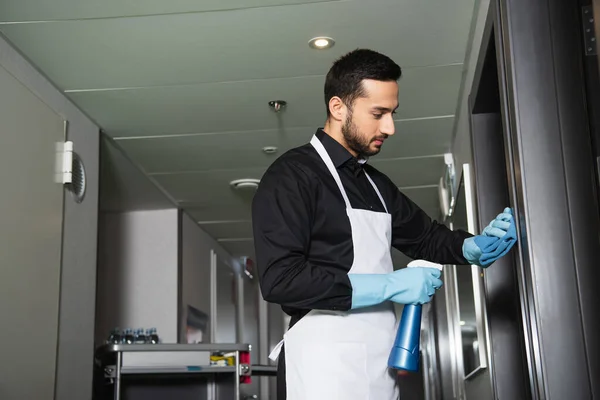
3. Flagging down the nearest employee for every issue
When the air conditioning fails or toilet paper runs out, stopping the nearest housekeeper in the hall can seem faster than picking up the phone. In practice, it often pulls the wrong person away from assigned tasks or sends a technical issue to someone who cannot fix it.
Hotels run on specialized roles. A maintenance problem belongs with maintenance, a room assignment concern belongs with the desk, and a billing issue definitely belongs with the desk. Front desk agents are trained to direct each problem to the right department, which usually gets a better result with less back-and-forth.

4. Waiting too long to report a problem
Guests sometimes stay quiet because they do not want to be difficult. That instinct can backfire. A noisy room, a missed service, a broken television, or an incorrect charge is much easier to address in the moment than after checkout.
Staff consistently say early notice helps. Specific details matter too: time, place, and who was involved. That kind of information gives the desk something concrete to act on, and it can speed up everything from a room move to a correction on the folio.

5. Demanding a manager before giving the desk a chance
Some travelers assume only a manager can fix an issue. In many hotels, that is not true. Front desk agents are often trusted with a surprising amount of authority, including handling complaints, arranging service recovery, and coordinating with other departments.
Escalation has its place, especially when a serious issue has gone unresolved. But opening with a demand for management can slow down a process the desk may have been able to solve immediately. In many properties, front-line staff already have the authority to make things right.

6. Talking down to staff or using status as leverage
Front desk workers are trained multitaskers, and their jobs require speed, diplomacy, and constant coordination. Speaking to them dismissively, mocking someone’s accent, or announcing wealth or loyalty status rarely improves service.
What usually does help is clarity. Staff already see reservation details, including many loyalty indicators, in the booking system. Courtesy and specific requests are far more useful than reminders about membership level or personal importance.

7. Saving billing questions for after leaving
Checkout can feel rushed, especially on a travel day. But front desk professionals repeatedly urge guests to review charges before leaving when possible. Once a traveler is already home, options may be narrower and fixing mistakes can take longer.
Reviewing the itemized bill at checkout remains one of the simplest ways to avoid follow-up headaches. Even guests who use express checkout benefit from reading the folio promptly and raising any discrepancy right away.

8. Treating the desk like a catch-all for unreasonable favors
Hotel staff handle a wide range of needs, but that does not extend to personal errands, off-the-books favors, pet sitting, or bending rules that place employees in a difficult position. Workers have described being asked to fetch cars, run outside errands, or watch animals, often with an offer of extra cash.
Those requests can create liability and policy issues, even when they are presented casually. The cleaner approach is to use the services the hotel actually offers, whether that means valet, concierge help, or approved local providers. Professional boundaries make the stay smoother for both sides.

Most hotel friction does not come from dramatic scenes. It comes from small misunderstandings about what counts as helpful, urgent, or polite.
The front desk tends to work best when guests are straightforward, respectful, and timely. A clear request, a quick heads-up about a problem, and a brief review of the bill can remove much of the stress from both the stay and the staff’s shift.