Good manners on a plane do not always look the way travelers expect. In a crowded cabin, the habits that seem considerate on the ground can disrupt service, slow boarding, or create extra work for a crew whose first role is safety. That is why so many common in-flight missteps start with good intentions. A smoother trip usually comes from respecting the crew’s workflow, staying aware of shared space, and keeping small gestures truly helpful.

1. Playing flight attendant with other passengers
When another traveler ignores a rule, some passengers step in to correct the behavior themselves. Crew members generally prefer not to have that kind of backup. Cabin staff are trained to handle compliance, conflict, and de-escalation, while passenger-to-passenger policing can turn a small issue into a louder one. A better move is a quiet heads-up to the crew. That keeps the cabin calmer and leaves the decision to the people responsible for safety.
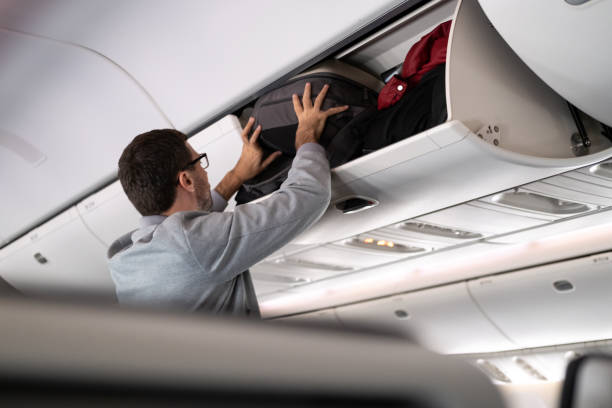
2. Rearranging the overhead bins to “help”
Stowing a personal bag quickly is useful. Touching other people’s luggage, shifting items across rows, or repacking a crowded bin is another story. It can lead to misplaced belongings, frustrated travelers, and longer boarding delays. Etiquette guidance still points to one simple rule: use the bin nearest the seat and load bags efficiently. With carriers enforcing 22 x 14 x 9 inches including wheels and handles, overhead space is tighter than ever, which makes orderly stowing more important.

3. Tapping, poking, or grabbing a crew member for attention
A light touch may seem gentler than calling out, but most flight attendants do not want to be physically tapped while working the aisle. It is distracting, intrusive, and unnecessary in such a close environment. Simple language works better. A calm “excuse me,” eye contact, or the call button when needed is usually enough. As one crew member told Travel + Leisure, “Do not touch us.”
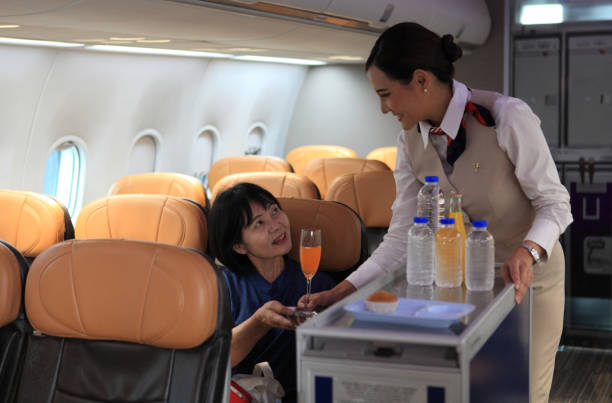
4. Asking for oversized water refills during service
Bringing a reusable bottle is practical, but asking the crew to fill a large bottle mid-flight can strain limited onboard supplies and slow the cart for everyone else. Flight attendants often work with restricted water access, especially during a standard drink run. The easier option is to fill up before boarding and accept a regular cup of water in the air. It is a small adjustment that keeps service moving.

5. Reaching onto the drink cart before being served
The beverage cart may be only inches away, but it is still the crew’s workspace. Grabbing a can, pointing at items while the attendant is pouring, or trying to speed things up from the aisle can interrupt a tightly managed routine. This matters more than it looks. Flight attendants are moving quickly, tracking rows, and handling requests in sequence. Eye contact and a brief order help; treating the cart like self-serve does not. Several attendants also say passengers should remove headphones and be ready when service arrives, since repeated orders slow the cabin for everyone behind them.
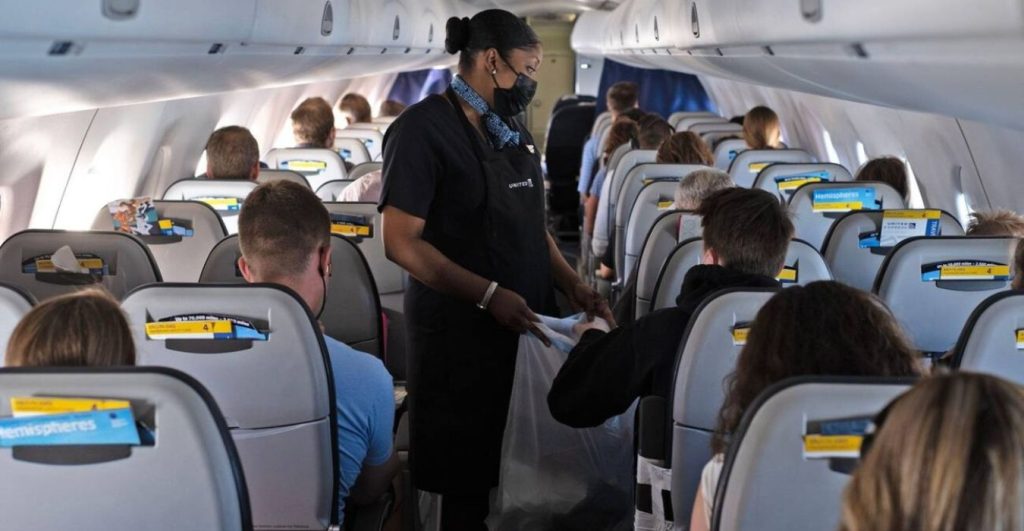
6. Handing over messy or hazardous waste directly
Used diapers, sickness bags, tissues with bodily fluids, and medical sharps are not ordinary trash. Passing those items directly into a flight attendant’s hand creates an obvious hygiene problem. Where possible, those items belong in the lavatory trash or in a proper personal container. It is one of the clearest examples of how a passenger can mean well and still make a difficult job harder.

7. Bringing a carry-on that cannot be lifted safely
Many travelers assume a crew member will hoist a heavy suitcase into the bin if needed. Flight attendants have said that bag lifting is a common source of injury, which is why they often avoid doing it at all. If a passenger cannot safely lift a bag, it is better to check it. That protects the crew, reduces aisle backups, and lowers the chance of a bag falling on another traveler. One etiquette rule has remained steady for years: if it cannot be lifted personally, it should not go overhead.
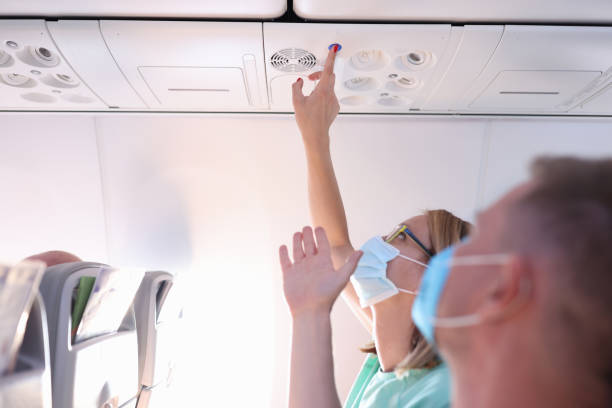
8. Treating the call button like a personal service bell
The button exists for a reason, but crews consistently say it is best used for genuine needs rather than one-off conveniences. Repeatedly pressing it for trash pickup, to ask what drinks are available, or to start an extended chat adds friction to a system already running on tight timing. That does not mean passengers should never use it. It means the call light works best when it solves an actual need, not when it replaces patience.

9. Thanking only the pilot on the way out
Deplaning often brings a final burst of tunnel vision, especially after a long flight. But for cabin crews, being ignored at the door after handling service, safety checks, and passenger needs can land poorly. A brief thank-you matters. Flight attendants are not only there for drinks and trash; as one crew member explained, “We are first and foremost safety professionals”. A simple acknowledgment recognizes the people passengers saw all flight long.
Most of these habits are not rude by design. They are ordinary attempts to be efficient, friendly, or proactive in a space where timing and boundaries matter more than many travelers realize. The most appreciated passenger behavior is usually the least theatrical: stow quickly, ask clearly, wait patiently, and respect the crew’s space. On a plane, that is what helpful tends to look like.