

Hollywood has long treated identity as both category and commodity. When an industry offers visibility in narrow doses, one role can be asked to stand in for an entire community, and that pressure often turns casting into a spectacle rather than a craft decision.
Some actors have responded by declining parts, asking for rewrites, or stepping away when a character’s race, ethnicity, body, or gender identity seemed designed to sell a stereotype. Their refusals did not stop the pattern on their own. They did, however, expose how often representation becomes a branding exercise before it becomes a serious commitment.
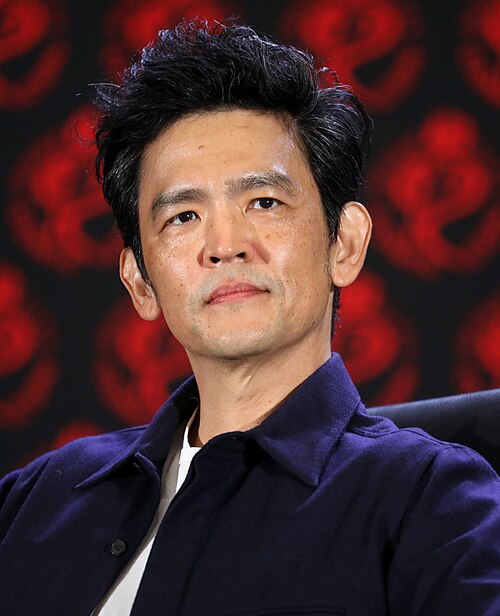
1. John Cho refused to make an accent the joke
Early in his career, John Cho was asked to perform a heavier accent for a role in Big Fat Liar. He declined because he did not want children laughing at an accent as the source of comedy. As he later explained, “I don’t want to do this role in a kid’s comedy, with an accent, because I don’t want young people laughing at an accent inadvertently.”
The detail mattered because the request was not about realism. It was about making Asian difference legible and funny in the fastest possible way. The director agreed to drop the accent, and Cho has since been noted for avoiding roles that rely on that shortcut. His stance fit a broader pattern in his career: refusing to let ethnicity serve as the costume before the character exists.

2. Kumail Nanjiani would not exaggerate his voice for a “brown guy” part
Kumail Nanjiani has described turning away from auditions that wanted a “stereotypical brown guy” rather than a person. During a public discussion, he recalled being asked to make his Pakistani accent “funnier” for a major film audition and refusing to do it.
His reasoning was precise. There are roles where a particular accent belongs naturally, but comedy built on exaggeration turns identity into the punchline and the sales pitch at once. Nanjiani said, “I just didn’t want the comedy to just be coming from someone exaggerating their accent.” That refusal cost him at least one large opportunity, but it also drew a line between portrayal and caricature.

3. Denzel Washington walked away from a role he believed would define him by stereotype
Denzel Washington has spoken about advice from Sidney Poitier to choose early roles carefully. He later described rejecting a film part in the 1980s that he summarized as a role built around a degrading stereotype he did not want attached to the beginning of his career. saying the role centered a violent and degrading image he did not want attached to the beginning of his screen life.
That decision was less about respectability than about control. Early casting often determines what an actor is repeatedly offered, and Washington understood that one sensational role can become an unofficial ad campaign for how the industry imagines Black masculinity. He turned it down, and not long after landed Cry Freedom, which brought an Oscar nomination and redirected his trajectory.

4. Rita Moreno stopped accepting “house ethnic” parts
After West Side Story, Rita Moreno might have been expected to gain access to richer material. Instead, she said she became “the house ethnic,” cast as anyone deemed foreign enough to be interchangeable. In interviews, she recalled being offered a stream of roles that reduced her to “this Gypsy girl, or a Polynesian girl, or an Egyptian girl.”
She eventually chose absence over repetition, taking a seven-year acting break rather than continue feeding that machine. It was a costly decision, but an unusually clear rejection of a system that marketed ambiguity as diversity. Moreno was not being asked to portray many identities with nuance; she was being used as a generic signifier of not-American.
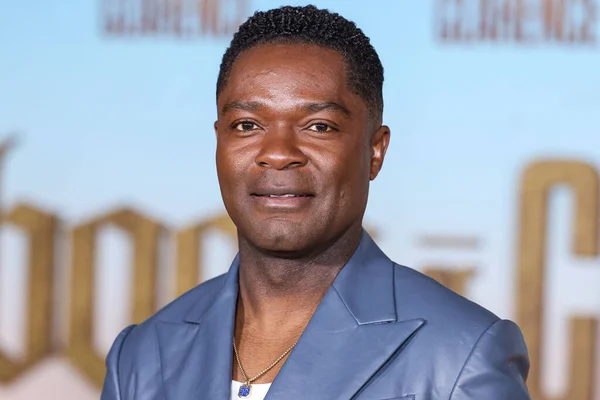
5. David Oyelowo turned down roles he believed reinforced harmful images of Black men
David Oyelowo has said he rejects most of the roles offered to him because of the stories they tell about Black life. “I turn down about 80 percent of what comes my way for that reason,” he said, connecting casting decisions directly to the cultural force of images.
His point was not abstract. He described understanding that film and television shape public assumptions, including assumptions carried into schools, workplaces, and policing. That makes some roles more than private career choices. In his words, “I must be part of the solution and not the problem,” a standard that rejects the idea that visibility alone is progress when the visibility itself is distortive.

6. Peter Dinklage refused roles built around mockery and later challenged a familiar fairy-tale frame
Before becoming widely known, Peter Dinklage struggled to find work because he would not accept parts that mocked him or used dwarfism as a novelty device. That refusal shaped the early pace of his career, but it also made his later criticism of the live-action Snow White remake consistent rather than opportunistic.
On Marc Maron’s podcast, he said he was “sort of taken aback” that a production could celebrate one kind of progress while reviving what he called a “backward story about seven dwarfs living in a cave together.” The objection cut to the marketing logic underneath the project: difference was acceptable when it looked modern in publicity, but old caricatures could still be repackaged as harmless tradition.

7. Thandie Newton rejected a rewrite that reduced a Black woman to cliché
Thandie Newton has described stepping away from a role in Charlie’s Angels after proposed changes pushed her character toward a narrower and more stereotyped performance of Blackness. She recalled being told the part should feel more “believable” as a Black woman, followed by suggestions that leaned on nightclub and stereotype-based clichés.
Newton rejected the rewrite because it revealed the real assignment. The issue was not that the character had depth which needed refinement; it was that intelligence and poise were apparently considered insufficiently marketable without a familiar racial script layered on top. Her response was simple: she would not do it.

8. An actress stepped aside from a Latina role rather than let scarcity do the damage
A recent casting controversy around a non-Latina actress attached to a Mexican character in Deep Cuts prompted a different kind of refusal: withdrawal. According to Gloria Calderón Kellett’s account, the actress stepped away after learning the role had been written as Latina and after hearing criticism from Latino creatives.
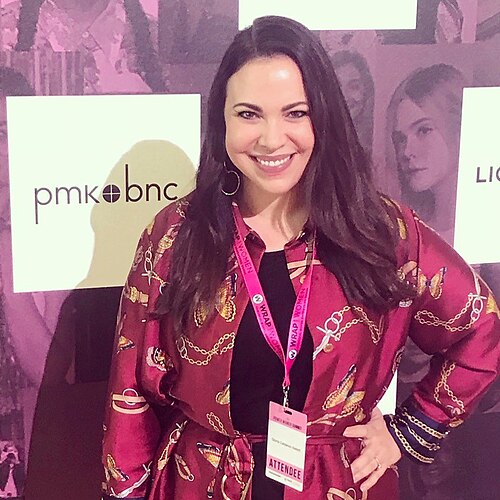
Calderón Kellett argued that the larger problem was scarcity, not one performer alone. “That’s why moments like this sting,” she wrote, because too few Latino roles means each one is burdened with symbolic weight. In that environment, casting can become a publicity language about inclusion while opportunities for Latino actors remain painfully thin. A refusal in that context becomes notable precisely because the system makes such gestures so rare.
Across these decisions, a pattern emerges. The actors were not only rejecting bad parts; they were resisting a production habit that treats identity as shorthand, decoration, or proof of relevance. That habit persists because it is efficient. As one USC Norman Lear Center-cited disparity shows in the Latino case, representation remains far below population share, which means every highly visible role carries inflated symbolic pressure. When actors refuse to participate under those terms, the refusal does more than protect a career. It interrupts the sales strategy.


