
Air travel asks strangers to share a tight space, a fixed routine, and a long list of rules that are not always obvious from the seat. In that setting, some passenger habits look thoughtful on the surface but quietly complicate safety checks, service flow, and the crew’s workload.
That tension matters more now. Airline crews have reported 12,900 unruly passenger incidents since 2021, a backdrop that helps explain why crews rely on calm, predictable cabin behavior. What often helps most is not extra effort, but less improvising.
1. Correcting another passenger instead of alerting the crew
Pointing out that someone’s tray table is down or seat belt is unfastened can seem useful, but it often creates a second problem: conflict between passengers. Flight attendants are trained to manage noncompliance, and they also decide whether a reminder should be quiet, direct, or escalated. In a cabin already shaped by stress and delay, side policing can quickly pull attention away from the crew’s main job. A discreet heads-up does more than a public correction.
2. Reorganizing overhead bins to “help” everyone fit
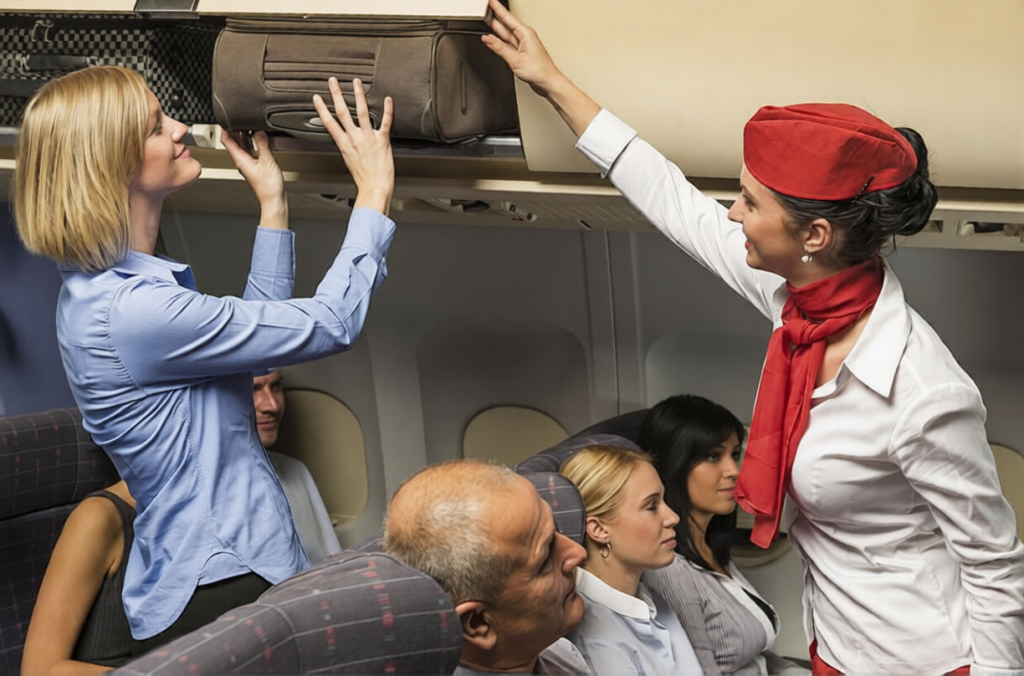
Overhead space is shared, but handling other people’s bags is where tension starts. Moving a stranger’s suitcase, turning it around, or squeezing personal items into a new spot can separate passengers from medication, electronics, or fragile belongings. It also slows boarding. The smoother move is simple: place personal items securely, keep smaller belongings under the seat when appropriate, and let crew members direct overflow when bins fill up.
3. Tapping a flight attendant to get attention
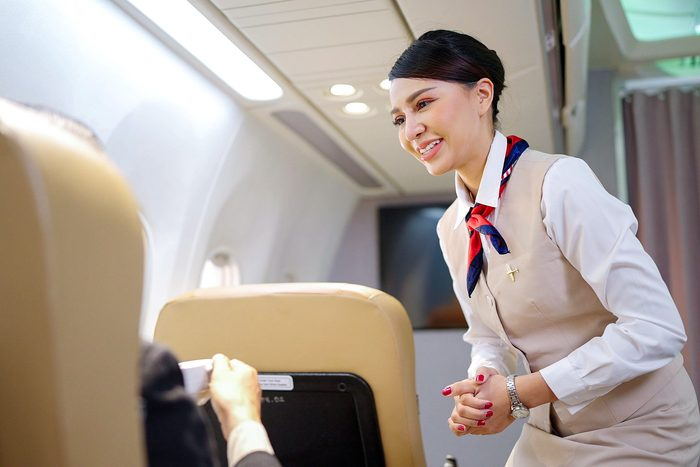
A quick touch may be intended as polite, yet many crew members do not want physical contact while working in a narrow aisle. The concern is not only personal boundaries. Flight attendants are often carrying hot drinks, handling equipment, or moving quickly through turbulence-prone spaces. Calling out politely or using the call button respects distance and reduces the chance of a spill or disruption.
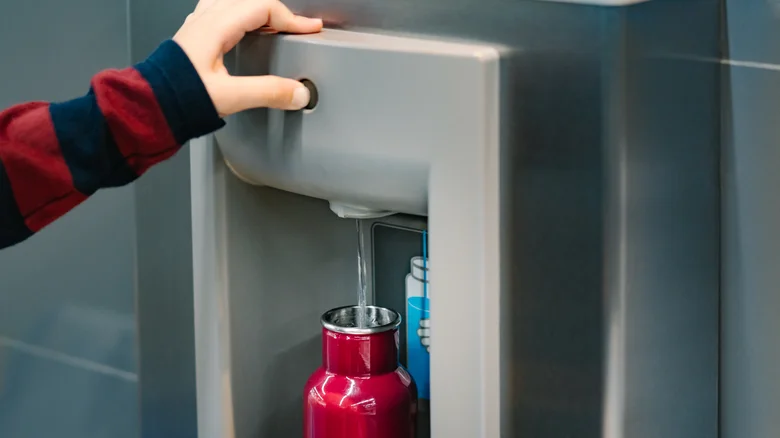
4. Asking for repeated large water-bottle refills
Reusable bottles are practical in airports, but the onboard supply is limited and planned around standard service. As one veteran flight attendant in the main material put it, “We just can’t fill up all of your water bottles, or there wouldn’t be enough to offer.” A full bottle before boarding usually solves the problem better than repeated in-flight refill requests. Accepting a cup of water during service keeps distribution fair and keeps the cart moving.
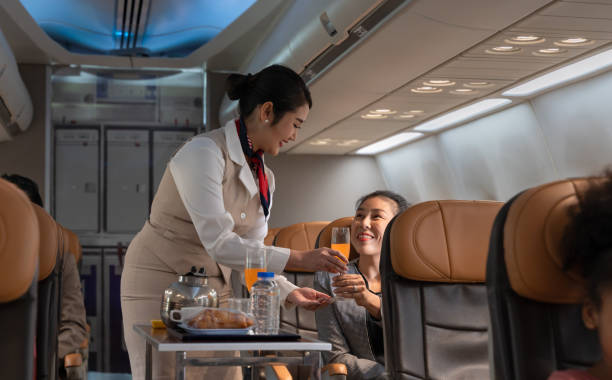
5. Reaching into the drink cart for convenience
Passengers sometimes grab napkins, cans, or snacks directly from the cart to speed things up. For crew, it does the opposite. The cart is organized in a working order, and extra hands in that space can interrupt service and block the aisle. It is a small action with outsized ripple effects. Asking for an item directly keeps service cleaner, faster, and less chaotic.
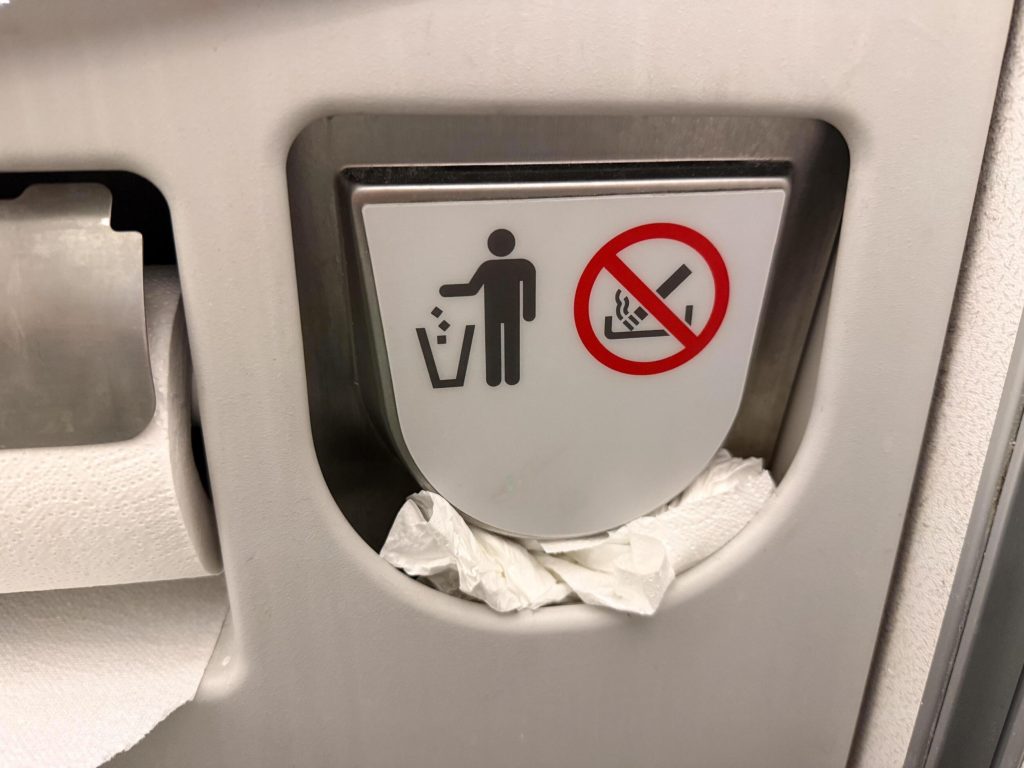
6. Handing over diapers, tissues, or other bio-waste
Not all trash belongs in a flight attendant’s hand. Items with bodily fluids create a hygiene issue in a tightly shared environment, especially on flights where surfaces and trays are touched repeatedly. Lavatory bins are the better destination for used tissues, diapers, and similar waste. That boundary protects crew members and reduces unnecessary exposure in the cabin.
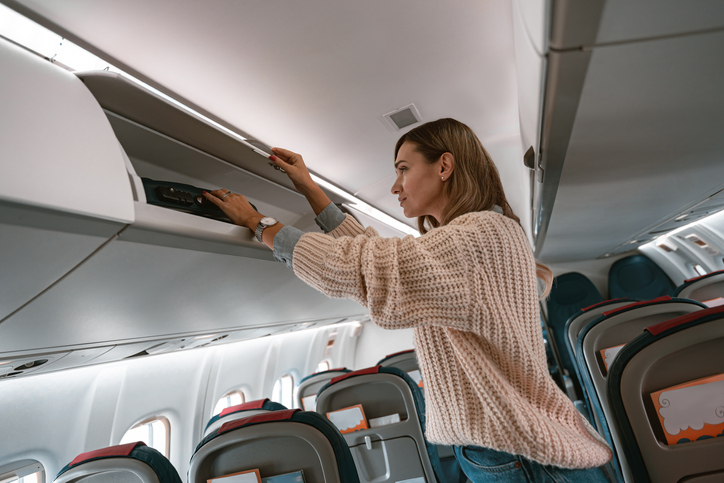
7. Blocking the aisle to perfect a carry-on setup
Few boarding delays feel as avoidable as a passenger standing under the bin, rotating a bag through multiple angles while the line behind them stops cold. The cabin works best when boarding decisions are quick and bags are ready to lift.
One flight-attendant account in the source material described passengers treating the bin above their row like private territory, even though it is not assigned space. A prepared bag, tucked straps, and a fast decision are often the most considerate choices in a crowded boarding lane.
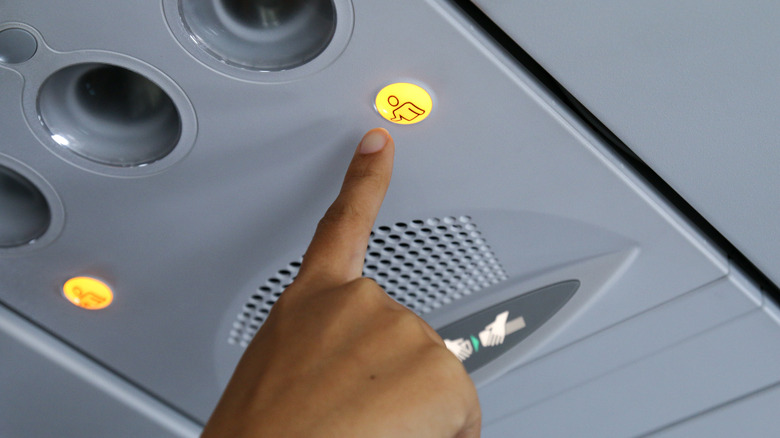
8. Using the call button for company instead of a need
Friendly conversation can brighten a flight, but the call button is part of the crew’s working system. Using it for casual chat adds interruptions during beverage service, safety checks, paperwork, and other tasks passengers do not always see.
This has become more noticeable as screen-heavy travel habits have changed cabin interactions. Some flight attendants have described passengers becoming irritated when pulled away from headphones or entertainment, while others summon crew for idle conversation at busy moments. Saving social talk for quieter stretches shows better timing.
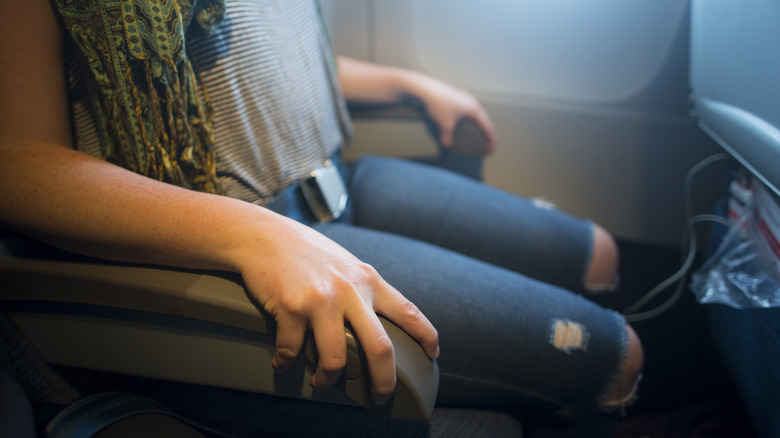
9. Treating the middle-seat armrest as open territory
Few airline etiquette disputes are smaller and more persistent. The clearest rule remains the simplest one: the middle-seat passenger should get both armrests. The aisle seat already has easier movement, and the window seat gets the wall and view.
Frequent flyers repeat the same logic in etiquette discussions across the internet, and the reason is easy to understand. In a row where space is already scarce, armrest battles create silent friction that crews often end up defusing. The easiest way to make a flight smoother is rarely to do more. It is to avoid turning a shared cabin into a personal project.
Brief requests, clear boundaries, and faster decisions give flight attendants more room to focus on safety, service, and the steady rhythm that keeps a full aircraft functioning well.


