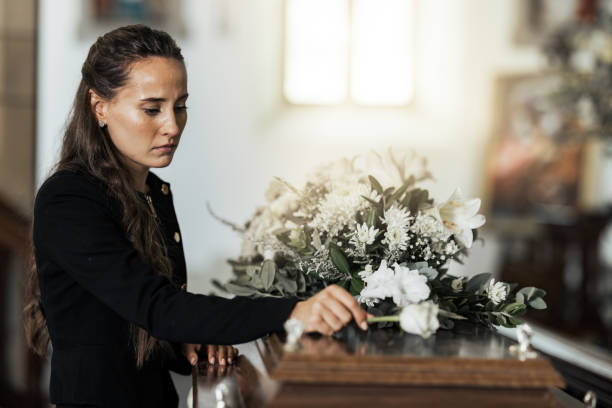
Grief often leaves other people scrambling for words. The result is usually not cruelty, but discomfort. Even so, a well-meant comment can still land as minimizing, intrusive, or strangely detached when someone is trying to survive a death, not explain it.
What grieving people tend to need most is simpler than many conversations make it seem: acknowledgment, patience, and a steady presence. Several bereavement support sources note that grief has no expiration date, and that practical support is often more helpful than polished language.

1. “Everything happens for a reason”
This phrase tries to impose order on a loss that feels unbearable. For the grieving person, it can sound like pain is being explained away rather than witnessed. It often replaces empathy with philosophy, which is rarely what someone needs in the raw aftermath of death.
Religious or spiritual framing can be especially hard when the mourner does not share those beliefs, or feels angry, confused, or abandoned by them. A death does not become easier because someone else assigns it meaning.

2. “They’re in a better place”
Many bereaved people hear this as a sentence about where the deceased is, when their own immediate reality is about absence. The loved one is not here. That is the wound.
Grief researchers and bereavement advocates repeatedly describe this kind of statement as unhelpful because it shifts attention away from the mourner’s experience and toward a consoling idea that may not comfort them at all. As one grief resource puts it, people often need others to be there in the moment rather than try to fix the pain.

3. “I know exactly how you feel”
Loss is not interchangeable. A parent, spouse, sibling, child, friend, or pregnancy loss carries its own history, role, and future that vanished with it. Even when someone has also experienced death, the relationship and the circumstances are never identical.
This is why many grieving people respond better to language that leaves room for difference, such as “I can’t possibly understand how you feel. But I’m here.” That kind of response keeps the focus where it belongs and avoids turning the exchange into a comparison.

4. “At least they lived a long life”
Age does not reduce attachment. Losing an elderly parent after decades of love can still shatter daily life, identity, routines, and the sense of being anchored in the world.
Grief is not measured by years lived. Comments like this can make mourners feel pressured to be grateful instead of devastated. The same problem shows up in phrases like “At least you had them as long as you did” or “At least it was quick.” They search for a bright side while the bereaved are still trying to absorb the loss itself.

5. “You need to move on”
This is one of the fastest ways to make a grieving person feel judged. It frames mourning as a task that should be completed on schedule, when in reality grief changes shape over time rather than neatly ending.
Support guidance from mental health organizations emphasizes that different people cope in different ways and at different paces, and that silence or pressure can deepen isolation. For many mourners, the healthier aim is not “getting over it,” but slowly learning to live with a changed life.

6. “Stay strong”
On the surface, this sounds supportive. In practice, it often tells someone to hide the very emotions that need room to exist. Crying, forgetfulness, anger, numbness, and exhaustion are all common grief responses, and they do not signal weakness.
Some grieving people later describe feeling as if they had to perform stability for everyone else. That pressure can be especially heavy when it is tied to children or caregiving responsibilities. Healthy support does not demand composure; it makes space for reality.

7. “Let me know if you need anything”
This is one of the most common sympathy lines, and one of the least useful on its own. A person in acute grief may be overwhelmed, exhausted, unable to plan, or unwilling to feel like a burden. That makes vague offers hard to act on.
More effective support is specific. One psychologist writing about serious illness and loss recommends offers like bringing soup, driving to appointments, walking the dog, or handling a routine chore, because specific offers remove the pressure of having to ask. Concrete help is often more caring than open-ended promises.

8. “Did they smoke or drink?”
Questions like this can sound like an investigation into blame. Even when asked out of nervousness or curiosity, they force the grieving person to defend the dead or revisit painful medical details they may not want to discuss.
Bereavement guidance consistently advises people to focus on the mourner’s experience instead of pressing for details. Some support groups recommend asking whether the person wants to share more before going further, rather than assuming access to the story. That small pause respects boundaries during an already exposed moment.

9. Saying nothing and avoiding them
Silence can be louder than any cliché. Many grieving people say what hurt most was not one awkward comment, but the friends, coworkers, or relatives who disappeared because they were uncomfortable. Even a brief message matters. Mental health guidance notes that not contacting somebody after a bereavement can leave them feeling more isolated. A simple acknowledgment such as “There are no words,” “I’m so sorry,” or “You don’t have to talk, I can just sit with you” is often enough to keep the door open.
There is no flawless script for grief. What helps most is usually less polished and more human: listening without correcting, remembering the person who died, using their name, and returning after the funeral when the noise has faded. Supportive words do not need to solve anything. They only need to make it clear that the mourner does not have to carry the moment alone.