

Trust with a dog rarely falls apart in one dramatic moment. More often, it erodes in ordinary routines: a rushed command, a laugh at a fearful reaction, a home that feels unpredictable instead of safe. Dogs communicate constantly through posture, movement, facial tension, and small stress signals.

Because body language must be read as a whole, many human habits that seem harmless can leave a dog feeling confused, pressured, or ignored. These seven patterns often look minor on the surface, but over time they can weaken a dog’s sense of security.
1. Correcting a dog for confusion
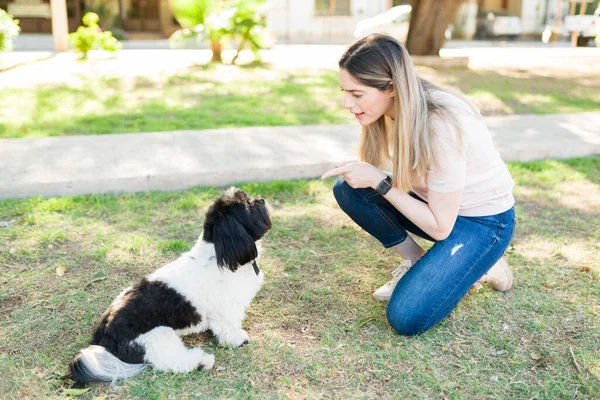
One of the fastest ways to damage trust is to treat misunderstanding like disobedience. When a dog has not fully learned a cue, or cannot perform it in a distracting setting, pressure and scolding do not clarify the task. They make the situation harder to read. Behavior professionals repeatedly point out that many training problems are rooted in unclear communication, not stubbornness. A dog that sits in the kitchen may not understand the same request in a busy park, around visitors, or when household activity spikes. When correction arrives before clarity, the dog learns that the human may become unpredictable at the exact moment guidance is needed most.

2. Being inconsistent from one day to the next
Dogs do not thrive on mixed messages. If jumping on guests is ignored one day, rewarded the next, and punished later, the dog is left guessing which version of the rule is real. Inconsistent cues, shifting boundaries, and family members using different commands all increase stress. Training guidance notes that inconsistency can slow learning and make a dog more anxious in everyday interactions. Trust grows when the home feels understandable. It weakens when the dog cannot predict what earns praise, what gets ignored, and what suddenly causes frustration.

3. Missing the subtle signs that a dog is already stressed
Many people notice barking, cowering, or retreating. Fewer notice lip licking, head turns, body stiffening, or repeated yawning. Those quieter signals matter. A survey of 386 dog owners and video analysis from UC Davis found that people often underestimated how fearful dogs were during exposure to common household sounds. Some even responded with amusement instead of concern. That mismatch can quietly undermine trust, because the dog is communicating discomfort while the human is failing to respond. Over time, a dog that feels unheard may become more withdrawn, more reactive, or harder to settle. Not every stress signal points to a broken bond, but repeatedly overlooking them can teach a dog that communication does not lead to relief.
4. Flooding the home with noises a dog cannot escape
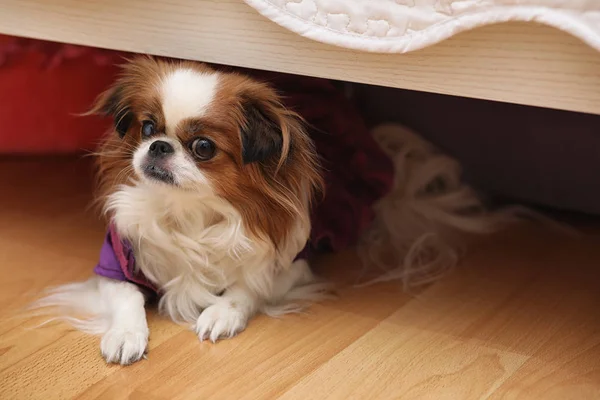
Humans are used to vacuums, microwaves, alarms, and beeping electronics. Dogs experience that soundscape differently. Some of the most stressful triggers are not dramatic noises, but high-frequency, intermittent household sounds that keep interrupting the dog’s sense of calm.Research highlighted by UC Davis found that common home noises can trigger anxiety, especially when owners do not recognize the body language attached to them. A dog that startles, pants, turns away, lowers the head, or leaves the room is not being difficult. The dog may be trying to cope. When daily life repeatedly forces a dog to endure avoidable stress without support or distance, trust can thin out in subtle ways.
5. Giving too much freedom before the dog is ready
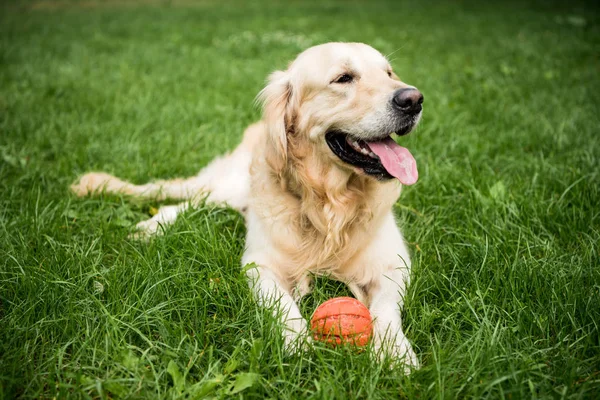
Freedom sounds generous, but unstructured freedom can set a dog up to fail. Roaming the house unsupervised, greeting everyone on walks, or navigating stimulating spaces without guidance often leads to mistakes that are later blamed on the dog. Behavior consultants consistently describe management as prevention, not punishment. Gates, crates, tethers, and controlled setups can reduce stress by making expectations clear. When a dog keeps getting into situations that lead to tension, conflict, or repeated reprimands, the human starts to feel unsafe to the dog rather than reliable. Structure protects trust because it reduces needless conflict before it starts.
6. Poisoning recall and other important cues
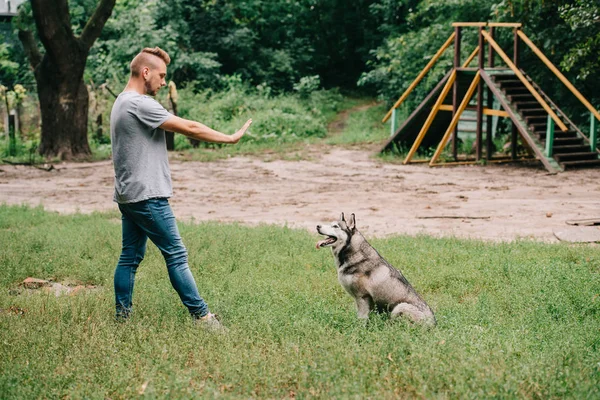
Dogs remember what tends to happen after a word is used. If “come” regularly leads to the end of play, a nail trim, isolation, or a reprimand, that cue stops feeling safe. Some trainers refer to this as poisoning a cue: the word itself becomes loaded with disappointment or stress. The same thing can happen with crates, cars, leashes, or even a cheerful tone of voice that predicts something unpleasant. Trust depends on patterns. When a dog learns that responding to a human often makes life worse, cooperation naturally starts to erode.

7. Ignoring emotional withdrawal because the dog is “quiet”
A noisy dog gets attention. A shut-down dog can be missed. Withdrawal, isolation, sleeping more than usual, loss of interest in play, or acting “checked out” can be signs that something is off. One reference article noted that more than 75% of dogs may show depression-related symptoms during their lives, while other guidance emphasizes that dogs often isolate, pace, or become unusually vocal when their emotional needs are not being met. A dog that stops seeking interaction is not always calm; sometimes the dog is conserving energy in a home that feels hard to navigate.

When that change is brushed aside, the relationship can grow more distant without anyone noticing it in real time. Trust usually grows in ordinary moments: a pause when the dog looks away, a quieter room when noise overwhelms, a cue taught with patience instead of pressure. Dogs do not need perfect caretakers, but they do rely on humans who notice patterns and respond consistently. Small habits shape the emotional climate of a home. When those habits become clearer, the bond often does too.


