

Some abilities used to be so ordinary that nobody bothered calling them skills. They were simply part of getting through the day: finding a destination, fixing a rip, making change, or writing something down fast enough to keep up. Now many of those habits live in a strange category. They are no longer essential in daily life, yet they still signal a kind of competence that people notice immediately.

1. Reading cursive without stopping to decode it
Cursive has shifted from basic literacy to a generational dividing line. Family letters, old recipes, signed documents, and notes tucked into photo albums often depend on it, yet the gap is real: historian Drew Gilpin Faust once said, “two-thirds of the students in the class couldn’t read cursive.” Even with some schools restoring cursive lessons, everyday communication has moved so heavily to keyboards that fluent reading of loops and slanted handwriting is no longer assumed.

2. Counting back change from memory
Cash handling once involved speed, accuracy, and a reliable routine. A cashier could mentally total the difference, place coins in the customer’s palm, then set bills on top in order. Card readers and automatic tills pushed that habit aside, but the older method was more than nostalgia. It trained mental math under pressure and reduced mistakes in a way that did not depend on a screen.

3. Navigating with a paper map and a sense of direction
Map reading did more than get people from one place to another. It built a mental picture of distance, direction, and the surrounding area. As one Canadian map seller put it, “what you lose is the big picture.” That concern matches broader evidence that traditional map-reading has become less familiar as phone navigation handles every turn. Digital maps remain useful, but they often narrow attention to the next instruction instead of the whole route.
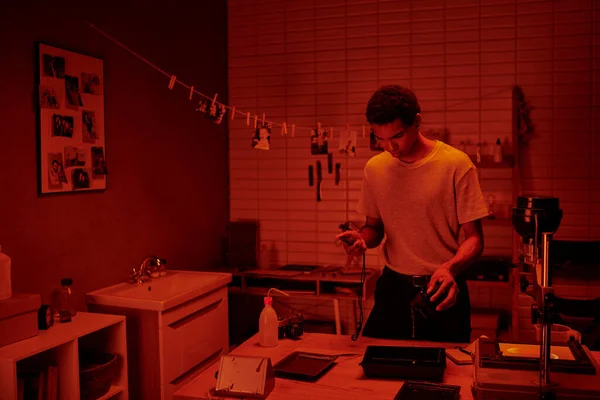
4. Developing film and handling darkroom basics
Taking a photo once required patience before the picture even existed. People had to understand exposure, chemicals, drying time, and the small mistakes that could ruin a print. Film has returned as a hobby for some, but the full darkroom workflow is far less common than it once was. Today the image usually ends up as a file, not a strip of negatives and a tray of prints.
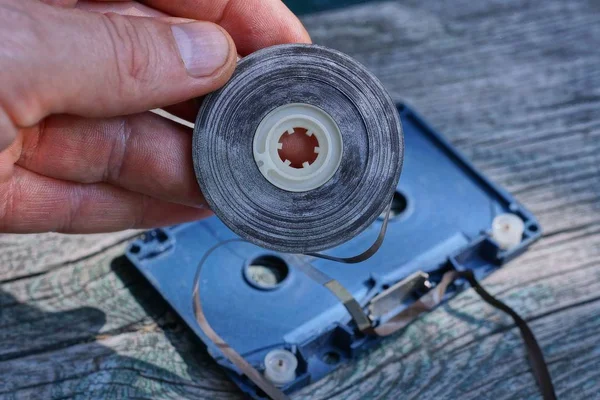
5. Splicing damaged tape by hand
Audio and video media used to break in ways that demanded careful repair. Reconnecting tape meant trimming the ends precisely and joining them cleanly, often with a razor blade and special adhesive. According to a step-by-step tape splicing guide, the ends should align so they “just meet and barely touch.” That level of manual precision disappeared once music, recordings, and movies became files instead of fragile strips of magnetic tape.

6. Writing shorthand fast enough to catch every word
Before auto-captions, voice notes, and instant recordings, shorthand solved a practical problem. It let a person keep up with a lecture, meeting, or interview in real time. The skill still impresses people who see it, partly because it looks like a secret code and partly because it reflects an older form of concentration: hearing, processing, and recording information all at once without software in between.

7. Touch-typing on a real keyboard
Typing classes once built muscle memory the hard way. People learned home-row position, posture, rhythm, and accuracy because typewriters punished mistakes with noise, delay, and correction fluid. The skill still matters, but the culture around it has changed. Phones reward thumb typing, voice tools reduce the need for speed, and workplace research has echoed how quickly tasks are shifting, with one survey finding 49% of workforce skills may lose relevance quickly as AI changes office work.

8. Sewing repairs instead of replacing clothes
A loose hem, missing button, or torn seam once sent people to a sewing kit, not a shopping cart. Mending required steady hands and enough practice to make a repair hold without drawing attention to it. Fast fashion changed the equation, and many households stopped passing the skill down. Still, sewing remains one of the clearest examples of practical self-reliance that became optional once replacement turned easier than repair.

9. Fixing basic car and bike problems without a tutorial
Many adults over 40 were taught at least the basics: patching a bike tire, checking fluids, changing a spark plug, or diagnosing a stubborn engine by sound and feel. That kind of troubleshooting required memory, tools, and comfort with mechanical systems. Newer vehicles are more computerized, and many riders and drivers now turn first to a video, roadside assistance, or a shop. The skill has not vanished, but it is no longer treated as common knowledge.

10. Driving a manual transmission and knowing backup tricks
Knowing how to drive stick once expanded a person’s options immediately. Borrowing a car, driving overseas, or dealing with an older vehicle all became easier if clutch control was second nature. In many places, automatics steadily took over, leaving manual driving as a specialty rather than a baseline ability. Even problem-solving habits tied to it, such as pop-starting a stalled car, have faded with the machines that made them useful.

11. Reading an analog clock at a glance
This one still catches people off guard. A clock face used to be instant information, yet many younger people now rely almost entirely on digital displays. Reader’s Digest noted that some schools have even replaced analog clocks because students struggle to read them during timed exams. What once felt automatic now belongs on the same list as map folding and balancing a checkbook: familiar to one generation, oddly foreign to another.
What ties these skills together is not their market value. It is the texture of them: memory, patience, handwork, and the ability to keep moving when batteries die, signals drop, or an app is no help at all. Even when daily life no longer requires them, they still reveal how people once made the world work with their own hands.

