
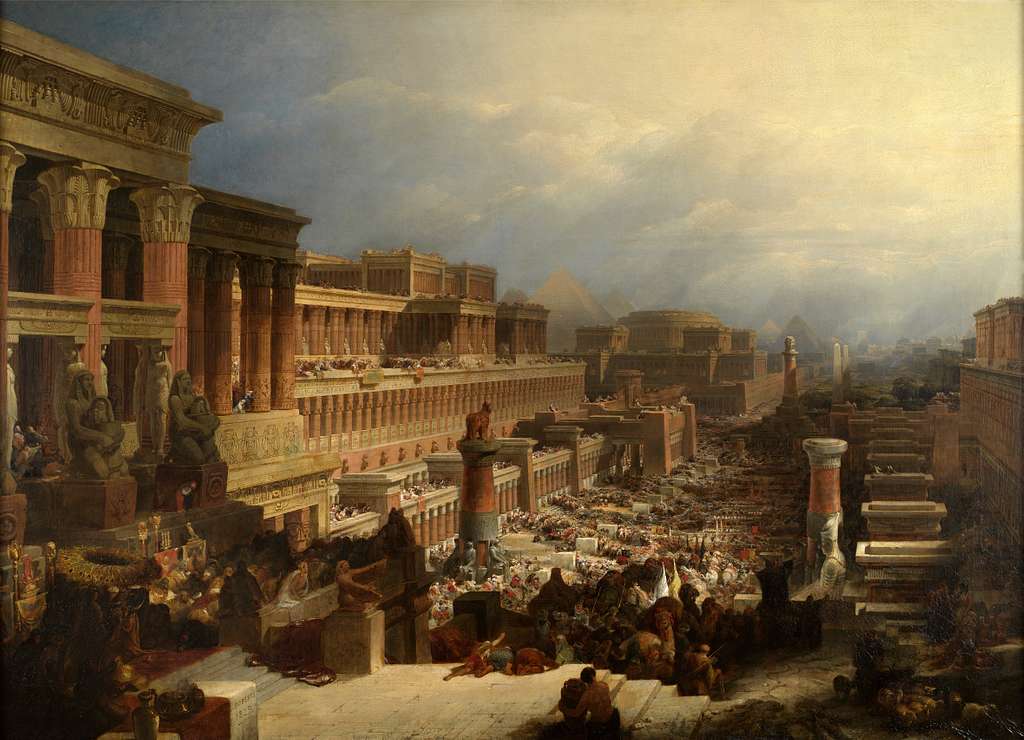
The Exodus has long lived in a charged space between sacred memory, literary tradition, and historical argument. What keeps the debate alive is not a single dramatic artifact, but a growing cluster of Egyptian texts, place names, religious traces, and landscape studies that continue to overlap with parts of the biblical story.
That overlap still falls short of proof. Yet the cumulative picture has become harder to dismiss as a simple coincidence, especially when Egyptian sources describe unrest, border zones, forced labor regions, and departures from the eastern frontier in ways that sound strikingly familiar.
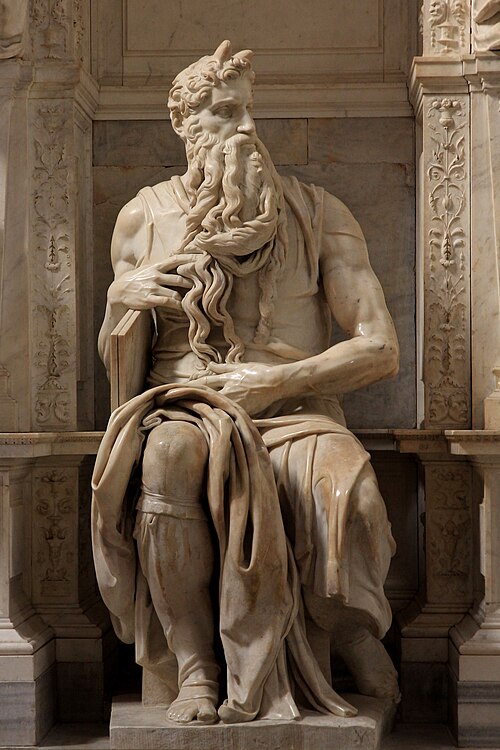
1. An Egyptian writer preserved a story with a Moses-like figure
One of the most discussed parallels comes from Manetho, an Egyptian historian whose work survives through later quotation by Josephus. In that account, a marginalized group rises in Egypt, clashes with the ruling power, allies with outsiders from Canaan, and is led by a figure called Osarseph who later takes the name Moses.
The details do not match the biblical text neatly, and the tone is hostile rather than sympathetic. Even so, the pattern matters: internal unrest, fear of collaboration with external enemies, and a leader linked to the name Moses all show that Egyptian memory preserved traditions resembling an Exodus-shaped conflict.

2. The eastern frontier now looks more historically realistic
Recent study of Egypt’s northeastern border has strengthened one of the strongest background arguments for the Exodus tradition: the route itself makes geographic sense. The biblical “Red Sea” is more accurately tied to the “Sea of Reeds”, a term that fits the marshy lake system along Egypt’s eastern edge better than the open Red Sea familiar to modern readers.
That region was not empty terrain. It included lakes, canals, embankments, and forts that formed a serious border barrier. In that setting, a trapped population facing water in front and Egyptian power behind becomes far less abstract and far more rooted in actual topography.
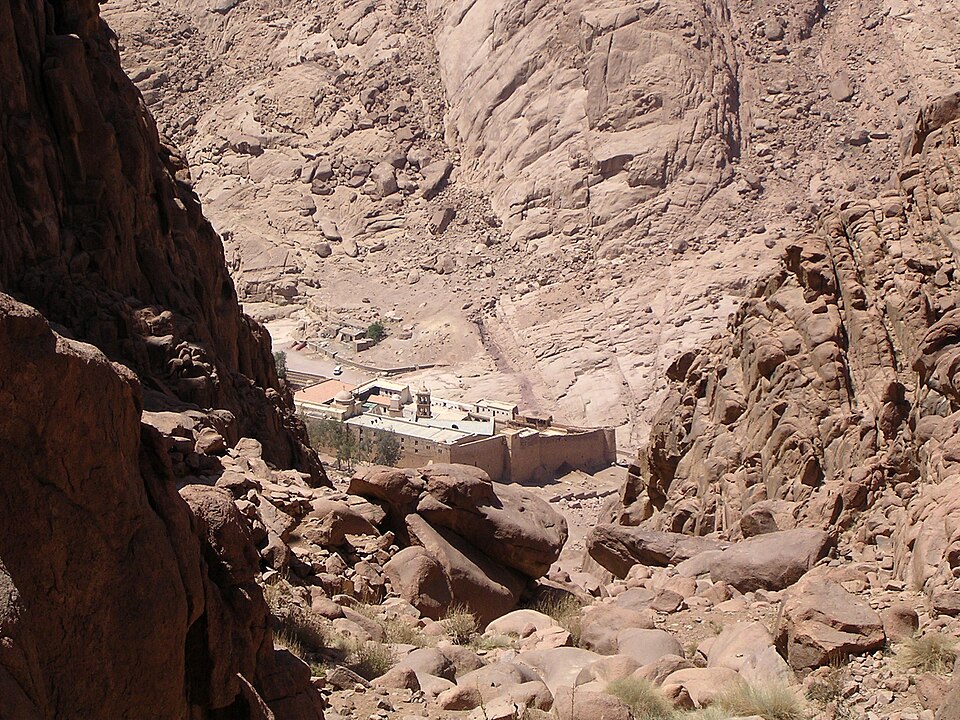
3. Sinai keeps yielding evidence of long human movement and state control
The Sinai Peninsula is central to Exodus memory, and archaeology there keeps underscoring how active and strategic the region was across millennia. A newly documented South Sinai plateau preserves thousands of years of human activity, from prehistoric rock art to later inscriptions and signs of repeated occupation.
That discovery does not verify the Exodus directly. What it does show is that Sinai was a lived-in, traveled, reused corridor rather than an empty blank between Egypt and Canaan. For a story built around escape, passage, wilderness, and border crossing, that matters.
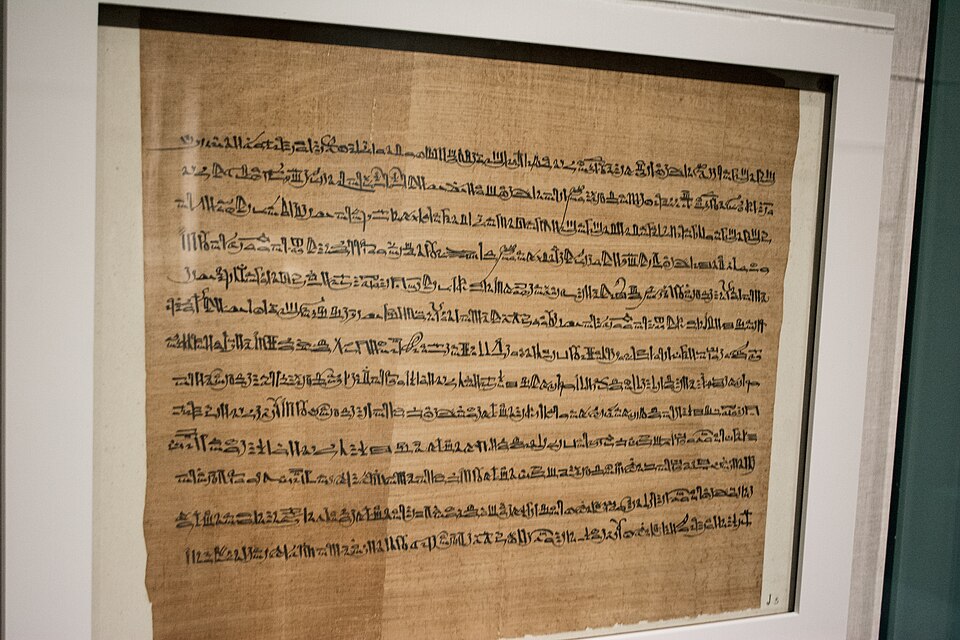
4. Egyptian records describe foreigners disrupting the land
The Great Harris Papyrus has drawn attention because it describes a turbulent period after Queen Tausret, when a foreign-linked figure seized influence, ignored Egyptian religious order, and was later defeated as the land was restored. The text is not the Book of Exodus in Egyptian dress, but it reflects a recurring Egyptian anxiety about outsiders, disorder, and reversal.
That pattern echoes the larger biblical setting. Egypt appears not as a static empire, but as a state vulnerable to internal fracture, contested leadership, and challenges from groups connected to the Levant.
5. A monument’s language of flight sounds uncannily familiar
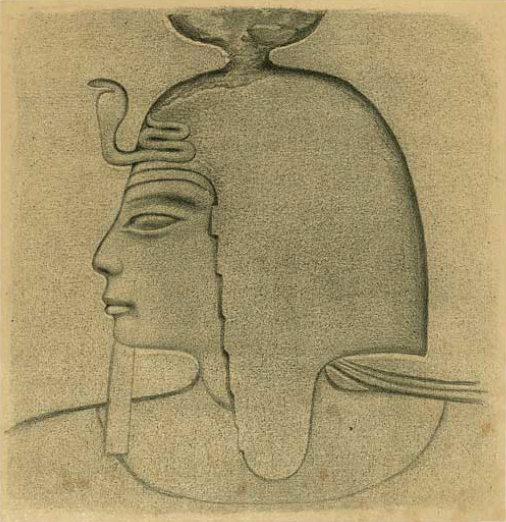
Setnakhte’s inscription at Elephantine describes enemies fleeing “as the swallows depart before the hawk.” The image is poetic, but it also captures panic, speed, and expulsion. In Exodus, departure is likewise remembered as hurried, pressured, and accompanied by valuables handed over before the fleeing group disappears from Egyptian reach.
Shared imagery is not the same as shared event. Still, when Egyptian royal language and biblical memory both frame departure through fear, pursuit, and release, the resemblance adds another tessera to the broader mosaic.
6. The Levites may preserve the oldest Egyptian connection
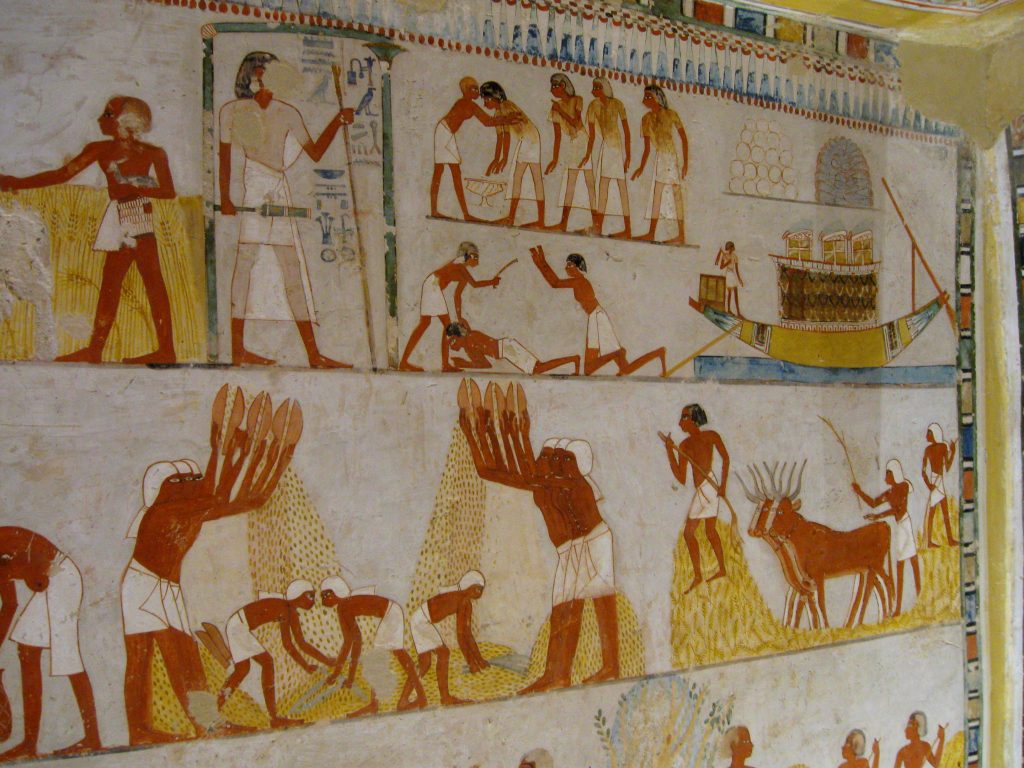
One of the more influential scholarly ideas is that the Exodus tradition may have begun with a smaller group rather than an entire nation. The Levites stand out because several names associated with them, including Moses, Phinehas, and Hophni, have Egyptian linguistic connections, and some of their ritual concerns look unusually close to Egyptian practice.
This helps explain why the memory feels both specific and portable. A smaller group with direct experience in Egypt could have carried that memory into the highlands of Canaan, where it later became part of Israel’s larger national story.

7. Israelite worship shows selective Egyptian fingerprints
The biblical material linked most strongly with priestly and Levitical traditions includes details that many scholars see as culturally significant: circumcision, concern for resident foreigners, and sanctuary design features that have been compared to Egyptian models. These details are not spread evenly across all biblical writings. That unevenness is revealing. It suggests Egyptian influence may have entered Israelite religion through a particular community, not through every tribe at once.

8. Sinai mining zones reveal why the region mattered to Egypt
Archaeologists recently uncovered a copper-smelting complex in South Sinai with furnaces, tools, storage vessels, and nearby watchpoints, offering evidence of an advanced industrial system tied to Egyptian administration. Sinai’s value was not symbolic. It was economic, strategic, and closely monitored.
That backdrop sharpens the Exodus setting. A departure through Sinai would have unfolded in a region already shaped by labor, extraction, surveillance, and state interest, not in an isolated wilderness detached from Egyptian power.
9. Rock carvings point to an early Egyptian colonial footprint in Sinai
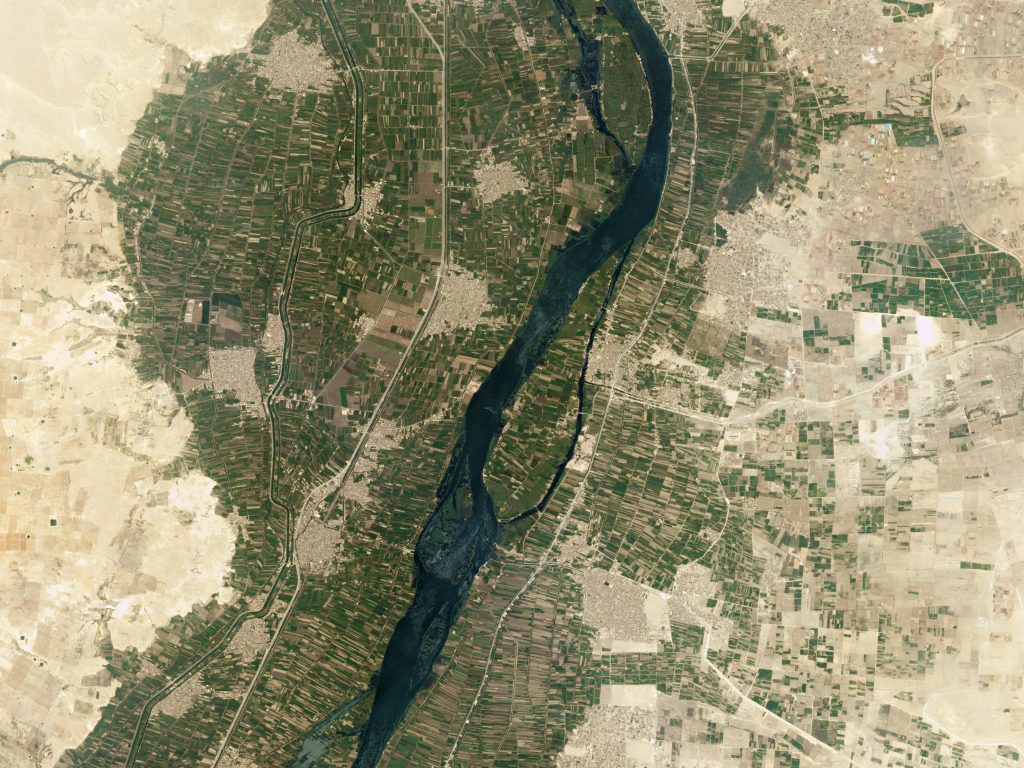
Another recent discovery in Wadi Khamila includes a carving interpreted as showing Egypt’s conquest and subjugation of the locals. The scene, dated to roughly 5,000 years ago, pushes Egyptian presence in the region deep into the past and supports the idea of a long-standing colonial network in southwestern Sinai.
This kind of evidence broadens the frame around Exodus traditions. It shows that Egyptian domination of Sinai was not temporary or incidental. It was part of a much older pattern of control, movement, and projection of power beyond the Nile Valley.
No single inscription settles the Exodus question. The argument remains cumulative, built from fragments: a hostile Egyptian memory, a reedy frontier, border fortresses, priestly customs, strategic mining zones, and Sinai landscapes marked by repeated passage. For readers of both archaeology and scripture, that may be the real shift. The Exodus no longer rests only in the realm of belief or disbelief; it increasingly sits inside a more textured ancient world where memory, politics, religion, and geography intersect.

