

The name “Jesus” feels fixed in English, yet historians and language scholars have long pointed to an older form: Yeshua. The shift is not a discovery that changes the figure at the center of Christianity. It is a window into how names travel across centuries, alphabets, and cultures. That journey also explains why the debate keeps returning. For some readers, the issue is about accuracy. For others, it touches identity, scripture, and the Jewish setting of the New Testament.

1. Yeshua is the Hebrew and Aramaic form tied to Jesus
Scholars commonly identify Yeshua as the name used in first-century Judea. It is a shortened form of Yehoshua, the same name that becomes Joshua in English. That is why Jesus and Joshua are linked linguistically, even though English readers usually experience them as separate names. The meaning attached to Yeshua is also central: “the Lord is salvation” or “Yahweh saves.” That meaning remains intact even when the name appears in different languages and spellings.

2. The name changed because Greek could not fully reproduce Hebrew sounds
As the gospel spread beyond Hebrew and Aramaic speaking communities, the name had to be rendered in Greek. Greek lacked an exact “sh” sound, so Yeshua moved toward Iesous. It also favored masculine names ending differently, which helped shape the final form. This was not unusual. Ancient names were routinely adapted to fit the sound system of a new language. In this case, the Septuagint rendered Yehoshua as Iēsoûs, creating the form that later passed into Latin and then English.

3. Latin and English completed the long shift to “Jesus”
Once Greek gave way to Latin in much of the Western Church, Iesous became Iesus. English later inherited that form, and over time pronunciation changed again. The letter J itself emerged as a distinct character much later than the earliest biblical languages. That detail often drives online arguments, but it mainly shows how writing systems evolve. English speakers also say Jerusalem, Judah, and John with J, even though those ancient forms did not begin with the modern English sound.

4. “Jesus” and “Joshua” come from the same name family
This is one of the least expected parts of the discussion. The English names Jesus and Joshua both trace back to the same Hebrew root. Different translation paths produced different English outcomes. That is why some older English Bible passages can surprise modern readers. In a few translations, the Greek form behind the text can point to the Old Testament figure Joshua while appearing in a form that looks unfamiliar to current audiences.

5. The debate is also about Jesus’ Jewish setting
Yeshua places Jesus more visibly inside the linguistic world of first-century Jewish life. Reference works on language in Roman Judea describe a multilingual environment in which Hebrew, Aramaic, and Greek all had roles. Some scholars argue strongly that Jesus likely spoke or understood Hebrew, Aramaic, and Greek, even as debate continues over which language dominated daily speech. That context matters because names are never only labels. They carry geography, community, and memory with them.

6. “Christ” was not a last name
The second half of the familiar phrase “Jesus Christ” is not a family surname. It is a title. Derived from the Greek Christos and linked to the Hebrew Mashiach, it means “the anointed one” or “Messiah.” So the expression many English speakers know by heart is closer in sense to “Yeshua the Messiah.” That small shift makes the phrase sound less like a modern name and more like an ancient declaration.
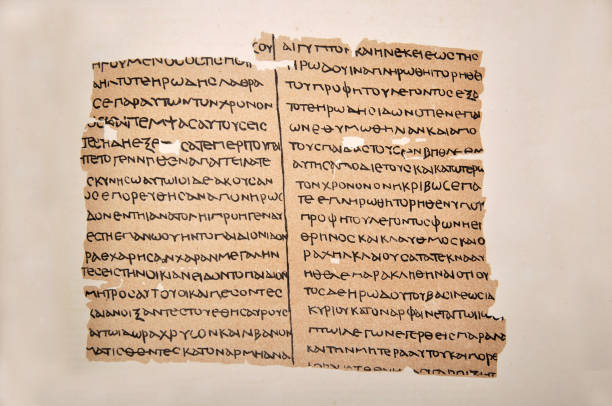
7. Early manuscripts show how flexible sacred names already were
The oldest Christian writings do not suggest a single approved pronunciation for all believers. Greek New Testament manuscripts used Greek forms and even abbreviated sacred names. That matters because it shows the earliest copyists were already working through translation, convention, and reverence at the same time. In other words, linguistic adaptation was present near the beginning, not added much later by modern translators.

8. The form “Yahshua” lacks the same historical support
Another branch of the naming debate argues for “Yahshua.” But historical discussions of Hebrew inscriptions and manuscript traditions do not give that form the same footing as Yeshua. One survey of the controversy notes that the name “Yahshua” exists nowhere in the Bible or the Hebrew historic record. That distinction matters because not every proposed “original” form rests on equal evidence. Yeshua does.

9. The larger point is about translation, not a different person
The strongest historical takeaway is simple: Jesus is the English form that developed through Greek and Latin from Yeshua. The name changed shape as Christianity moved across languages, but the referent did not. As one widely cited line from Shakespeare puts it, “That which we call a rose By any other name would smell as sweet.”
That idea helps explain why the argument has endured. Names feel intimate. They also feel final. But history shows that names, especially famous ones, rarely stay frozen when they cross borders and centuries. For modern readers, Yeshua does not replace Jesus so much as illuminate him. It restores the sound of a first-century Jewish name behind a familiar English one, and it shows how faith traditions preserve identity even while language keeps moving.

