

Franchise departures do not always begin with a box-office stumble or a contract fight. Sometimes the rupture starts earlier, in a pitch meeting, a casting choice, a poster layout, or a pay offer that reveals who gets treated as central and who gets treated as replaceable. That tension has only become more visible as the industry faces a measurable disconnect: films with more representative casts have continued to perform strongly, even as opportunities for people of color fell across the board in 2024. These exits, spread across film, television, and animation, show how marketing and representation can become inseparable.

1. Thandiwe Newton and a “Charlie’s Angels” role built on stereotype
Thandiwe Newton walked away from negotiations for the 2000 “Charlie’s Angels” reboot after a studio meeting that she later described as racially offensive. The issue was not simply wardrobe or tone. It was the larger framing of the character, including a sexualized presentation and a concept that leaned on caricature. Her exit remains a vivid example of how the marketing logic around a role can shape everything before filming even begins. When identity is packaged as a gimmick, the problem is already built into the project’s foundation.

2. Ed Skrein stepping aside from “Hellboy” over whitewashing
Ed Skrein’s casting as Major Ben Daimio in 2019’s “Hellboy” sparked immediate criticism because the comic-book character is Japanese. Rather than defend the decision, Skrein left the film, making the casting itself the issue instead of waiting for the backlash to fade. The role was later recast with Daniel Dae Kim. The move turned a familiar Hollywood pattern into a visible correction, showing that public-facing authenticity loses credibility when the casting choice says otherwise.

3. John Boyega and the shrinking of Finn in “Star Wars” marketing
John Boyega’s split with the “Star Wars” franchise became one of the clearest examples of the gap between launch marketing and long-term support. He was introduced as a major figure in the sequel era, but later criticized both the creative handling of Finn and the publicity choices surrounding him The poster controversy became shorthand for that frustration, especially after his smaller appearance on a Chinese promotional poster. Boyega’s broader point was that a franchise cannot spotlight a performer in the campaign and then retreat when racist backlash arrives. The complaint was about protection, authorship, and follow-through, not only a single image.
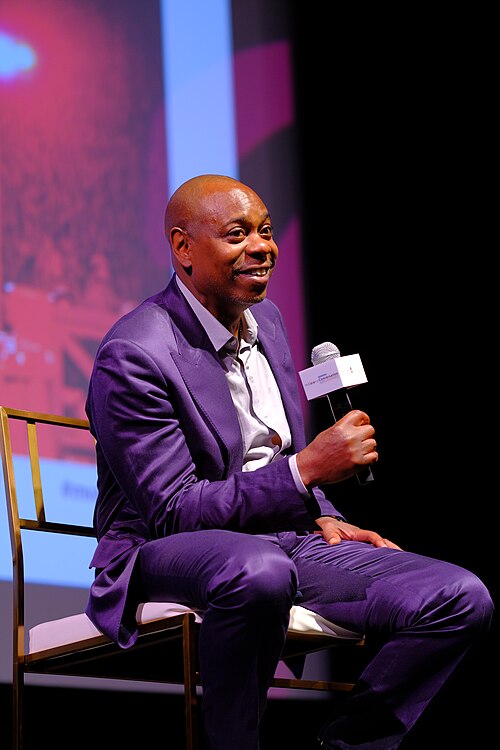
4. Dave Chappelle leaving “Chappelle’s Show” at its peak
Dave Chappelle’s departure from “Chappelle’s Show” carried unusual force because it came with a reported $50 million deal still on the table. He described reaching a point where the material no longer felt like satire landing as satire. In his account, the work risked reinforcing the very stereotypes it aimed to expose. That made the exit less about quitting success and more about refusing to let a wildly popular machine redefine the meaning of the work.

5. Hank Azaria ending his long run as Apu
After decades voicing Apu on “The Simpsons,” Hank Azaria stepped away as criticism of the character’s stereotyping intensified. The conversation had already shifted beyond nostalgia and into the lived impact of the portrayal. In a later discussion, Azaria told Hari Kondabolu, “I was really freaked out”. His departure became part of a broader animation reckoning over whether voice acting could still be treated as separate from representation when the character itself carried a long cultural shadow.

6. Jenny Slate leaving “Big Mouth” to open space for a Black actor
Jenny Slate asked to be replaced as Missy on “Big Mouth,” saying the biracial character should be voiced by a Black actor. The significance of the move was not only personal accountability. It also exposed how long white-by-default casting decisions had been treated as neutral. Her departure landed during a larger shift in animation, when several productions moved quickly to rethink who gets to embody non-white characters, even in voice roles.

7. Kristen Bell stepping away from “Central Park”
Kristen Bell exited the role of Molly on Apple TV+’s “Central Park” after the production decided the biracial character should be recast. Bell framed the issue directly, writing, “Casting a mixed race character w/a white actress undermines the specificity of the mixed race & Black American experience.” That statement helped move voice casting away from the idea that performance alone resolves representation. It made specificity the central question.

8. Regé-Jean Page and the limits of “legacy” casting
Regé-Jean Page addressed reports that he lost out on a role in “Krypton” after feedback tied the decision to race. The often-cited explanation was that Superman could not have a Black grandfather, a line of reasoning that turned franchise continuity into a gatekeeping tool. Page later wrote, “Hearing about these conversations hurts no less now than it did back then Still we do the work. We still fly.” The episode showed how “canon” can be invoked selectively when the real question is who gets imagined inside a legacy property.

9. Daniel Dae Kim and Grace Park leaving “Hawaii Five-0” over parity
Daniel Dae Kim and Grace Park exited “Hawaii Five-0” after contract talks centered on equal pay with white co-stars. Their departures widened the conversation beyond casting and publicity into compensation, where a franchise’s values become much harder to obscure. Kim wrote that “the path to equality is rarely easy.” The dispute was especially telling because ensemble marketing often sells every major cast member as essential, while the business terms behind the scenes can tell a different story.
Taken together, these exits are not one story repeated nine times. They touch different pressure points: stereotyping, whitewashing, poster design, voice casting, franchise lore, and salary structure. They also sit against a broader industry contradiction. According to the latest Hollywood Diversity Report, films that better reflected a diverse audience outperformed less-diverse counterparts domestically and globally. The message in these departures is not only cultural. It is structural, and the audience has already made it visible.

