
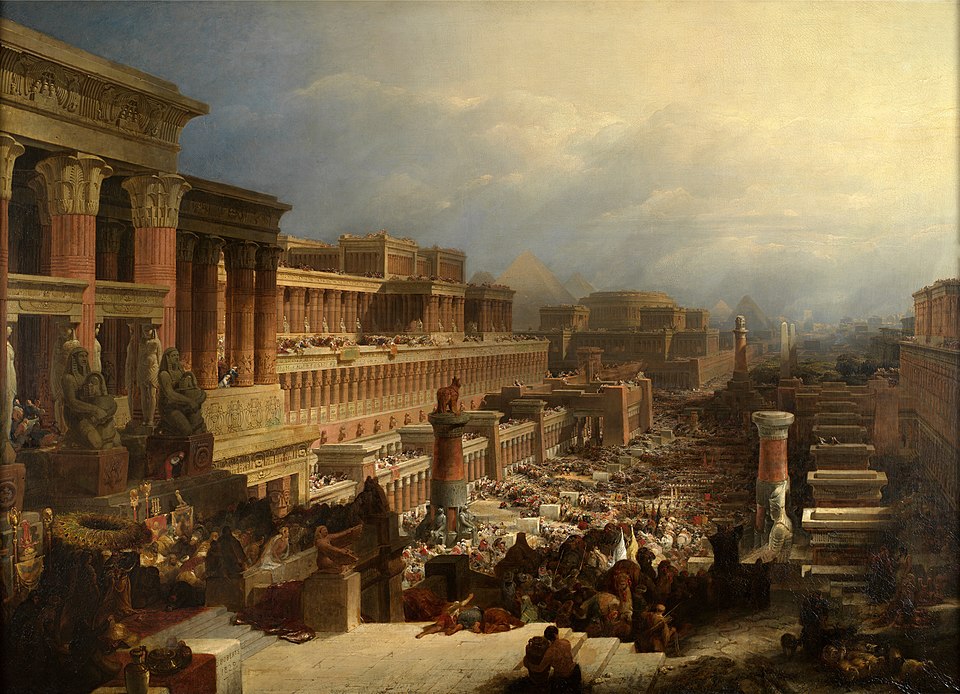
Few biblical questions draw more public fascination than the Exodus, yet archaeology rarely offers a single dramatic answer. Instead, it presents fragments: a disputed inscription, traces of Semitic workers in Egypt, an Egyptian monument naming Israel, and long-running arguments over where Sinai might have been. Taken together, those fragments do not settle the story of Moses. They do, however, show why the Exodus remains one of the most contested intersections of faith, memory, and material evidence.
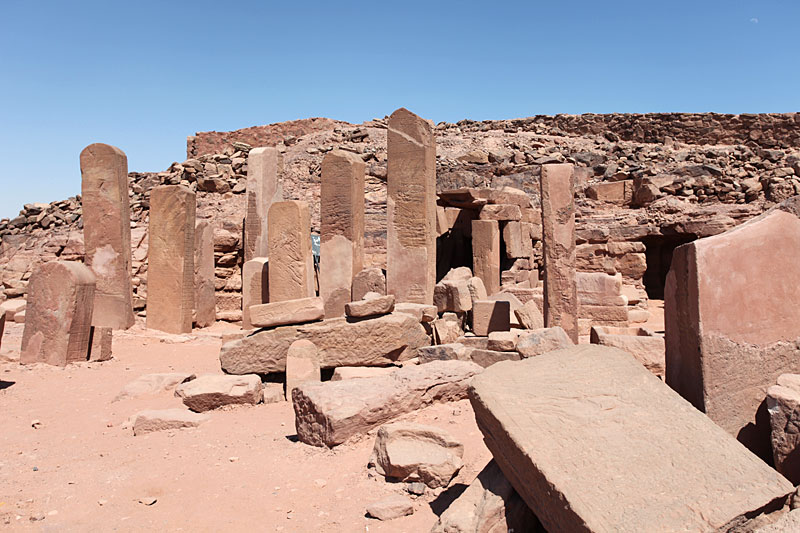
1. A Sinai inscription has reopened the Moses question
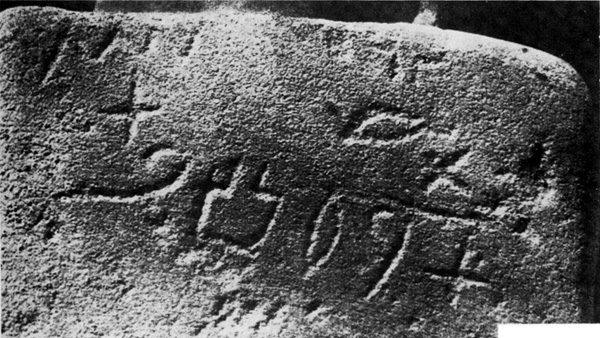
At the turquoise mines of Serabit el-Khadim in Egypt’s Sinai Peninsula, researcher Michael Bar-Ron studied Proto-Sinaitic inscriptions through high-resolution photography and 3D scans. His proposed reading of one phrase as “This is from Moses” has attracted attention because it would connect a biblical name to a site tied to Semitic laborers in Egypt’s orbit.
Bar-Ron stressed caution, saying, “I was very strict about looking for the name ‘Moses’ or any other that might be sensationalist-sounding.” Support also came from Dr. Pieter van der Veen, who said, “You’re absolutely correct, I read this too, it is not imagined!”
The excitement has been matched by criticism. Egyptologist Thomas Schneider rejected the claim, saying, “The claims are entirely unproven and misleading,” underscoring how much of the debate rests on the difficulty of reading damaged early alphabetic signs.
2. The script itself is part of the story
The inscription matters not only because of the name attached to it, but because it belongs to the earliest known alphabetic tradition. Proto-Sinaitic marks a major shift away from complex hieroglyphic systems toward a smaller set of signs that ordinary workers could use more flexibly. That change altered far more than literacy. It created a practical bridge between spoken language and durable recordkeeping, making it possible for short messages, dedications, and religious expressions to be carved by people outside elite scribal circles.
The script’s stripped-down structure also makes modern decipherment difficult: there are no vowels, no consistent word spacing, and several signs remain uncertain. Every proposed translation therefore carries a degree of risk, especially when a reading appears to echo a famous biblical figure.
3. The mine inscriptions hint at religious change, not just labor records
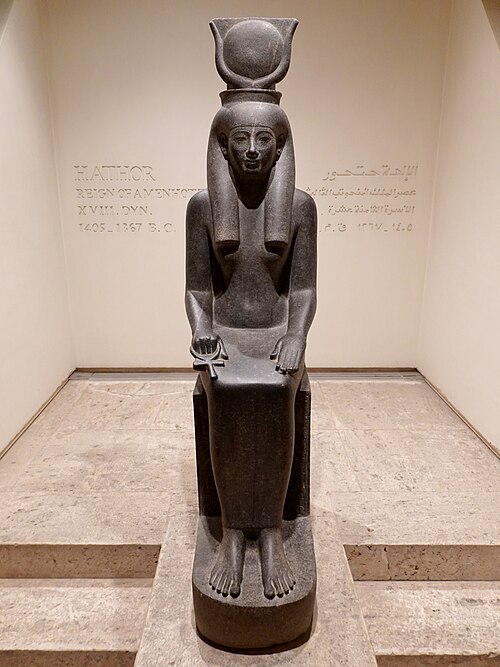
Some inscriptions from Serabit el-Khadim appear to preserve tension between devotion to Egyptian-associated deities and loyalty to El, a deity name linked to early West Semitic religion. Bar-Ron described signs of overwriting and alteration in texts connected to Baʿalat, a title associated with Hathor at the mining site.
That makes the location more than an industrial outpost. It becomes a window into a mixed community where language, identity, and worship were still in motion. The Exodus tradition is often read as a liberation story, but archaeology at sites like this also raises a quieter question: how did groups living under Egyptian power negotiate belief before any later national story took shape?

4. Archaeology has strengthened the case for Semitic communities in Egypt
One of the more durable points in Exodus research is not a single artifact but a wider pattern. Scholars broadly accept that Semitic-speaking populations lived in and moved through Egypt for centuries. That background gives the Exodus tradition a historical setting, even where direct proof for the biblical narrative remains elusive. Richard Elliott Friedman has argued that the strongest historical core may involve a smaller group, particularly Levites, rather than the later image of a vast migrating population.
He points to Egyptian-linked names among Levites, including Moses, and to cultural features such as tabernacle design and circumcision traditions that preserve Egyptian connections. In that reading, the memory of departure from Egypt was not invented from nothing, but carried by a subgroup whose experience later became central to Israel’s identity.
5. An Egyptian monument places Israel in the picture early
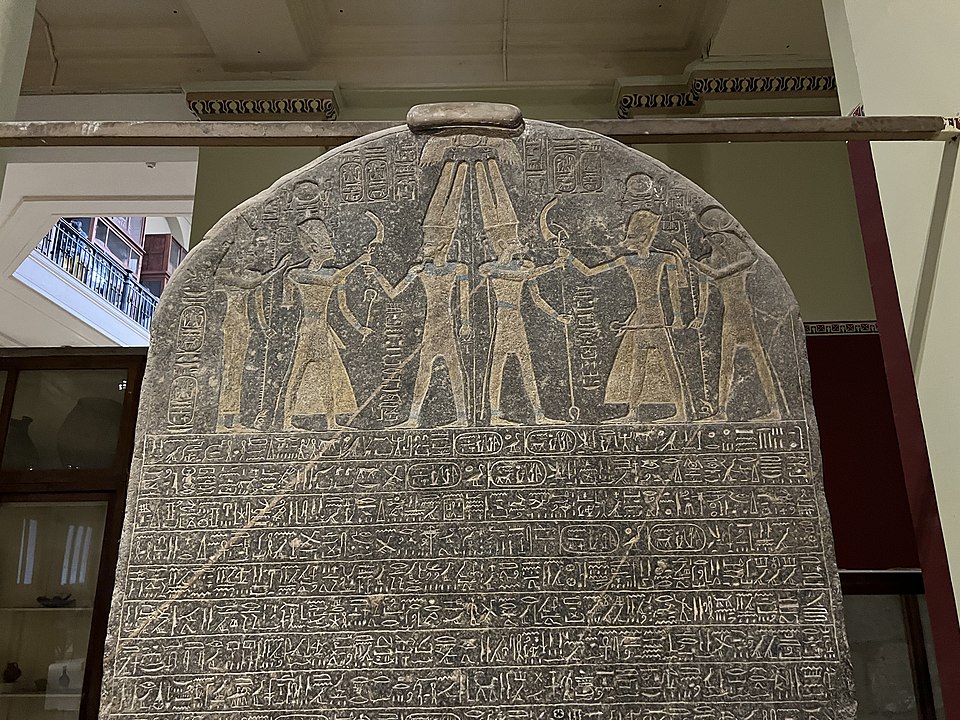
Any discussion of Exodus archaeology eventually reaches the Merneptah Stele, a late-13th-century BCE Egyptian inscription that most scholars read as the earliest textual reference to Israel outside the Bible. It does not mention Moses or an exodus, but it does show that a people called Israel was known in Canaan by that period.

The wording is important. The determinatives used in the inscription suggest a people group rather than a city-state, which has led many scholars to see early Israel as a population not yet organized around an urban kingdom. That does not confirm the biblical storyline, but it does anchor Israel in the historical record and narrows the gap between text and archaeology.
6. Mount Sinai remains a debate with no consensus
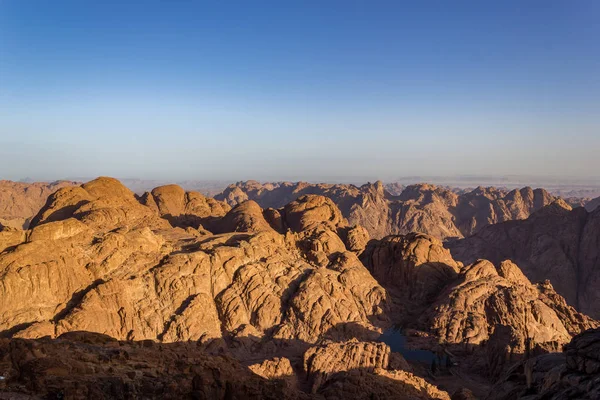
The search for Sinai has produced competing candidates rather than a settled map. Traditional identification with Jebel Musa dates to late antique Christian tradition, while other proposals place the mountain along the Trans-Sinai route, in the Negev, or even in northwest Arabia. Some researchers have argued for Gebel Khashm et-Tarif because it better matches certain biblical travel descriptions.
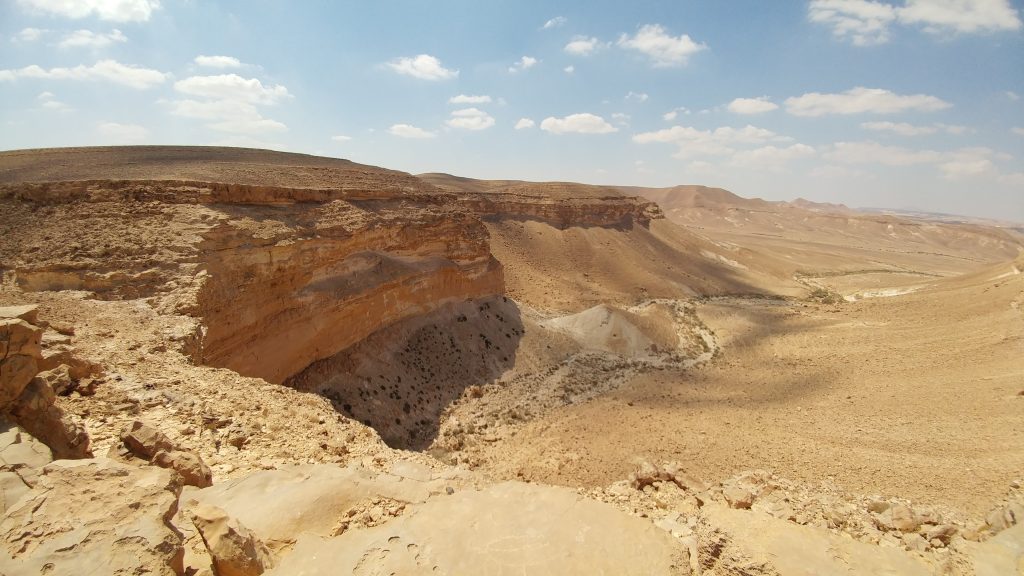
Others highlight Har Karkom in the Negev because of its dense ritual landscape, while the Midianite hypothesis continues to attract interest because Moses is linked in the biblical text to Midian and because northwest Arabia shows stronger Late Bronze Age activity than the traditional Sinai location. No proposed mountain has achieved broad scholarly agreement, which leaves Sinai as one of the largest unresolved pieces of the Exodus puzzle.
7. The biggest archaeological shift is away from all-or-nothing thinking
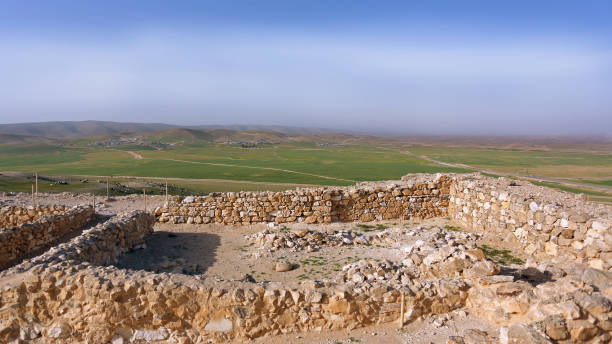
The older public argument often forced a choice between total proof and total fiction. Current discussion is more layered. A disputed Moses inscription may remain disputed. A mountain may remain unidentified. A large-scale migration may remain archaeologically unverified. Yet the wider record still matters: Semitic workers in Egyptian contexts, early alphabetic inscriptions in Sinai, evidence of religious blending and conflict, and an Egyptian text naming Israel in Canaan. None of that closes the case. All of it changes the terms of the debate.
The archaeological picture of the Exodus is no longer a search for one final object that makes every question disappear. It is a reconstruction built from partial clues, where language, memory, migration, and belief intersect. That is precisely why the Moses debate endures. The stones do not tell a simple story, but they do show that the world behind Exodus was more historically textured than a choice between certainty and legend ever allowed.

