
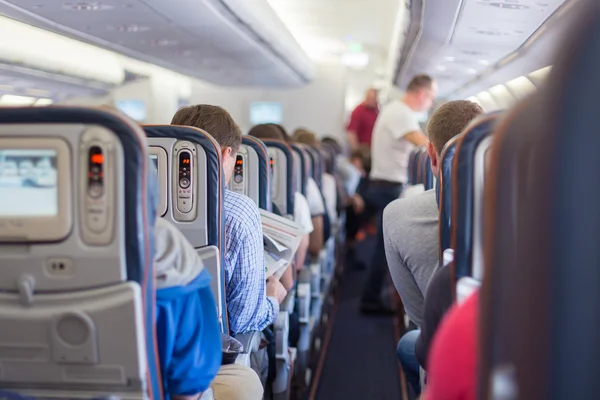
Air travel has a way of blurring the line between courtesy and disruption. In a packed cabin, many passenger habits look thoughtful on the surface but create delays, safety issues, or extra work for the crew managing a tightly choreographed space. That is why some of the behaviors flight attendants dislike most are not openly rude. They are the well-meant gestures that interfere with boarding, service, and the basic flow of the flight.
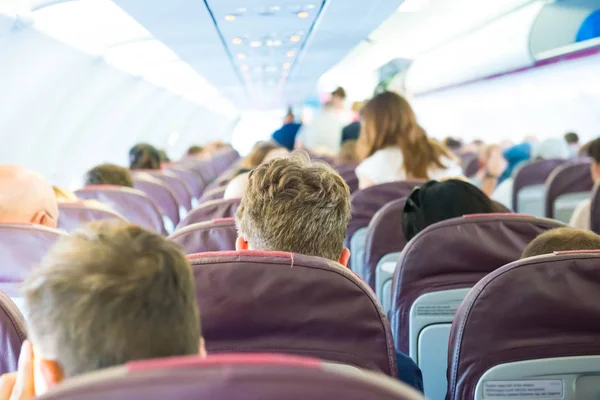
1. Policing other passengers
Correcting a stranger over a seatbelt, a mask, a bag, or a boarding rule can quickly turn into a confrontation. Cabin crew are the people trained to handle compliance issues, and stepping in as an unofficial enforcer often raises tension in a confined space where there is nowhere to walk away. A quieter approach helps more. If a passenger is creating a genuine problem, informing a crew member discreetly lets them handle it through procedure instead of public conflict.
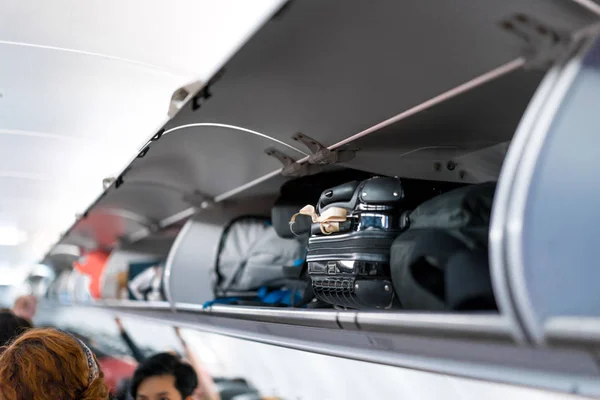
2. Reorganizing overhead bins that are not theirs
Few things slow boarding faster than passengers deciding to reshuffle other people’s belongings. Moving someone else’s backpack, pulling out a personal item, or rotating bags to “help” can trigger confusion and arguments while the aisle backs up behind them. Etiquette guidance around boarding consistently stresses that overhead bins are shared space, not a zone for self-appointed traffic control. The cleaner habit is to place one’s own larger bag efficiently, keep smaller items under the seat when required, and let the crew handle any last-minute bin adjustments.
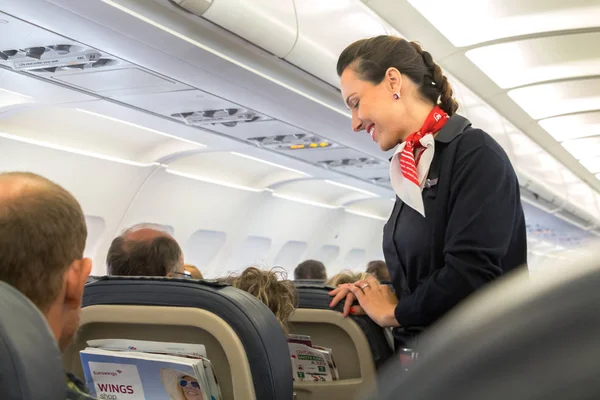
3. Touching a flight attendant to get attention
A tap on the arm may seem gentler than calling out, but many crew members regard it as intrusive. In a workplace built around safety checks, carts, hot drinks, and narrow aisles, physical contact is rarely necessary. A simple “Excuse me,” eye contact, or the call button works better. Cabin crew are already scanning the cabin, and a verbal cue respects their space while still getting attention.
4. Requesting oversized water refills in the air
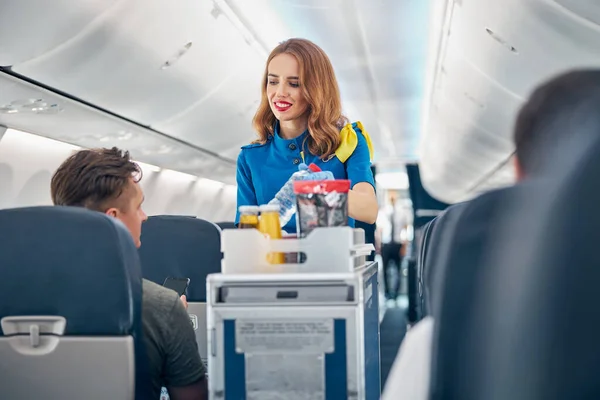
Bringing a refillable bottle is practical, but asking crew to fill a large bottle during service can strain limited onboard supplies. Aircraft do not operate like cafés with endless pitchers behind the counter, and service is designed around standard portions that can be delivered quickly across the cabin. Passengers who want a full bottle are usually better off filling it in the terminal before boarding and asking for a cup of water in flight. That keeps service moving and leaves enough for everyone else.
5. Reaching onto the drink cart
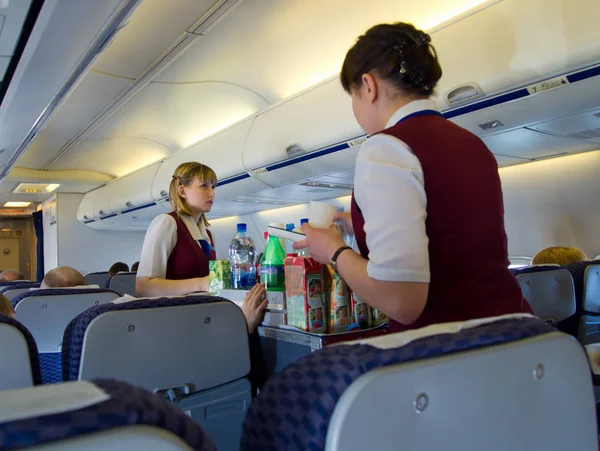
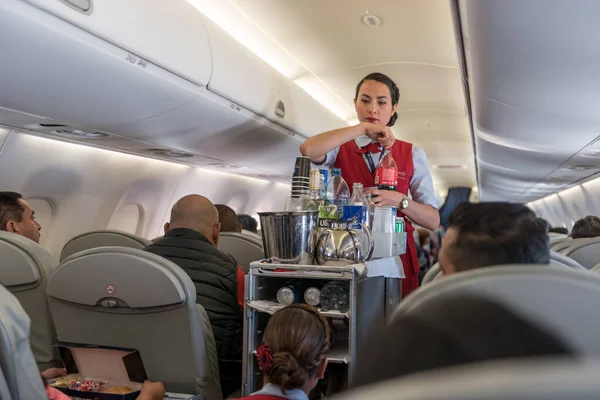
Grabbing a soda, napkin, or snack directly from the service cart may look efficient, but it interrupts a system the crew is using to move row by row. The cart is also one of the smallest workstations in commercial travel, and every unexpected reach-in forces the attendant to stop, reset, and check what was taken. That same logic applies to trash. Crew members have described piled-on cups and waste as a mess risk rather than a favor, especially when liquids spill or unpleasant items appear at the top of the cart.
6. Handing over diapers or other hazardous waste
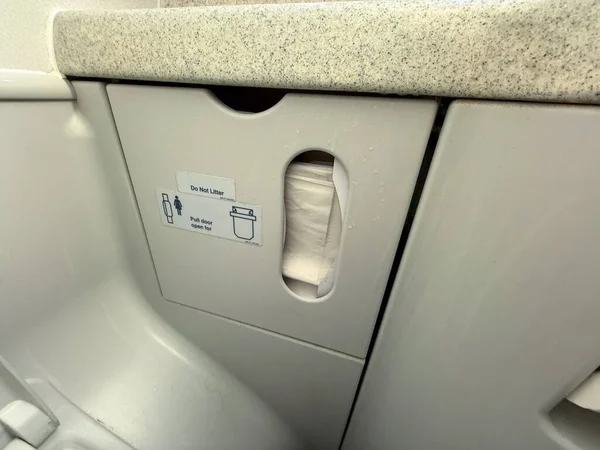
Used diapers, tissues with bodily fluids, and similar items are not ordinary trash. Passing them directly into a flight attendant’s hand puts the burden on crew to manage something that belongs in the lavatory bin or in properly contained storage until landing. Health etiquette matters even more in shared cabins. Advice for travelers increasingly includes containing illness, cleaning up after oneself, and avoiding contact-heavy habits in tight quarters where the floor is likely teeming with bacteria and viruses.
7. Overmanaging carry-ons while everyone waits
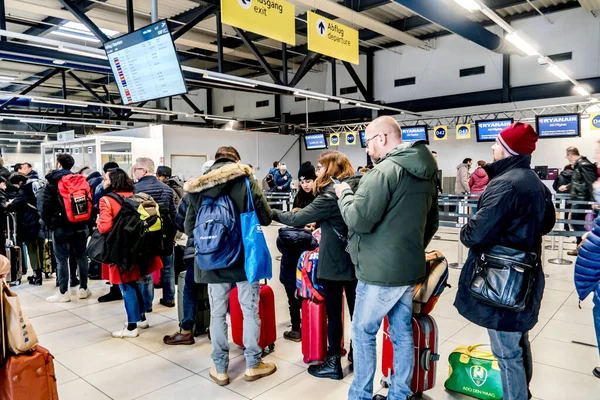
There is a difference between being organized and becoming the bottleneck. Passengers who stop in the aisle to perfect the angle of a suitcase, defend empty bin space, or repeatedly reopen a compartment can stall boarding for dozens of people behind them. The more useful move is simple: zip the bag, tuck in straps, know the seat number, and store the item quickly. Boarding experts regularly note that being prepared to board is one of the easiest ways to reduce friction for everyone.
8. Starting long conversations while crew are working
Some passengers read a friendly crew member as an invitation to chat through beverage service, paperwork, cabin checks, or galley prep. But flight attendants are not standing idle between tasks. Their customer-facing role often masks the fact that safety remains the primary job, a point crew members repeatedly emphasize in public discussions of passenger behavior. Short, warm exchanges are rarely the issue. The problem starts when a passenger uses the call bell to socialize, lingers in the galley, or assumes the crew needs company while they work.
9. Thanking the pilot and ignoring the cabin crew
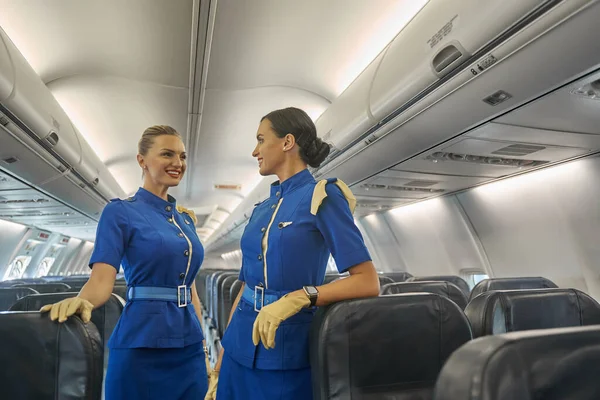
Many travelers make a point of greeting or thanking the pilot at the door, yet walk past the attendants who managed boarding, safety checks, service, and in-flight problems. It is a small social signal, but a noticeable one.
The more complete version of travel courtesy is brief and easy: thank both. In an environment where personal space is tight, delays are common, and patience wears thin quickly, simple acknowledgment often lands better than any performative helpfulness.
Modern flight etiquette is less about doing more and more about doing less at the right moment. A cabin runs smoothly when passengers protect shared space, let crew control the workflow, and save their energy for the habits that actually make travel easier. That usually means staying aware, staying patient, and remembering that on a plane, the most considerate passenger is often the one causing the least disruption.

