
Air travel has a way of making people try a little harder to be considerate. In a crowded cabin, though, the gestures that feel helpful on the ground can create delays, safety problems, or extra work once the doors close. Flight attendants repeatedly make the same point: good etiquette on a plane is usually less about doing more and more about staying within the crew’s rhythm. As Tania M., a flight attendant with nearly 20 years of experience, put it, “We certainly appreciate it when passengers go out of their way to be helpful. usually.”
1. Policing another passenger
Passengers sometimes step in when someone ignores a rule, whether it involves a seatbelt, a loud device, or another cabin instruction. It may feel civic-minded, but it can escalate a situation that crew members are trained to handle. A discreet word to a flight attendant is usually more useful than confronting a stranger in a confined space.
That matters most around safety instructions. Cabin crew are responsible for enforcement during turbulence, taxi, takeoff, and landing, and passengers arguing over safety instructions only adds friction in moments when attention needs to stay clear.
2. Rearranging overhead bins like a cabin volunteer
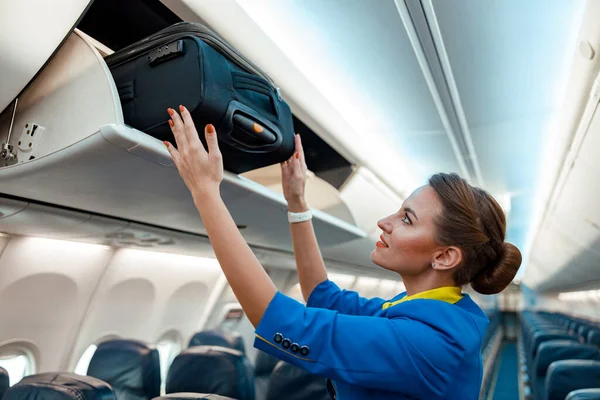
Shifting someone else’s suitcase, squeezing in an extra item, or relocating a bag without asking can cause confusion all the way through landing. People often need to find medication, valuables, or breakables exactly where they left them.
Flight attendants also note that bins are shared space, not private lockers. On many aircraft, the best orientation is wheels-first and vertically, but aircraft layouts vary. Stowing a bag quickly, following crew instructions, and leaving other people’s belongings alone keeps boarding moving.
3. Tapping a flight attendant to get attention
A light touch may seem gentler than calling out, but many crew members do not want to be touched by strangers during service. A simple “excuse me,” eye contact, or the call button is usually enough. That button is there to request assistance, although timing still matters. During turbulence, takeoff, or landing, crew may need to remain seated, so nonurgent requests can wait until the cabin is in a normal service phase.
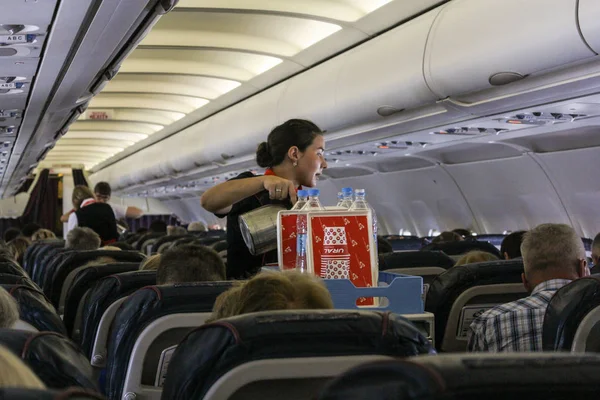
4. Asking for a giant water bottle refill
Bringing a reusable bottle is practical, but asking the crew to fill a large container can drain limited onboard supplies surprisingly fast. Tania M. explained it plainly: “We just can’t fill up all of your water bottles, or there wouldn’t be enough to offer.” The easier approach is to fill bottles in the terminal before boarding and accept a standard cup of water in flight when needed.
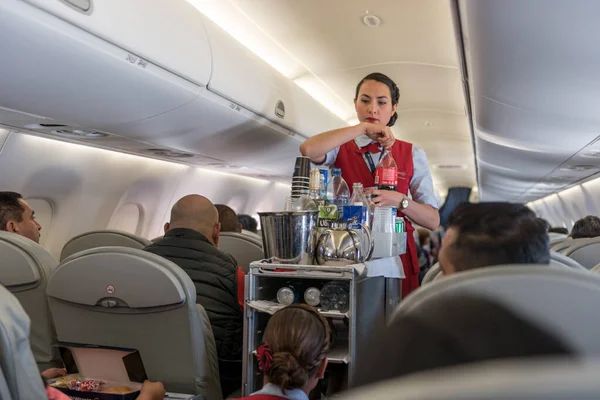
5. Reaching onto the drink cart
Taking a soda, napkin, or snack directly from the cart may look efficient from the passenger side. From the crew side, it interrupts an organized service pattern and puts hands into a very tight workspace. In an aisle already narrowed by carts, other timing issues pile up fast. Flight attendants also regularly ask travelers to avoid trying to squeeze past beverage carts for the lavatory because the carts take up nearly the entire aisle. Waiting a moment usually keeps the cabin calmer for everyone.
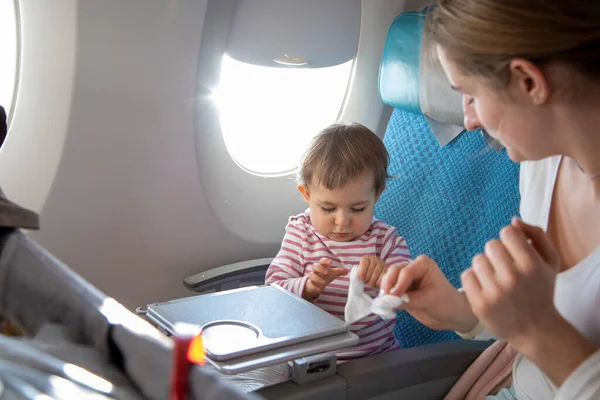
6. Handing over diapers, tissues, or other messy waste
Some passengers try to be polite by passing trash directly to a flight attendant, even when it includes used tissues, diapers, or anything involving bodily fluids. That turns a routine cleanup into hazardous handling. Items of that kind belong in the lavatory trash, not in a crew member’s hand during service. The same logic applies to personal items that need special disposal after landing.
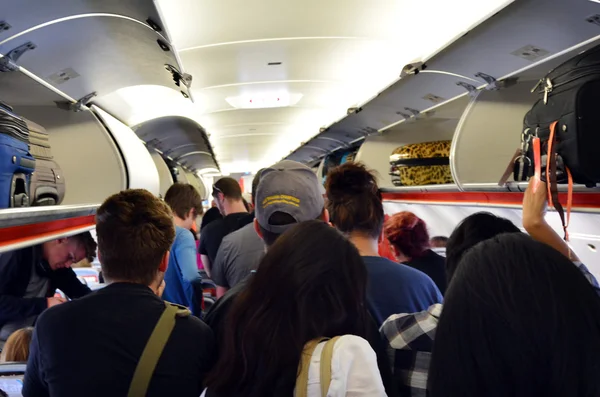
7. Fussing over bag placement for too long
Careful packing is smart. Hovering in the aisle while adjusting a carry-on over and over is not. Boarding slows down when one traveler treats the bin like a puzzle that must be solved perfectly while everyone else waits behind them.
Flight attendants consistently advise travelers to zip bags fully, tuck in straps, and be ready to lift their own belongings. They may guide placement, but many airlines do not want crew members lifting heavy bags because assisting with overhead bins is a common injury source for flight attendants.
8. Starting a chat in the middle of service
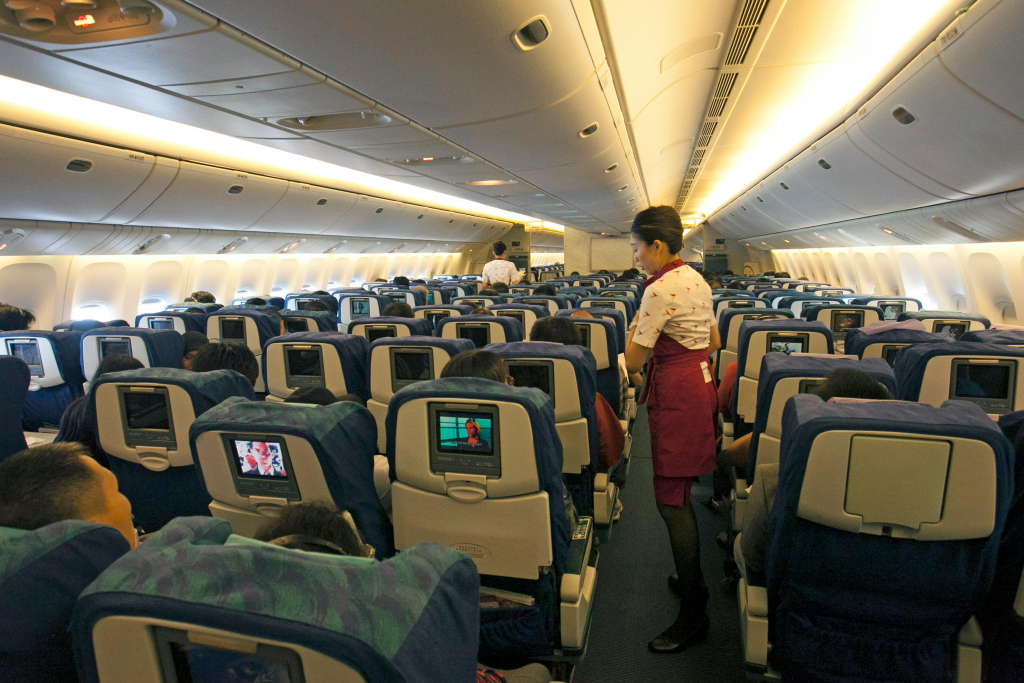
Friendly conversation is not the problem. Interrupting a busy cabin crew member for entertainment is. During a flight, attendants are juggling safety checks, paperwork, service tasks, and passenger needs that are not always visible from the seat. A brief exchange at a relaxed moment can be welcome. Summoning a crew member just to keep the conversation going can pull attention from work that affects the whole cabin.
9. Thanking the pilot and ignoring the cabin crew
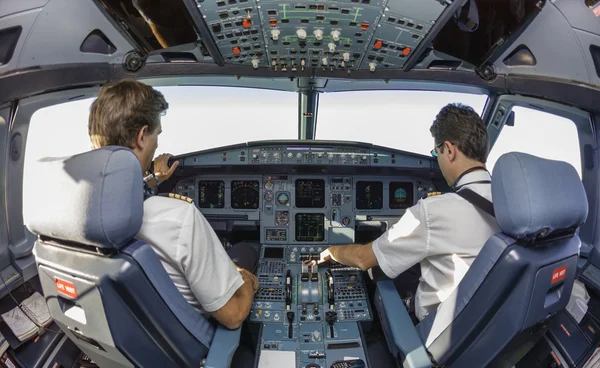
Passengers often notice the pilot at the front of the aircraft and say goodbye on the way out. Flight attendants notice when the people who handled boarding, service, and cabin safety are skipped entirely. It is a small moment, but it lands. A quick thank-you to the cabin crew costs nothing, slows no one down, and recognizes the people passengers interacted with most closely from gate to gate.
The pattern behind all of these habits is simple: what looks extra courteous in the air can be less helpful than basic awareness. Planes reward efficiency, personal space, and respect for shared systems. The smoothest travelers are rarely the ones making the biggest gestures. They are usually the ones who let the crew lead.

