
Many churches say questions are welcome. In one sense, that is true. Christian faith has long made room for lament, confusion, and hard inquiry, and Scripture itself preserves voices that ask painful things. But worship services are not the same as counseling sessions, doctrinal classes, or disciplinary meetings. Some questions are not wrong because they are too honest. They become difficult because they press for private judgments, demand instant rulings, or flatten complex theology into a public soundbite.
1. “Why won’t the church address this political issue from the front?”
This question often sounds like a plea for moral clarity, but in a public service it can force clergy into territory many churches intentionally avoid. In the United States, churches with tax-exempt status must be careful not to cross into political campaign intervention, and even issue-based language can become contentious when it sounds like partisan alignment. The deeper tension is pastoral as much as legal. A prayer in worship is meant to gather a congregation before God, not test whether the room shares the same political instincts. Churches may still teach moral responsibility and public ethics, but many leaders prefer to do that in settings where context, nuance, and follow-up are possible.
2. “Can someone perform an exorcism right now?”
Few church questions escalate a room faster. In traditions that practice formal exorcism, the act is not treated as spontaneous spiritual theater. The Catholic Church, for example, restricts solemn exorcism under Canon 1172, requiring express permission from the local bishop. That structure exists to prevent panic, abuse, and confusion. A public request can pressure a priest or minister to respond to a dramatic situation without discernment, medical evaluation, or the safeguards their tradition requires. The question is not merely awkward; it asks a leader to bypass process in front of a crowd.

3. “Can a relative be anointed even if the illness is not serious?”
Questions about healing rites often come from love and fear. Even so, some sacramental acts carry specific meanings that churches do not want blurred by public improvisation. In Catholic teaching, Anointing of the Sick is connected to serious illness, frailty, or the burdens of advanced age, not simply any moment of family distress. When such a request is made publicly, the minister may have to deny it in a way that feels personal. That is one reason many churches handle these requests privately, where they can ask pastoral questions without turning the sacrament into a general gesture of reassurance.

4. “Can communion be refused over someone’s lifestyle?”
This question rarely stays theoretical for long. Everyone in the room senses that a real person may be hiding behind it. That is why churches with formal communion discipline usually avoid discussing it in the abstract during worship. In Catholic canon law, Canon 915 addresses situations involving withholding communion, but the Church has repeatedly treated such matters as pastoral judgments, not public spectacle. Asked aloud, the question can invite gossip, imply moral verdicts, and turn the altar into a stage for social sorting.
5. “Why has a church leader not been removed after complaints?”
Some questions deserve answers, but not every answer can be given in a sanctuary microphone moment. Church discipline, investigations, documentation, and review procedures often involve privacy, witness protection, and due process. A worship service is usually the least suitable place to press for details. This does not make the issue small. It means public accountability and public disclosure are not always identical. A congregation may rightly want transparency, yet churches also face legal, pastoral, and ethical boundaries when allegations are under review. Asking in the middle of worship can corner leaders into saying too little to satisfy anyone or too much to protect the process.

6. “Is this doctrine required, or can believers disagree?”
This sounds like a simple request for clarification, but it can expose one of the oldest tensions in church life: which teachings define the faith, and which belong to open debate. Many traditions do make distinctions between core doctrines and secondary matters. The problem is that worship services are not usually built to sort that out in real time. Writers on doubt and discipleship have argued that believers need honest spaces for hard questions, not clichés.
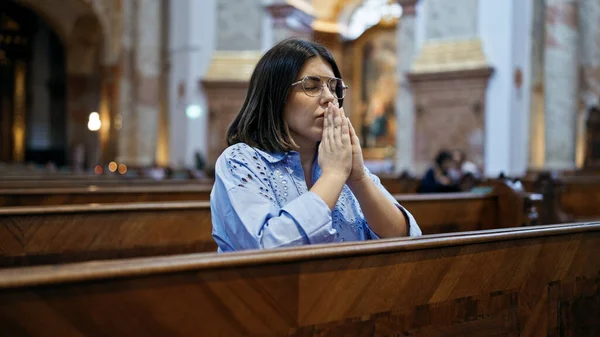
One reason churches stumble here is that a deep question gets asked in the one setting least able to give a deep answer. As one reflection on doubt observed, “have mercy on some who are doubting” remains a neglected command, and that mercy often looks like patient conversation rather than a rushed public reply. Serious doctrinal inquiry is better served in teaching settings than in the middle of liturgy.

7. “Does the church say people of other religions are going to hell?”
This is the kind of question that can fill a room with tension in seconds. It touches salvation, mission, judgment, and the character of God all at once. Churches hesitate not because the subject is unimportant, but because almost any short answer risks misleading people. Christian writers who have addressed doubt openly have noted that the Bible itself contains bold questioning, especially in books like Job, Psalms, Habakkuk, and Lamentations. But they also warn against reducing major mysteries to slogans. A question about the fate of non-Christians cannot be handled responsibly as a yes-or-no exchange before a congregation.
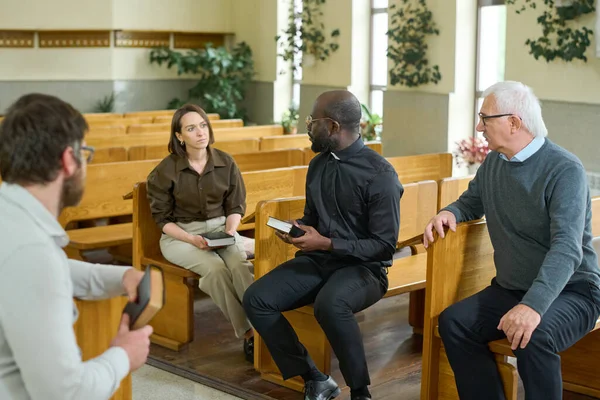
It requires theology, biblical interpretation, and pastoral care for the listeners who will hear the answer through very different wounds and histories. The difficulty with these questions is not that churches fear intelligence. The stronger problem is that public worship has limits. It cannot carry every private sorrow, legal concern, doctrinal debate, or disciplinary matter without becoming something other than worship. That does not make the questions unworthy. It means the setting matters. Many churches handle faith more faithfully when they move the hardest questions out of the spotlight and into rooms where honesty, patience, and context have space to breathe.

