
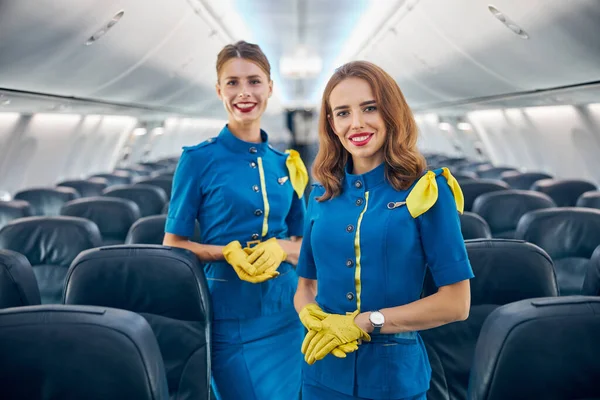
Polite intentions do not always read as polite in a packed aircraft cabin. On a flight, the smoothest passengers are often the ones who do less, wait their turn, and let the crew control the flow of service and safety. That matters because the cabin is not just a customer-service space. It is also a workplace, a safety zone, and a tightly timed operation where small interruptions can ripple through boarding, beverage service, and deplaning.
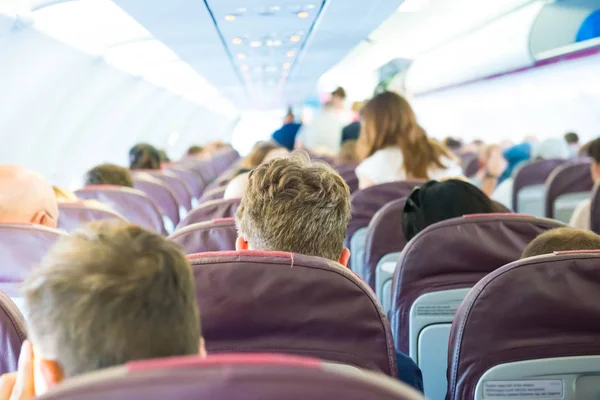
1. Policing other passengers
Correcting a stranger for ignoring a rule can look responsible, but it often creates a second problem for the crew. Flight attendants are the people trained to handle seat belt issues, lavatory timing, and other onboard conflicts, especially when emotions are already running high in a confined space. A quieter approach works better: alert the crew and let them decide how to intervene. What feels like helpful backup can quickly turn into an aisle-side argument that slows service and raises tension for nearby rows.
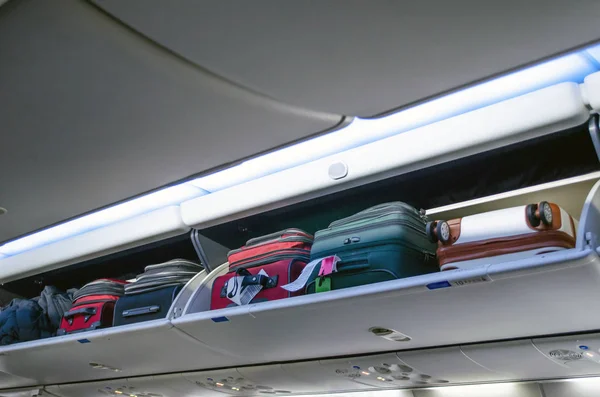
2. Repacking the overhead bin for everyone else
Passengers who shift other people’s bags, compress coats, or close bins around loose items usually mean well. In practice, it can create confusion, delay boarding, and leave travelers searching for belongings after landing. Etiquette guidance from frequent flyers consistently points to the same rule: stow your bag quickly and keep the aisle moving. The strongest carry-on habit is simple preparation before reaching the row, with straps tucked in and essentials already pulled out.
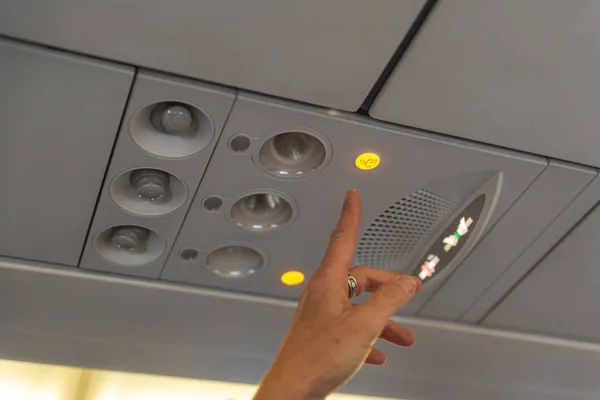
3. Tapping, poking, or grabbing a crew member
A light touch may seem gentler than raising a voice, but most crew members would rather not be touched at all. A verbal “excuse me,” eye contact, or the call button is clearer and more professional in a shared public space. This is one of the easiest fixes onboard. The call button exists for a reason, and it is far less disruptive than a hand on the arm during service or safety checks.
4. Asking for oversized water refills mid-flight
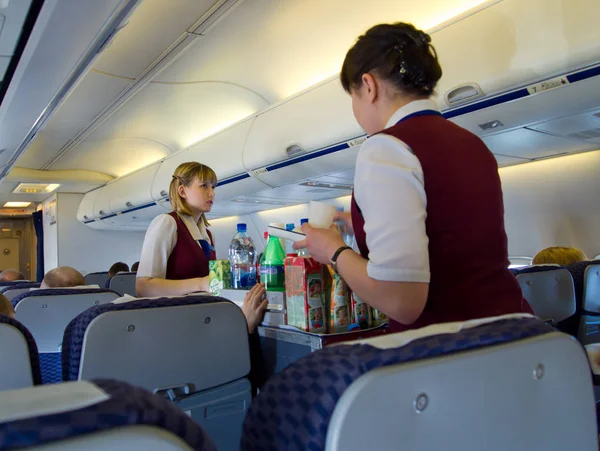
Reusable bottles are practical, but the request for a full large-bottle refill can create problems in the air. Flight attendants work with limited supplies, and the cabin service is designed around cups and measured distribution, not repeated large fills for individual passengers. One veteran attendant in the main material put it plainly: “We just can’t fill up all of your water bottles, or there wouldn’t be enough to offer.” The easier move is to fill up in the terminal, then accept a cup onboard when the cart comes through.
5. Reaching onto the drink cart
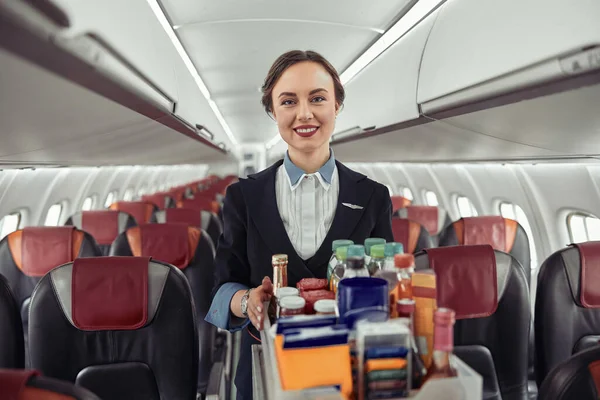
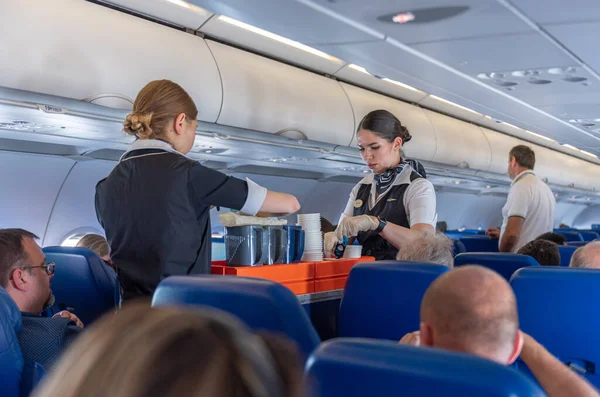
Grabbing a soda, napkin, or snack before the attendant reaches the row may seem efficient, but it disrupts the service pattern and shrinks the crew’s working space. The beverage cart is not a self-serve station; it is part of a carefully paced routine in a narrow aisle with dozens of passengers waiting. That same principle applies to trash. Flight attendants have long asked passengers not to hand garbage over while food or drinks are actively being distributed, because it interrupts the sequence and mixes tasks in a very small area.
6. Handing over diapers or other biohazard trash
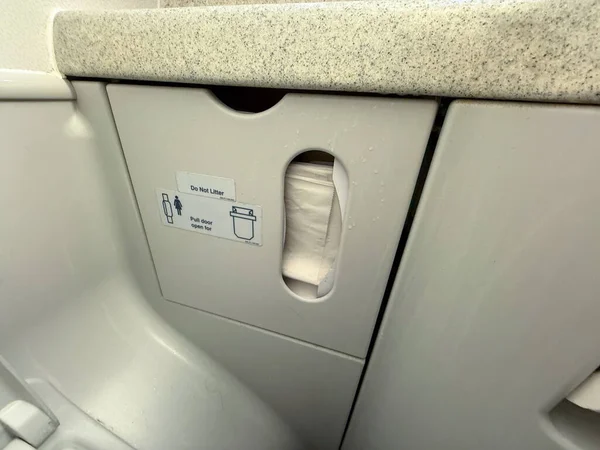
Not all trash belongs in the same stream. Used diapers, tissues with bodily fluids, and similar waste create an obvious sanitation problem when passed directly to a crew member. The wider etiquette literature around flying shows why this stands out. Stories about dirty diapers left under seats and other unsanitary behavior remain among the fastest ways to ruin a cabin for everyone nearby. Lavatory disposal is the appropriate route for many of these items, while medical sharps require proper containers and post-flight disposal.
7. Taking too long with carry-on loading
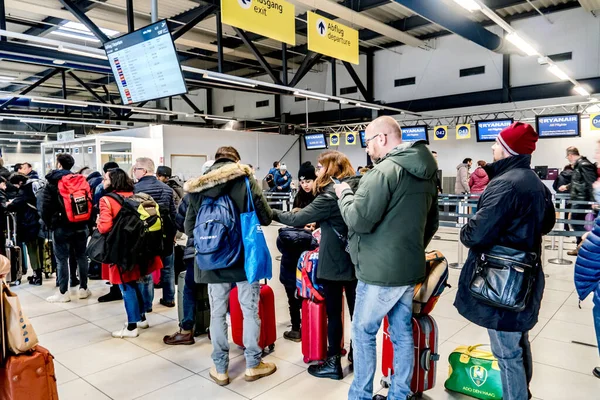
There is a difference between being careful and becoming a bottleneck. Passengers who stop in the aisle to reorganize, rotate, guard, and readjust a bag can slow an entire plane behind them. Flight attendants regularly flag this as one of the most common boarding mistakes. Heavy bags passengers cannot lift create another layer of strain, especially because some crew members note that lifting them is not always covered as part of their formal duties or injury protection.
8. Treating the crew like in-flight company
Friendly conversation is not the issue. Timing is. Calling a flight attendant over to chat while they are handling service, paperwork, safety checks, or galley tasks misunderstands what is happening behind the smile. The galley and aisle are active work zones, not idle social spaces. Even outside conversation, crew members frequently ask passengers not to linger there, stretch there, or use the area as overflow standing room because it interferes with service and safety access.
9. Thanking the cockpit and ignoring the cabin crew
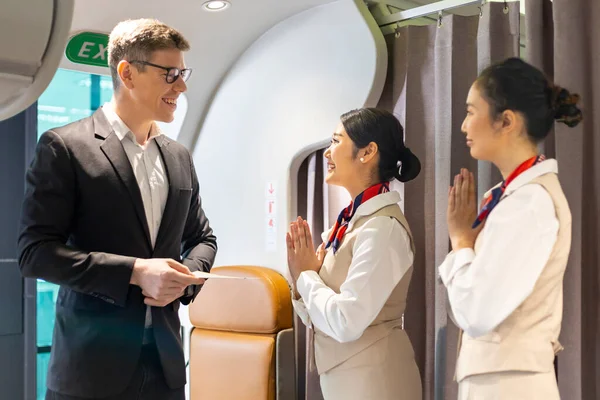
Many travelers say goodbye to the pilots while walking off, but skip the attendants standing just a few steps away. That imbalance gets noticed because cabin crew handled the visible parts of the journey: boarding flow, safety briefings, drink service, cleanup, and passenger issues in real time.
A brief thank-you matters more than performative helpfulness. The same goes during service, when attendants say simple basics like eye contact, removing headphones, and acknowledging a question can noticeably improve the interaction. Southern Living highlighted taking out headphones during service as one of the easiest courtesy upgrades on any flight.
The pattern behind all nine habits is consistent: the most useful kind of courtesy on a plane is low-drama, low-contact, and easy for the crew to work around. In a cramped cabin, good etiquette is less about doing extra and more about respecting workflow, personal space, shared hygiene, and limited resources. That is the kind of politeness that actually travels well.

