
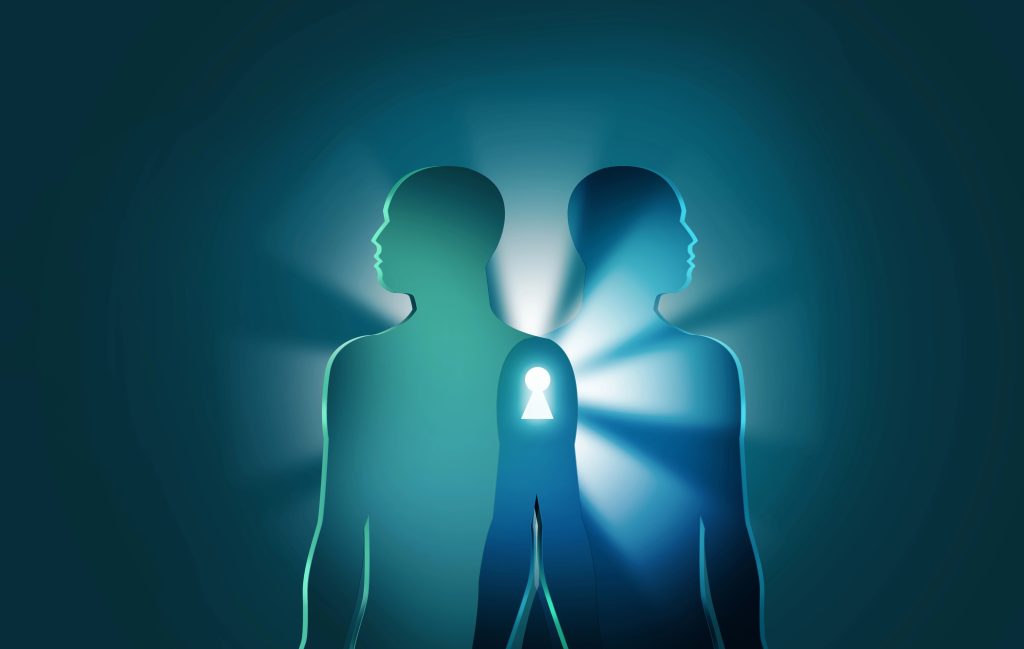
What if everything you thought you knew about dying was, well, an illusion? The age-old question of what happens to us when we die has been the subject of debate, inspiration for artists, and the source of many a late-night insomniac existentialist confusion. But today, thanks to contemporary medicine and greater numbers of people returning from the brink, near-death experiences (NDEs) are providing a treasure trove of stories challenging what we’ve traditionally believed about consciousness and the afterlife.
From hovering above their bodies to bathing in a space where time appears to disappear, NDE patients are reauthoring the book on what it means to live and what may come next. Let’s take a look at the most astounding findings of recent studies and personal accounts, and observe how these remarkable experiences are rewriting the book on life, death, and everything else.

1. Out-of-Body Experiences: They Occur More Often Than You’d Imagine
Out-of-body experiences (OBEs) are not the exclusive realm of science fiction movies they occur in a substantial fraction of the population. In fact, a survey of over 13,000 respondents found that 5.8 percent had experienced at least one OBE in their lifetime (5.8 percent). For NDEs, OBEs are even more common, occurring in about 76 percent of cases.

These experiences can be described in terms of seeing medical professionals operating on one’s dead body or hovering above the area, with a strange feeling of detachment but hyper-vigilance. Neurologists have isolated the temporoparietal junction as the region of the brain that is responsible for such sensations, and stimulation there directly can even cause OBEs under laboratory conditions. But to most people, it seems more real than anything they have ever experienced, on the edge of science and something far far more enigmatic.

2. Peace, Clarity, and the End of Fear
The most dependable and comforting aspect of NDEs is this overwhelming sense of peace. Survivors report usually being in some location where pain vanishes, worries dissolve, and an incredibly vivid sense of clarity reigns. As clinically dead for eight minutes, Brianna Lafferty reported: “I was perfectly still, but I felt thoroughly alive, awake and more myself than ever before. There was no pain, just a really great sense of peace and clarity.”
This is not anecdotal. Studies have found the feeling of peace to be the most frequent reported NDE feature, even more so than seeing a bright light or feeling an OBE. And most groundbreaking, nearly all experiencers Dr. Bruce Greyson interviewed said they no longer feared death following their NDE.

3. Time Gets Weird: Months in Minutes
If you’ve ever felt like time flies when you’re having fun, NDEs take this to a whole new level. Many survivors report that time either slows to a crawl or seems to disappear entirely. Brianna Lafferty explained that, although she was gone for eight minutes, it felt like months had passed. This distortion is reflected in studies, whereby individuals frame time as “in the power of God” or comment, “Time moved slower than normal.”

It’s an experience that researchers theorize could be the work of the brain’s single response to crisis, in which memories are stored with a deeper sense of sensory and emotional detail than is typical. But for people who have it, though, timelessness tends to feel more like a glimpse into another universe one in which the usual rules simply don’t hold.

4. Meeting with Light, Beings, and Other Worlds
Bright lights, tunnels, and visions of mystical creatures are elements of the classic NDE. Brianna described experiencing “a presence, or intelligence, greater than ourselves that watches over and guides us with unconditional love,” and creatures she could not specifically identify but who seemed like old friends. Research points to these experiences not being isolated to a single culture or belief system.
Rather, research has regularly demonstrated the most frequent NDE characteristics documented are a perception of a bright light, experiencing peace, and communicating with spirits or people. Interpreted as guides of the spirit, deceased loved ones, or even response of the mind to trauma, such experiences are most often enduring impressions.

5. Changes That Last a Lifetime
The most motivating thing about NDEs is how they change people. After the experience, Brianna described, “What I feared no longer had power over me and what I used to pursue didn’t seem essential anymore.” This transformation is not an exception. Studies show that NDE survivors often report profound inner changes: they are more altruistic, spiritually open-minded, and less materialistic.
A Dutch experiment found that, years following their NDE, survivors were more confident, more empathetic, and possessed a stronger belief in an afterlife than non-survivors. For many, death anxiety is transcended by a sense of mission and gratitude for life.
6. Science, Spirituality, and the Limits of Explanation
The debate over what causes NDEs is far from settled. Neuroscientists point to physiological explanations—like oxygen deprivation, endorphin release, or REM intrusion blending dream and waking states. Others argue that these experiences hint at consciousness existing beyond the brain. As Dr. Bruce Greyson notes, “Almost every experiencer that I’ve talked to has said they are no longer afraid of dying after their near-death experience.”
While science can recreate some NDE features in the lab, the meaning people attribute to them is often more than biology. Because, as one study concluded, “Belief in consciousness beyond the brain lies in the realm of faith beyond science.”

7. All Experience Is Singular, But the Questions Are Common
No two NDEs are alike. Some experience euphoric reunions and cosmic odysseys, while a small minority experience agonizing or even “hellish” ones. Culture, religion, and personal history all influence the telling, but what remains is: What is consciousness? Does anything survive after death?
The very variety of NDEs is proof that while perhaps there may be similarities, each experience is as unique as the individual experiencing it. And with each discovery, these reports keep us pushing past what we think we know.
Near-death experiences challenge us to reconsider our most profound beliefs about life, death, and consciousness. Whether they are portals to another dimension or the brain’s final brush stroke, their ability to heal, console, and motivate is irrefutable. Perhaps ultimately, the most important teaching is not about what comes after death but how these remarkable visions can assist us in living more richly, more courageously, and more gratefully now.

