
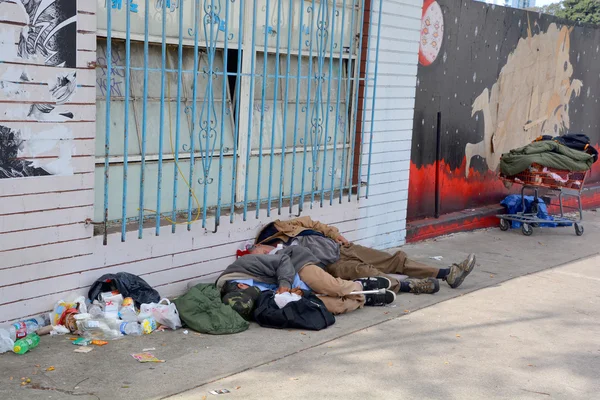
What if poverty is so difficult to escape in America not just because of childhood, but because of what occurs or doesn’t occur when those children become adults? The notion that anyone can overcome their environment has always been a part of the American tale, but for millions it is much more complex. The United States is unusual among rich countries for the extent to which poverty sticks to the next generation, and the why might shock even experienced policy nerds.

1. America’s Outlier Status: The Stickiness of Poverty
It’s not an illusion evidence indicates that the persistence of poverty from one generation to the next in the U.S. is two to four times more common than it is in comparable high-income nations. Based on a recent cross-national study, living through all of one’s childhood in poverty in the United States corresponds to a 43 percentage point greater average poverty rate during early adulthood. In Denmark, it is only 8 percentage points. “Growing up poor in the United States is particularly consequential for your adult economic outcomes, undermining this idea that the US, relative to peer nations, is some land of great upward economic opportunity,” says Zachary Parolin, associate professor at Bocconi University.

2. Beyond Childhood: The Missing Adult Safety Net
It’s easy to put all the energy into pulling children out of poverty, but what the research shows is a missing link in critical importance: the U.S. does much less to help adults who struggled as children. Parolin explains, “If you are poor growing up in the US and you’re an adult and perhaps you don’t have a full-time job, perhaps you didn’t make it to college the state is doing much less to assist you.” In contrast to such nations as Denmark, adults who grew up in poverty continue to enjoy strong social aid, which prevents them from slipping back into difficulty.

The statistics bear this out. Adult poverty reduction through tax and transfer programs slashes the persistence of poverty by almost ten percentage points in Denmark and sixteen in the UK, but only two in the United States. The difference in adult assistance is one strong reason why poverty is much more likely to persist in America.

3. Child Poverty: The Persistent Effects
Poor childhoods in America leave a deep scar. It not only impacts education and social connections, but also physical and mental well-being far into adulthood. Low-income children are more likely to suffer from chronic health issues, lower achievement in school, and restricted access to well-funded schools and secure neighborhoods. Over time, these disadvantages gain momentum, and it becomes increasingly difficult to escape poverty’s shackles.

4. Racial Disparities: Exposure, Not Stickiness
One of the most striking findings is that the connection between childhood and adult poverty is no weaker for Blacks than it is for whites. Parolin clarifies, “If you have a white child and a Black child who spend half their childhoods in poverty, the correlation of spending half your childhood in poverty and being likely to be poor when you grow up is very close for those two children.” The variance? Black kids are much more likely to spend their childhoods in poverty to begin with. Black children live in poverty at four times the rate of white children, further increasing overall disparities despite the “stickiness” of poverty not varying by race.

5. Why Social Safety Nets Matter Globally and Locally
Other countries are also combating intergenerational poverty, but their methods are not so narrowly restrictive as the U.S. Social safety net programs cash transfers, public works, and food programs have consistently been proven across the globe to reduce inequality and decrease the poverty gap by roughly 45 percent. More individuals move out of poverty in nations with tighter adult safety nets, and the cycle is less likely to recycle itself.

6. What Actually Works: Evidence-Based Interventions
There is no one “silver bullet,” but the study points to several policies with documented capability to break the cycle. Raising funding for under-resourced schools, increasing access to Medicaid and SNAP, and expanding the Earned Income Tax Credit (EITC) all demonstrate real potential. Most promising is the 2021 expansion of the Child Tax Credit, which caused child poverty rates to plummet. Sectoral employment training programs and career and technical education of high quality also increase long-term earnings among those who do not attend college.
7. The Limits of Benchmarks and the Power of Context
While staying in school to graduation, working full-time, and postponing childbearing are linked to lower poverty, equalizing exposure to childhood poverty would have twice the impact of equalizing attainment at benchmark in closing Black–White gaps in young adult poverty. That is, environment children are raised in is at least as important as their own decisions later in life.

The bottom line for advocates and policymakers: poverty reduction in childhood is important, but without a more ample and supportive safety net during adulthood, the cycle will persist. Nations that have invested in supports for both children and adults experience much greater upward mobility and healthier, more equal societies. As Parolin describes it, The alleviation of poverty by means of income transfers is a good thing in itself, but what we demonstrate is that beyond alleviating hardship, these transfers can alleviate that connection between childhood poverty and poverty in adult life.

