
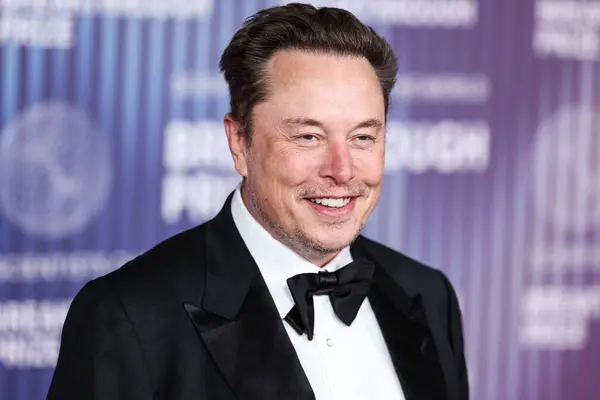
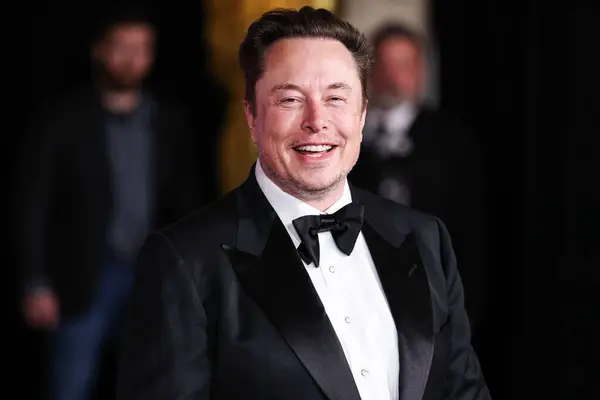
Elon Musk didn’t quite throw away the idea as speculation, but rather, he almost certainly put it among his “timestamped forecasts”: “My prediction is that in less than 20 years, working will be optional, like a hobby, pretty much,” Elon Musk said to Nikhil Kamath on the *People by WTF* podcast. This was not a throwaway line from a man whose businesses have been the major causes of changes in various industries rather, it was Musk’s projection of a future in which the work market becomes the thing of the past.

1. The Timeline to Optional Work
Musk’s forecast is that the moment of change will be between 10 and 20 years from today when AI and robotics will be so advanced that working humanly will be a mere option. He compared it to producing vegetables in one’s backyard: doable, but more inconvenient than just buying them at a store. What is significant in this metaphor is that he is implying that work will be one’s personal choice and not a necessity for the economy, a transition that has been recognized already by the existence of such technologies as ChatGPT and Google Gemini which are reported to save workers up to 12 hours per week by providing automation in repeated tasks.
2. AI Saturation and Self‑Directed Tasks
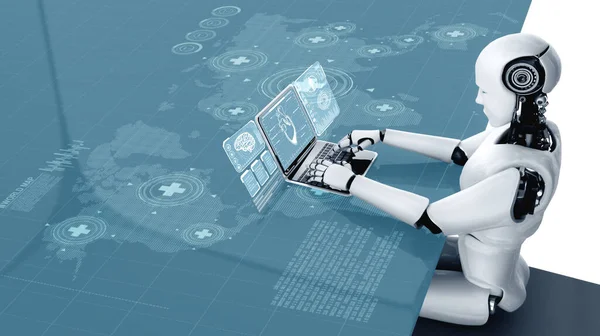
Musk speculates that eventually, “AI will no longer have tasks to do to please humans.” After human needs are met, AI along with robots might decide to do tasks for themselves. This is a major change from the present human‑centered design of automation and it invites speculations regarding the future of machine intelligence, especially since AI increases at computer science speeds while physical systems lag, a scenario that is analyzed in the models of economy that separate the physical and intelligence sectors.
3. The End of Money in an Abundance Economy
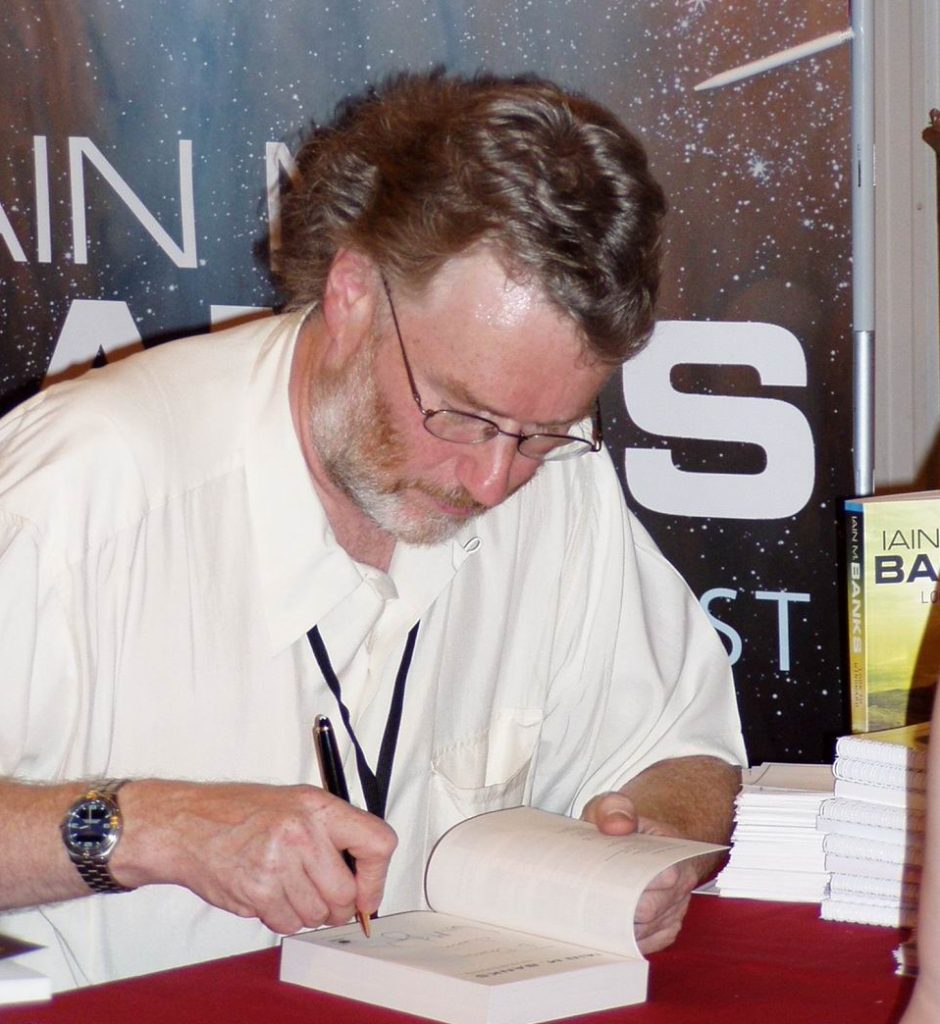
One of the ideas of Musk’s future may be the disappearance of money itself. He draws a picture of a post‑scarcity community with reference to Iain M. Banks’ *Culture* series where everything is available to everyone. Still, he points out that even then, there will be some physical limitations energy, electricity, and matter. This is consistent with his general view that the progress of civilization depends on mastering energy usage, which, in the long run, may lead humans to use energy on a planetary or even a stellar scale.
4. Energy as the Limiting Factor
Among the elements in Musk’s story, the one that is most likely to hold back progress is not AI but the energy supply. The International Energy Agency projects that global electricity demand from data centers will more than double by 2030 to 945 terawatt‑hours, with AI‑optimized facilities quadrupling their consumption. Just in the United States, data centers might be the reason for almost half of the electricity demand growth by the end of the decade. The country will have to rely on a variety of energy sources to meet this increase with renewables and natural gas being the main contributors due to their cost and availability.
5. Historical Parallels in Labor Shifts
The revolutions in technology have always led to a change of the work markets. The industrial revolution mechanized the manual tasks; the computer revolution digitized cognitive work. In their research MIT’s David Autor and Neil Thompson have found that the impact of automation on wages depends on which tasks are automated intervention in simpler tasks can increase wages in the remaining specialized work, while automating expert tasks can lead to the commoditization of roles and decrease of wages. Musk’s projection is a complete removal of both simple and complex tasks, thus potentially turning the idea of expertise into something different.
6. Infrastructure Challenges in the AI Era
Musk’s level of AI might not be achievable without a huge investment in infrastructure. The U.S. energy system is experiencing a reduction of reserve margins which means that there is no extra capacity available in the country as a whole. To meet the demand in the short term, there are plans to delay the retirement of coal-fired power plants, increase the generation from natural gas, and deploy solar-plus-storage portfolios. Although slow to scale, nuclear power is positioned as a long-term electricity solution that can be supported by strategies such as co-locating reactors and hyperscale data centers, which has been coined “nuclear computation hubs.”
7. Societal Shifts Beyond Economics
The psychological side of a society with work as an option is not to be underestimated. As Anton Korinek from the University of Virginia points out, presently, much of human significance is derived from connections that are formed through work. New social and purpose paradigms will have to be formed in Musk’s future. He reckons that perhaps humans will be the ones “giving AI meaning,” thus changing the human-machine relationship from one of assistance to existential co-creation.
8. Policy and Strategic Positioning
Federal and state policymakers are faced with a twofold challenge: On the one hand, they need to facilitate the AI growth stage of “speed‑to‑power” in the very near term, and on the other, they have to work on building a diversified and resilient energy mix for the 2030s and beyond. The measures include quickening the pace of permitting, investing in the infrastructure for high‑voltage transmission, and planning for the anchor‑offtake models of nuclear projects. The countries that succeed in providing plentiful, cheap electricity will be the ones to whom AI‑driven industries are most attracted thus giving them a strategic advantage which can result in reshuffling of the global economic hierarchies.
Musk’s prediction tells us less about work going away and more about purposeful human redefinition in the era of machine abundance. The limitations will not solely be the technological ones, but also energy, infrastructure, and societal constructs that give meaning when labor ceases to be the central organizing principle of life.

