
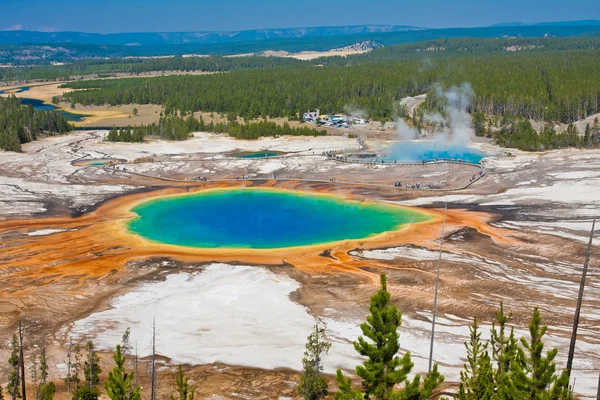
Beneath the familiar forests, geysers, and wildlife of Yellowstone National Park lies a geologic system vast enough to reshape continents. Recent advances in seismic imaging and artificial intelligence have uncovered details that deepen scientific understanding of this supervolcano-while also challenging the way the public interprets risk. The story is one of a restless but far‑from‑erupting giant, and of how science communication can balance fascination with reassurance.
1. The Immense Scale of the Supervolcano
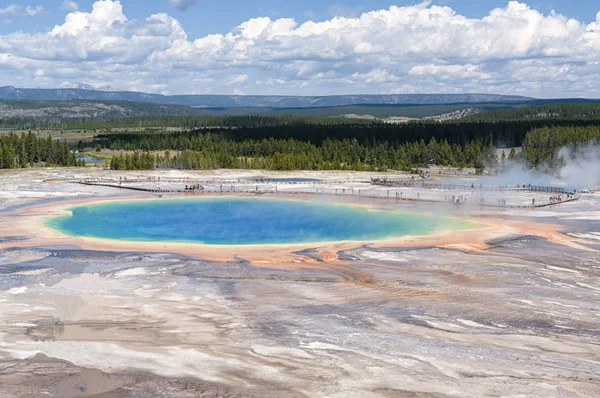
The Yellowstone caldera stretches across parts of Wyoming, Idaho, and Montana; it is the remains of past eruptions that ejected hundreds of cubic kilometers of volcanic material. Over the last 2.1 million years, three enormous events have deposited continent‑wide ash blankets and resurfaced much of the landscape. The most recent, about 640,000 years ago, often feeds “overdue” storylines, but scientists emphasize that eruption intervals are highly irregular. The bulk of Yellowstone’s life cycle is taken up with quietly releasing heat and gas, rather than in explosion.
2. AI Discovers 86,276 Previously Unknown Earthquakes
Machine learning has radically updated Yellowstone’s seismic catalog. Reanalyzing 15 years of data, researchers picked up on 86,276 previously undetected microquakes-most in swarms along immature, rough fault structures. “By understanding patterns of seismicity, such as earthquake swarms, we can take better safety precautions, inform the public about potential risks, and even direct geothermal development to avoid danger,” says Bing Li, a specialist in fluid-induced earthquakes. Most of them are too small to feel, more like listening through a stethoscope to the normal background noise of the volcano than an imminent warning sign of eruption.
3. Discriminating Routine Rumbling from True Precursors
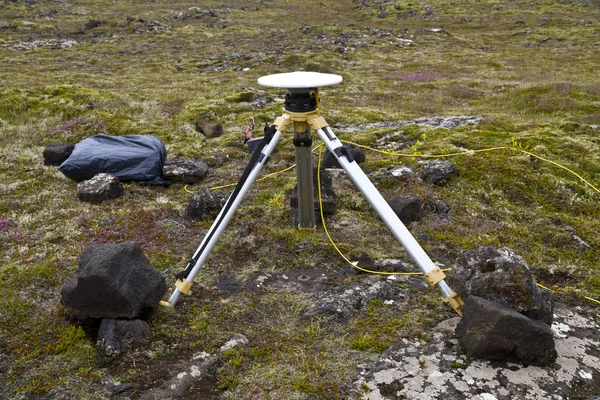
Volcanologists acknowledge that major earthquake swarms, accelerated ground deformation, and significant increases in gas emissions are leading eruption precursors. These signals develop over days to weeks in advance of an event. All current data at Yellowstone include disparate, low‑magnitude earthquakes without the sustained patterns that would be expected to accompany magma movement toward the surface. Networks of GPS receivers and gas sensors among the most advanced in the world continuously monitor these parameters, providing high confidence that large changes would be detected early.
4. Imaging a Sponge‑Like Magma Reservoir
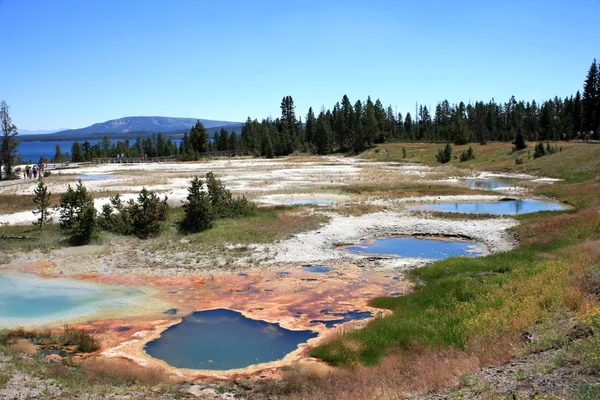
Full-waveform seismic tomography has resolved a complicated magma system beneath Yellowstone, wherein the melt is primarily concentrated between 3 and 8 km depth. The 16-20% partial melt within the upper reservoir forms a three-dimensional morphology by being embedded within a crystalline framework, acting more like a sponge saturated with liquid than a single molten chamber. It can feed smaller eruptions or hydrothermal activity without initiating a collapse across the scale of a caldera. Melt fractions are well below the ~35-50% threshold required for mobilization on large scales.
5. Role of Texture: Sills and Melt Distribution
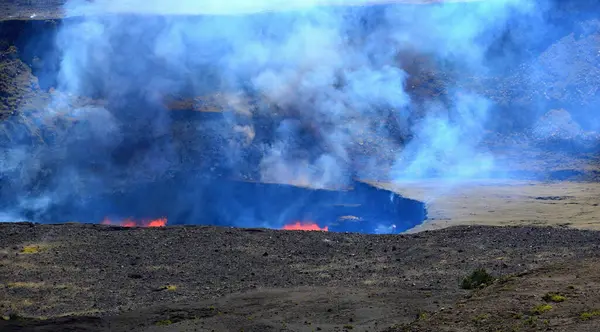
Dense seismic arrays deployed in 2020 have further refined this picture. Horizontally polarized waves travel through the upper reservoir faster than vertically polarized ones, consistent with sheet‑like magma storage in sills. Accounting for this texture raises local estimates of melt fraction to as much as 28%, but still well below eruptible levels. The findings provide insights for volcanologists into the way magma is stored and allow the development of monitoring strategies for other dangerous volcanoes around the world.
6. Public Anxiety and the Science of Communication
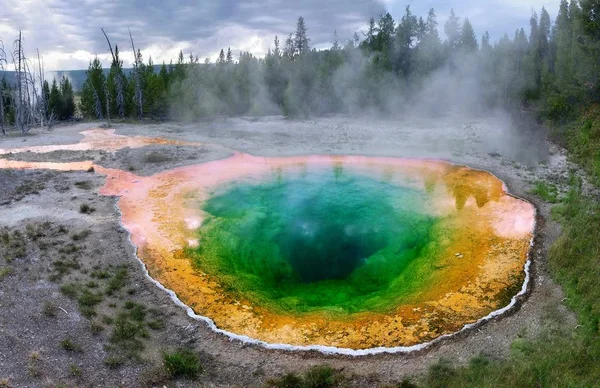
But because Yellowstone is a supervolcano, every murmur of awakening becomes a headline. Uncertainty is an intrinsic ingredient in geoscience, and it is used to keep the fear going. Disaster communication research-including New Zealand’s AF8 earthquake program-finds that sweet spot between urgency and efficacy. Messages that acknowledge risk while providing clear actions foster confidence rather than paralysis. As one AF8 participant commented, “Knowing that you can still do something about it gives people confidence.”
7. Lessons from Past Eruptions and Public Trust
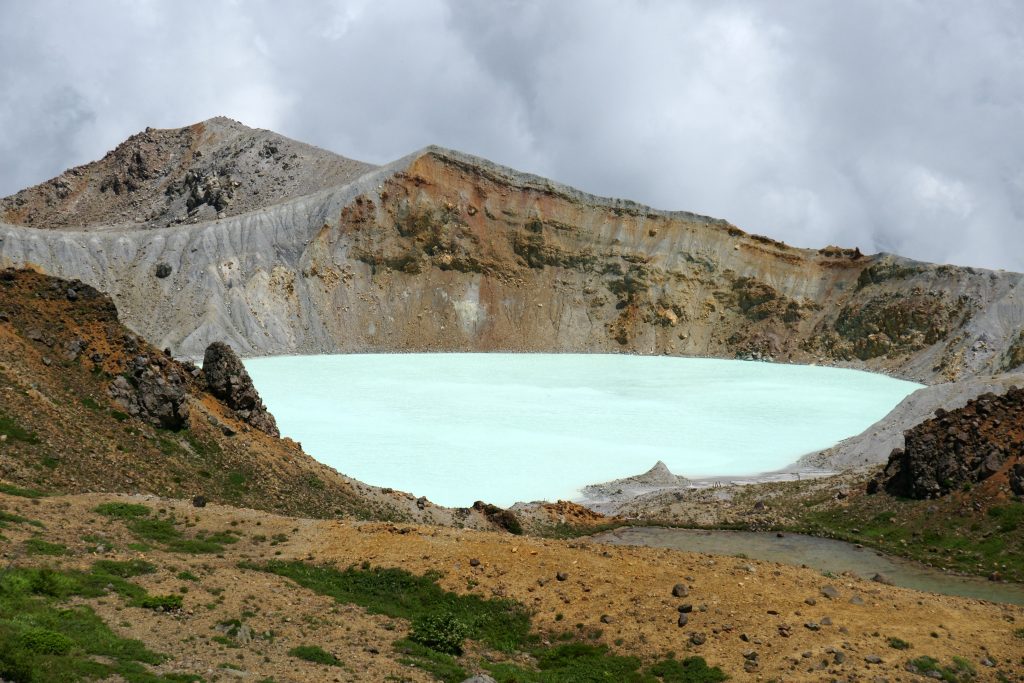
Events like the eruption of Japan’s Mount Kusatsu‑Shirane, without detectable precursors, have bred skepticism about monitoring. An abundance of instruments at Yellowstone coupled with a policy of transparency is the hoped-for antidote, but trust requires candor repeatedly demonstrated. Helping the community interpret changes without overreaction to the common unrest involves communicating clearly not only what is known but also what is not.
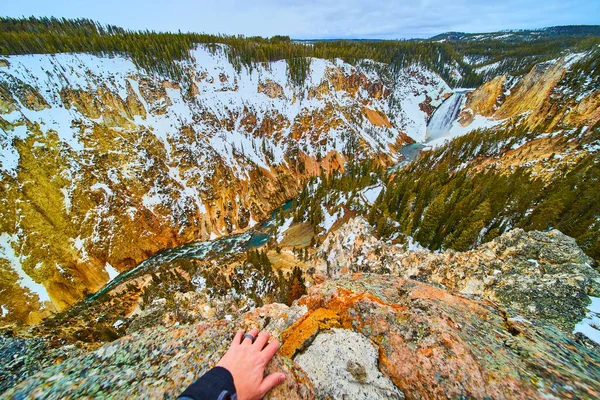
8. The Realities of a Hypothetical Supereruption
While the near-term risk is very low, scientists model the potential impacts of a true Yellowstone-scale blast in order to understand hazard magnitude. Ash could blanket much of North America, disrupt agriculture, and cool global climate for years. These are not predictions, but they do help illustrate why monitoring subtle changes is important.
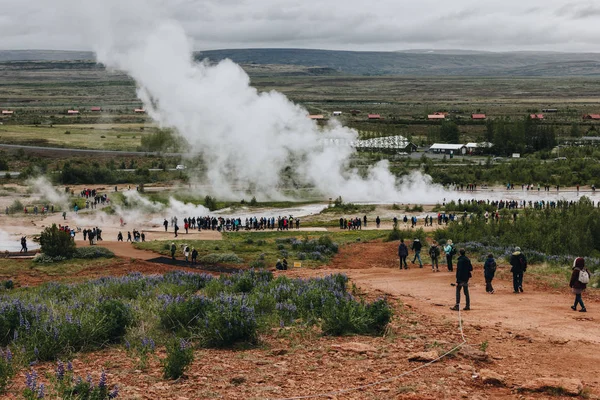
9. Keeping Your Feet on the Ground When Headlines
Scare You But for readers interested in science, the interaction between discovery and risk perception is part of the reason Yellowstone is so interesting. Understanding this volcano is active but stable reframes the story: this is a living geologic system, not a ticking bomb.
And effective communication-foundational to evidence, rich in context, and balanced between fascination and reassurance-helps to keep the public informed while avoiding disaster anxiety.

