

Christmas didn’t become consumerist by mere accident. No, it happened because retailers made certain choices & advertisers decided to promote their products in a certain way, eventually transforming how the whole of December worked. Some of the very traditions that we see as timeless today actually started as business ideas with financial goals in mind. Here are nine ways that consumer culture rewrote the meaning of Christmas.
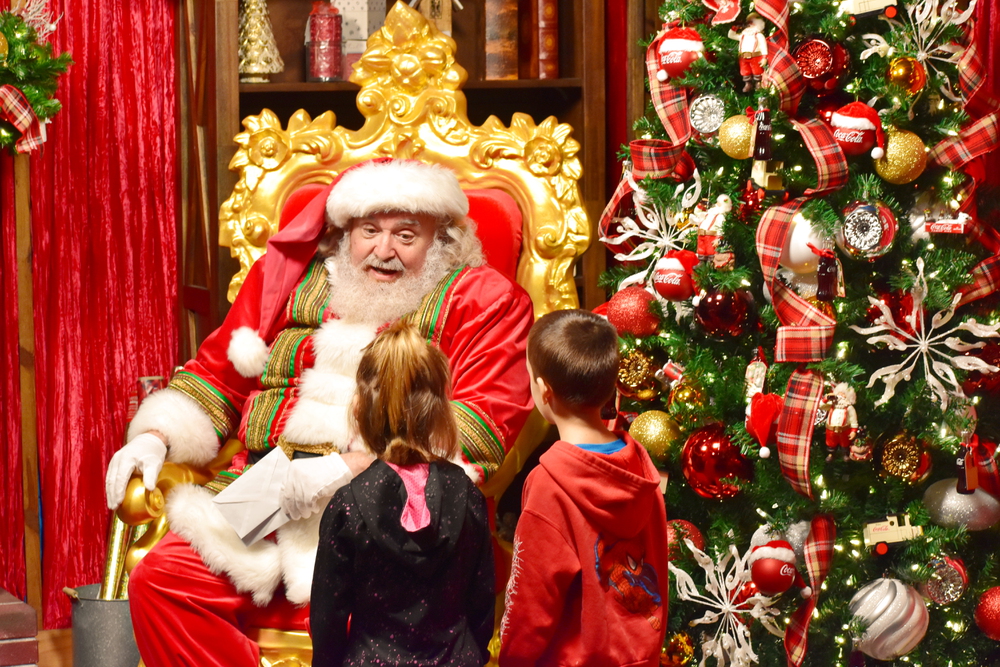
1. Department stores made visiting Santa an appointment
It sounds hard to believe, but there was once a time when mall Santas weren’t normal. During the late 1800s, department stores realized that families would stay for longer in the stores & spend more when they made visiting Santa Claus part of the experience. James Edgar began the idea of a store Santa in 1890. With it, he turned a folklore figure into an annual retail attraction that was connected directly to shopping trips.

2. Lawn decorations moved Christmas outside
It was shortly after World War II that plastics manufacturing became very popular, and that led to suburban neighborhoods spreading across the United States. Cheap molded plastics made things like outdoor Christmas decorations more affordable by the 1950s. Now, Christmas was no longer a matter of what families did indoors. It was something for neighbors to see & react to, as well as compare, right from the sidewalk.
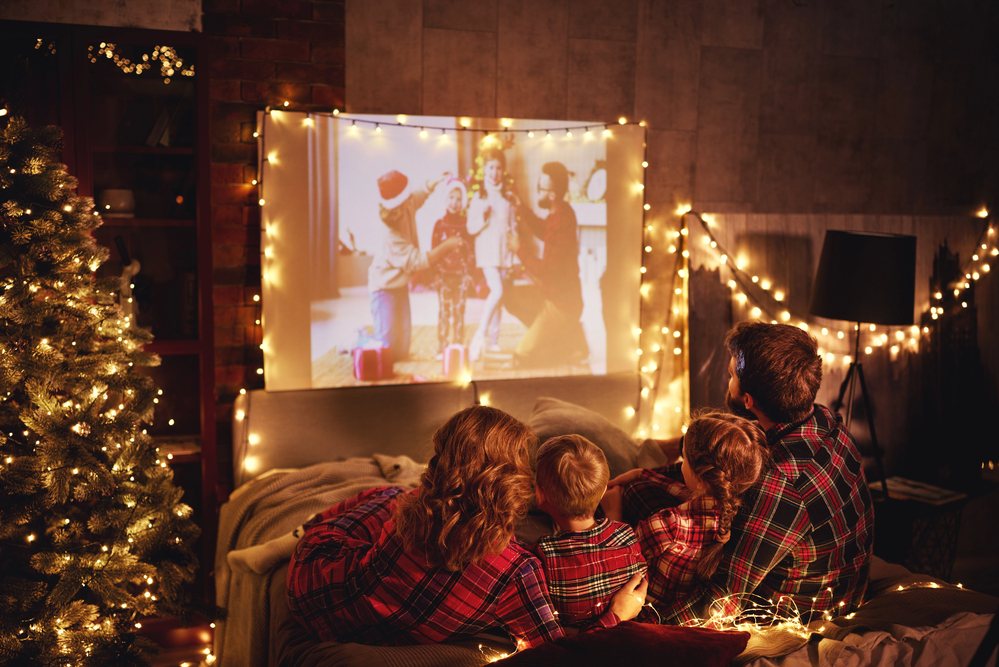
3. Christmas movies made people expect spectacles
So many Christmas movies were built around shopping environments, even though the message might’ve been trying to say something about commercialism. For example, Miracle on 34th Street (1947) was centered around a real Macy’s store. It helped to make the idea of department stores & gift buying things that “proved” people’s Christmas spirit. Viewers came to expect scale and abundance as examples of what Christmas “looks like.” Shopping scenes were the norm.
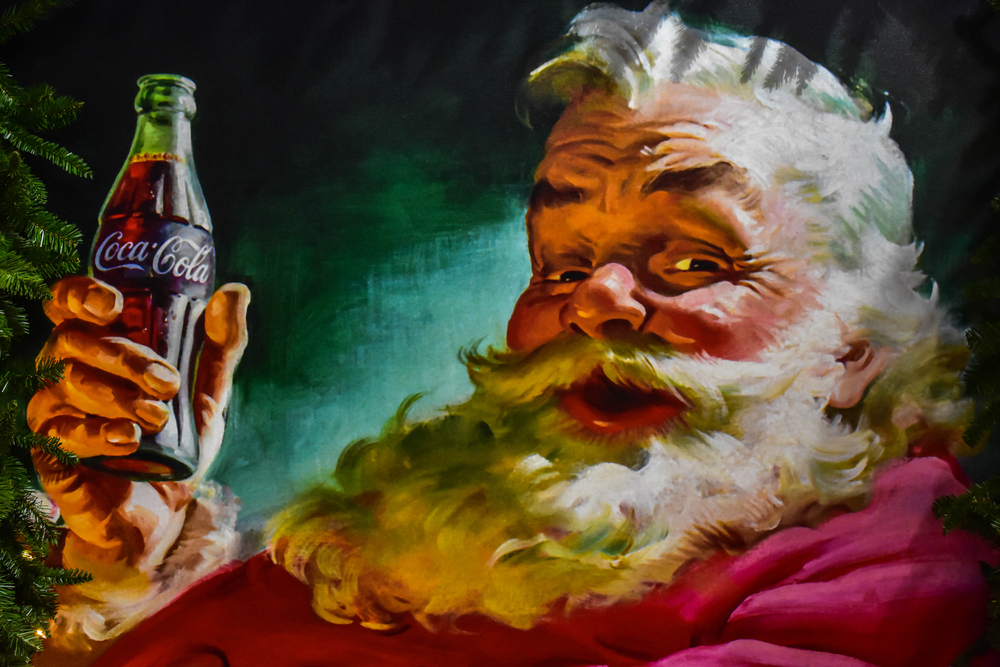
4. Coca-Cola popularized Santa’s look
Santa didn’t always look the way that we imagine him today. But neither did the Coca-Cola company invent Santa’s iconic look. He has existed as a jolly, red-clothed version for a while, yet it was the soft drink company’s 1931 to 1964 advertisements that helped to popularize the look. It’s unlikely that the modern version of Santa would be so popular today without these advertisements.

5. Rudolph started as a retail freebie
Despite what you might believe, Rudolph didn’t start as a character from folklore, and he’s actually quite a modern creation. Copywriter Robert L. May created the red-nosed reindeer in 1939 after the Montgomery Ward department store asked him to create a promotional booklet for families. It was essentially a marketing gimmick designed to keep families loyal to the store. It worked. Rudolph became the misunderstood Christmas character that we all love.

6. Christmas creep made the season earlier
You may have noticed that Christmas decor appears earlier & earlier in retail stores. That’s not by accident, and certainly not because of anything religious. Managing director William S. Cody stated in conversation with the Wharton School of the University of Pennsylvania that this so-called “Christmas creep” helps retailers not lose sales to competitors who started first. The earlier they sell products, the more money they can make, and they changed our calendars in doing so.

7. Must-have toys created a scarcity chase
A few Christmases became well-known because of the gifts that people struggled to find that year. In 1983, retailers marketed Cabbage Patch Kids quite heavily to consumers while supplies of these dolls were limited. The result was lines & ration tickets, as well as utter chaos as parents desperately looked for these toys on the shelves. Gift-giving became a hunt under pressure. Rather than family traditions, Christmas mornings were about having the latest gifts.

8. Trend trees made a manufactured fashion cycle
The moment that companies realized they could redesign & resell Christmas trees was the moment that our festive decorations changed. In the late 1950s, the Aluminum Specialty Company’s range of Evergleam aluminum trees became popular. They had been created for mass appeal. Their creation turned trees into consumer products that contained different styles & finishes, making the centerpiece into something to replace. It wasn’t to be reused.

9. Christmas became a national spending scorecard
Consumer culture at Christmas has become so widespread that the National Retail Federation actually began publishing annual holiday sales forecasts. The numbers increase every year. Their predictions for 2025 suggest that holiday spending will reach $1 trillion for the very first time, showing growth of between 3.7% & 4.2% since 2024. What does that mean? Christmas isn’t something we talk about as a holiday anymore, but rather, more of a performance. What matters are the totals spent & records broken. What matters is the growth measured.
None of these changes to Christmas happened overnight, and perhaps the worst part is the fact that nobody actually agreed to them. These changes simply became part of our lives, without our asking. It shouldn’t be a surprise to hear that Christmas has become louder & longer each year. Who knows what it’ll look like in 20 years?

