

The quiet hum of a server farm might seem worlds away from the clang of a plumber’s wrench or the chatter of an office keyboard, but to Yoshua Bengio, one of the “Godfathers of AI,” both are ticking toward the same fate. After years spent advancing machine learning, Bengio now warns that no profession-whether steeped in spreadsheets or soldering pipes-will escape the reach of automation.

1. The First Casualties: Cognitive Desk Jobs
Bengio’s alarm centers on “cognitive jobs, the jobs that you can do behind a keyboard.” These roles-analysts, copywriters, translators, data scientists-are already being displaced by AI systems that can perform tasks faster and cheaper. Microsoft’s own analysis flagged 40 such professions at high risk, from historians to telemarketers. Goldman Sachs estimates that 300 million jobs could be lost globally, with 25% of the labor market affected.

2. Gen Z and Junior Hires: The Hardest Hit
Recent graduates are facing the worst job market in years. In the U.K., it’s the bleakest since 2018; in the U.S., unemployment among recent grads has climbed to 9.3%, the highest outside the pandemic since 2014. According to one Stanford study, there has been a near 20% drop in employment for young software developers due to AI’s capability to “vibecode” in plain English. “Gen Z is first where all of us are going to have to go,” said Anton Korinek of the University of Virginia.

3. Trade Jobs: A Temporary Refuge
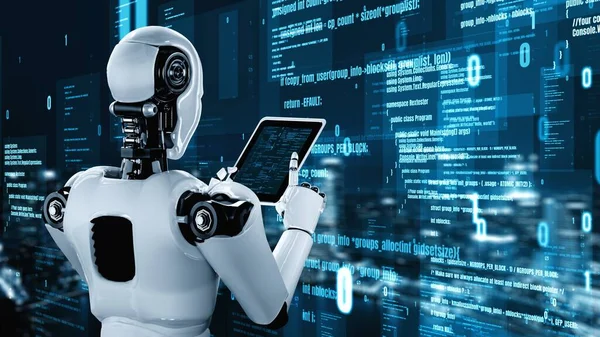
For now, robotics is far behind software, and for that reason, the physical trades are much harder to automate. Geoffrey Hinton’s advice-you should be a plumber-reflects that reality. But Bengio says it’s temporary. Advances in embodied AI and humanoid robotics by companies like Unitree and Persona AI are closing the gap, with machines that can weld and fabricate, and even clean, targeting the dull, dirty, and dangerous jobs.

4. Democracy in the Crosshairs
Beyond the labor market, Bengio predicts AI may bring instability to democratic systems in less than two decades. Through generative AI, it can inundate public discourse with persuasive, synthetic content; eroding trust in institutions. Research studies show that propaganda generated through artificial intelligence is as believable as material written by humans and how deepfakes have disrupted elections in countries as wide-ranging as Türkiye and Argentina. Experts say that could leave democracies far more vulnerable to both foreign interference and internal polarization.
5. Historical Parallels and Lessons
Technological revolutions-from the railroad to electricity-have reshaped economies before. What is different now is the speed and scope. PwC’s $1 billion investment in AI tracks the ghost of industrial booms past, yet here, the displacement arrives much faster than the tempo at which retraining programs can change. As Ray Dalio puts it, balancing AI’s productivity gains with human potential is crucial to avoiding a “great deleveraging” that puts millions out of work.

6. Resilience in the Midst of Turmoil
The uncertainty feeds anxiety, particularly for younger workers. Resilience strategies include investing in critical thinking, digital fluency, and targeting sectors that AI functions around, such as healthcare and education. Building critical thinking-as a skill to recognize AI-generated content, for example-can also defend citizens against devious manipulation. Finland’s national AI literacy program offers a model for fostering critical thinking and societal resilience.

7. Policy and Corporate Responsibility
Retraining programs funded by the AI companies and legislation on disclosure requirements for layoffs related to AI are being pursued by lawmakers such as Senator Mark Warner. The EU’s proposed AI Act and proposed California watermarking standards, for example, will introduce rules to ensure transparency regarding AI-generated content. Bengio’s own nonprofit, LawZero, promotes safe, human-aligned AI systems. In an open letter, it urged CEOs to “step back from your work” and join forces on solutions rather than competing toward goals that carry risks.

8. The Way Forward: Adaptation or Obsolescence
While some economists believe AI will ultimately create more jobs than it destroys, Korinek expects agentic AI to soon outcompete humans in research, analysis, and creative problem-solving. For professionals, graduates, and the trade-qualified, too, the message isclear: adaptation is not optional.

Nvidia’s Jensen Huang put it succinctly: “you’re not going to lose your job to an AI, but you’re going to lose your job to someone who uses AI.” But for how much longer? The hum of servers and the clang of tools may still echo in workplaces today, but the clock is ticking. Whether through proactive reskilling, policy safeguards, or collective action, the challenge is to ensure that AI’s march forward strengthens society rather than hollowing it out.

