
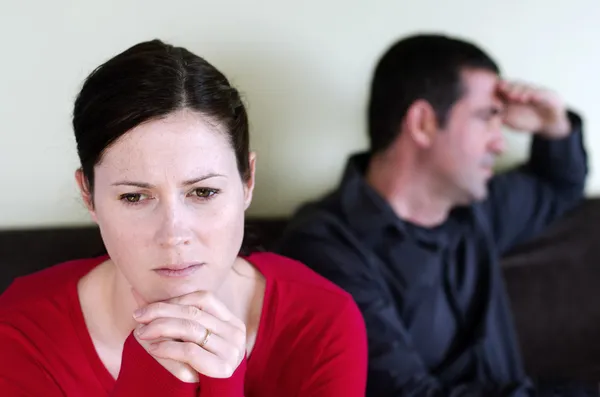
Most marriages do not shift from closeness to crisis in one dramatic moment. More often, the change arrives quietly, through routines, reactions, and small absences that begin to feel normal.
What makes these turning points so unsettling is that they rarely look like disaster at first. They can resemble stress, fatigue, personality differences, or a rough season. Over time, though, repeated distance can reshape the emotional tone of a marriage until both people feel the loss.

1. Conversations become purely logistical
A fading marriage often starts sounding efficient. The couple still talks, but the exchange centers on schedules, bills, children, errands, and household tasks. What disappears is the voluntary sharing that creates intimacy: the stray thought, the private joke, the vulnerable admission, the sense that one partner still wants to be known by the other. When most interaction becomes transactional, emotional connection usually weakens with it. Relationship specialists note that rarely discussing things anymore can leave an “elephant in the room,” where frustration stays active even while little is said.

2. One or both partners start editing themselves to keep the peace
Silence is not always calm. In many marriages, one quiet turning point arrives when honest reactions begin to feel too costly, so a partner starts withholding opinions, softening truths, or avoiding sensitive topics altogether. That pattern can look mature from the outside, but it often signals erosion underneath. According to guidance on editing yourself to avoid conflict, self-censorship usually develops gradually. What is lost is not only spontaneity, but the feeling of emotional safety.

3. Emotional bids are routinely missed
Marriages are built in small moments. A passing comment, a tired glance, a story from work, a hand on the shoulder, a request for attention after a long day; these are often bids for connection rather than trivial exchanges. Research cited by Psych Central highlights that long-term couples who remain together tend to turn toward each other’s bids for connection 86 percent of the time. When a marriage is fading, these bids are more often brushed aside, ignored, or met with impatience. The problem is not one missed moment, but a growing pattern of emotional nonresponse. Over time, partners stop reaching because they no longer expect to be met.

4. Relief replaces longing when time apart arrives
Healthy couples usually benefit from space. But there is a meaningful difference between enjoying solitude and feeling noticeably calmer only when a spouse is absent. That shift matters because it changes what separation means. Instead of missing one another, partners may feel they can finally exhale. The Gabby Petito Foundation describes a warning sign as when you feel relieved when you’re apart. In a marriage, repeated relief can indicate that daily connection has come to feel tense, draining, or emotionally unsafe.

5. Conflict stops leading anywhere
Arguments are not always the deepest threat to a marriage. In many distressed relationships, the larger issue is that disagreement no longer produces understanding, repair, or change. One partner may criticize, the other may withdraw, and the cycle repeats with almost no variation. Apologies appear, but the same injuries return. Relationship research has long identified criticism, defensiveness, contempt, and stonewalling as especially corrosive patterns, with contempt standing out as a major predictor of breakdown. When conflict becomes circular rather than clarifying, couples often sense the marriage is no longer moving forward.

6. Emotional distance starts feeling like the default setting
Not every period of distance means a marriage is failing. Some people need more solitude, and stress can temporarily reduce emotional availability. But distance becomes more concerning when a once-engaged partner remains chronically checked out and the withdrawal starts to define the relationship. As one couples therapy perspective puts it, “it is emotional distance not a conflict that destroys a marriage.” That idea reflects a hard truth: many couples can survive disagreement, but not prolonged disengagement. When warmth, curiosity, and responsiveness disappear for an extended period, the marriage can begin to resemble coexistence rather than partnership.

7. Physical intimacy feels absent rather than delayed
Desire naturally rises and falls over the course of a long relationship. A temporary lull does not necessarily signal emotional collapse. The quieter turning point comes when touch itself begins to fade from the marriage, not only relations, but affectionate contact, playfulness, and bodily ease. When one or both partners feel off-put by closeness, or stop seeking it altogether, the loss often reflects a broader emotional disconnection. In many marriages, fading intimacy is both a symptom and a reinforcement of distance.

8. Trust erodes into suspicion and private retreat
Trust usually breaks down in stages. Doubt can harden into suspicion, and suspicion can make openness feel risky. Once that happens, partners often stop bringing their full selves into the marriage. This retreat is not always loud. It can look like guardedness, increased privacy, second-guessing, or emotional self-protection. Relationship NSW describes how mistrust can spread “like wildfire,” eventually making vulnerability much harder. Without trust, even ordinary marital strain can start to feel like proof that the bond is no longer secure.

9. The future is no longer imagined as shared
A marriage often weakens long before separation is discussed. One of the clearest turning points is when the couple stops thinking in terms of “we,” whether around goals, support, or everyday plans. That shift can show up in subtle ways: celebrations feel solitary, setbacks are handled alone, or one partner no longer expects the other to be emotionally present. A long decline often leaves people wondering when the shared identity changed.
By the time that question is consciously asked, the fading has usually been underway for quite some time. These turning points are quiet because they are easy to explain away one at a time. Seen together, they often describe a marriage that has lost emotional responsiveness, mutual safety, and shared investment. They also show why fading marriages are not always defined by constant fighting. Just as often, they are marked by emotional distance developing slowly, until two people who still share a life no longer feel closely joined inside it.

