
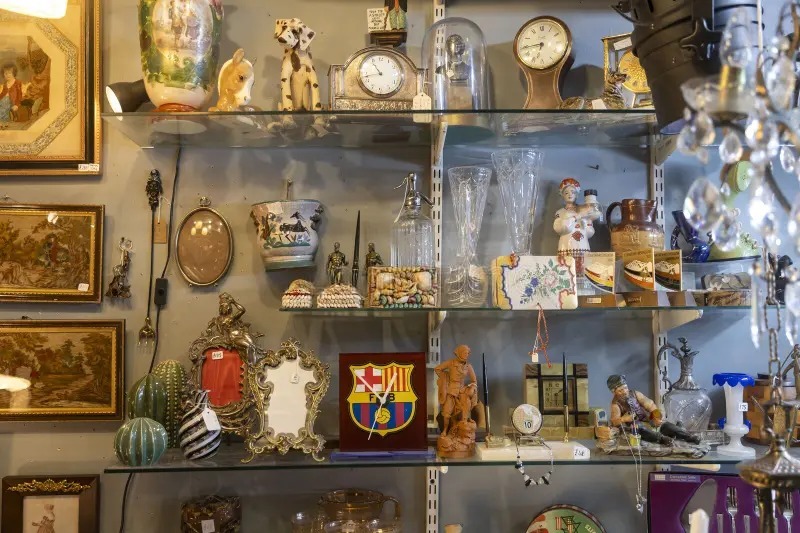
Small antiques often get dismissed first. They sit in a dish, hide in a drawer, or blend into the visual noise of an estate sale table, even when they hold the clearest signs of age, workmanship, and collector interest.
That quiet appeal fits neatly with today’s renewed interest in analog lifestyle trends. Objects made for sewing, note-keeping, carving, or table service feel relevant again because they offer something screens do not: a visible function, a tactile presence, and a story that can be understood at a glance.
1. Fishing license badges
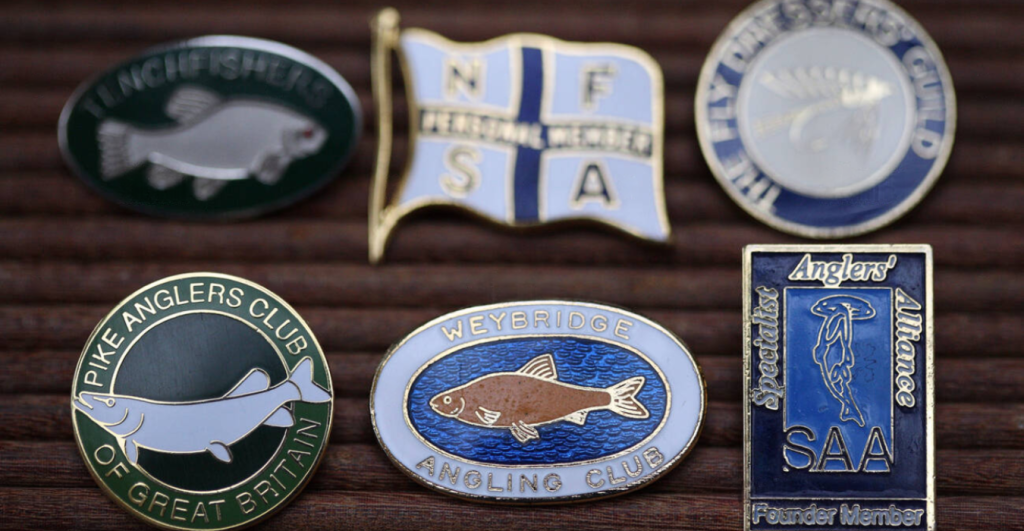
Early 20th-century fishing licenses were often issued as metal badges meant to be worn in public, not tucked away in a file. That practical use explains why sharp surviving examples attract attention today. Sun exposure, handling, and simple loss all worked against them, so badges with strong color, readable dates, and intact fasteners tend to stand out.

Many examples trade in the $20 to $100 range, while scarcer regional issues can move much higher. Southern badges have been known to reach $500 or more when condition is especially strong. Their appeal is easy to understand: they combine graphics, local history, and a built-in date stamp in one very small object.
2. Sewing bir
ds and sewing clamps
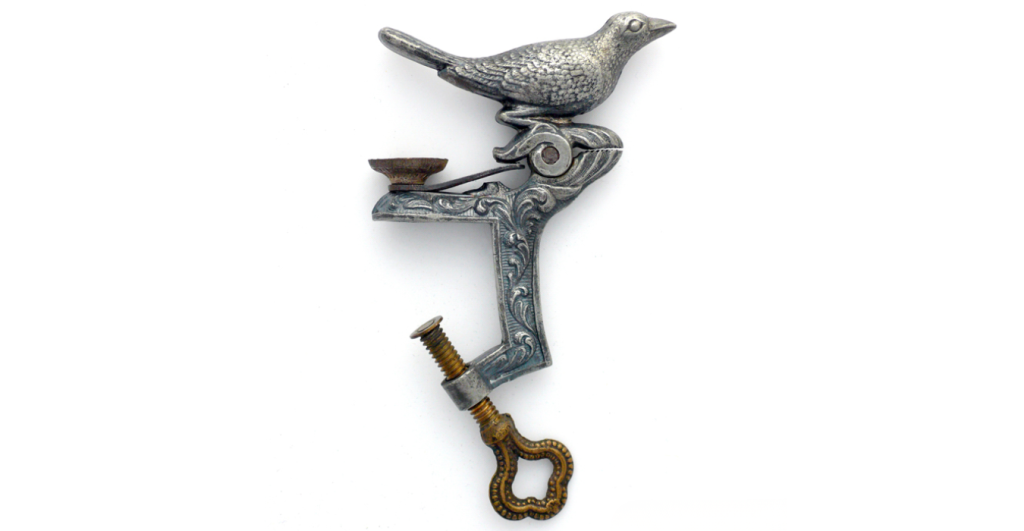
The sewing bird was a tabletop clamp that acted like a third hand, gripping fabric during hemming and fine hand sewing. In the United States, Charles Waterman of Connecticut held an 1853 patent connected to the form, and period promotion even described the tool’s “health-preserving property.”
Collectors look beyond the basic bird shape. Cherubs, fish, deer, dogs, and other novelty forms can add charm, while original cushions and attached accessories help value. Many antique examples fall around $75 to $200, but the real draw is how much Victorian utility and ornament these clamps manage to pack into one palm-size tool.
3. Perpetual desk calendars
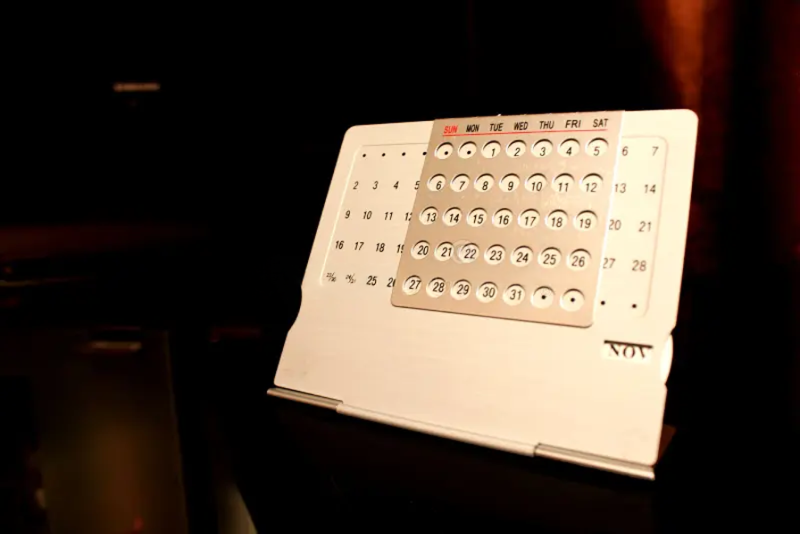
Perpetual calendars have a long history, but desktop versions became especially popular in the early 20th century and later surged again as gift items in the mid-century years. They still feel current because they solve a simple task mechanically, with no battery, alert, or app in sight.
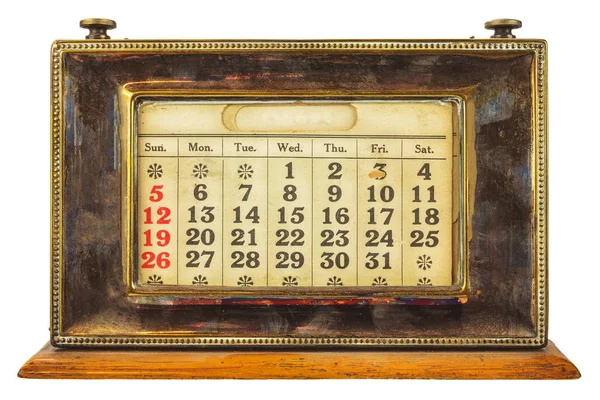
Wooden Edwardian examples with turn knobs can reach up to $1,000, while many brass mid-century designs sell in the $50 to $200 range. Their value depends on material, design, and whether the mechanism still works smoothly. They also benefit from a broader collecting rule: as antique specialists note, maker’s marks, patents, and condition can sharply affect interest, and one damaged part can reduce value fast.
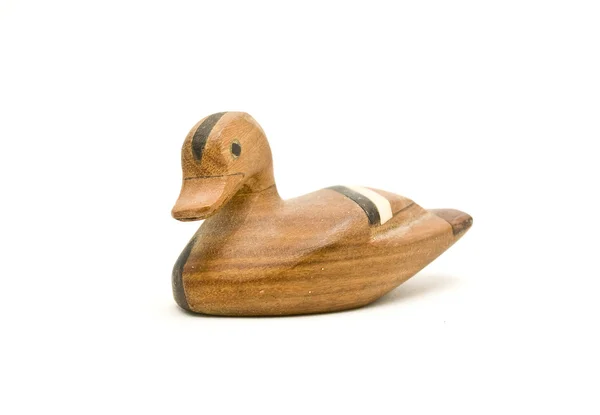
4. Miniature duck decoys
Miniature duck decoys prove that scale does not limit seriousness. Often measuring 5 inches or less, many were hand-carved from leftover wood and treated with the same care given to larger decorative or working birds.
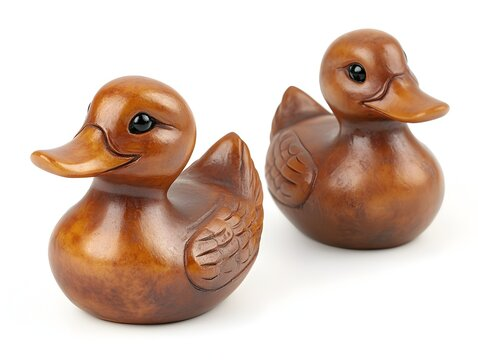
Some can command up to $5,000, especially when carving, paint, and form are strong. The larger decoy market helps explain why. Demand at the top end has been intense, with an Elmer Crowell wood duck bringing $504,000 at auction. Miniatures do not need that pedigree to matter, but they benefit from the same collector logic: confident carving, original surface, and a believable backstory make a major difference.
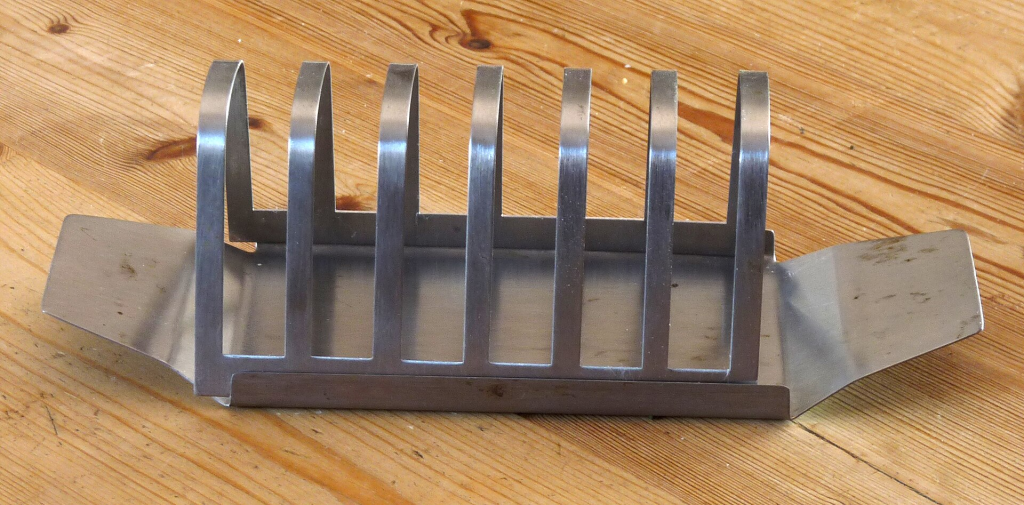
5. Silver toast racks
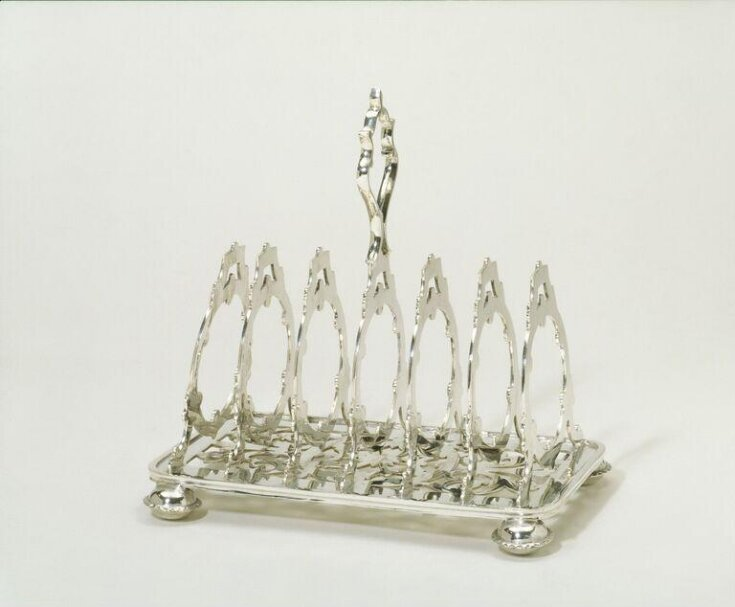
Toast racks were designed for one specific household problem: keeping slices upright so steam would not soften them. That narrow purpose gives them unusual charm now. Even people who never serve toast this way can appreciate the repeating arches, looped handles, and compact sculptural form. Some examples sell for more than $550, especially when material and origin are clear. Sterling pieces deserve a close look for small hallmarks or stamps like “925” or “sterling”, since silver marks often separate decorative metal from more valuable pieces. On modern desks, they are also easy to repurpose for stationery or mail, which helps explain why they continue to get noticed.
Across all five categories, the smallest details usually matter most. A crisp badge, a complete clamp, a smooth calendar mechanism, original decoy paint, or a readable hallmark can separate an ordinary little object from one collectors pause over. That is part of the lasting appeal of tiny antiques. They do not need much space to show craftsmanship, history, and purpose all at once.

