
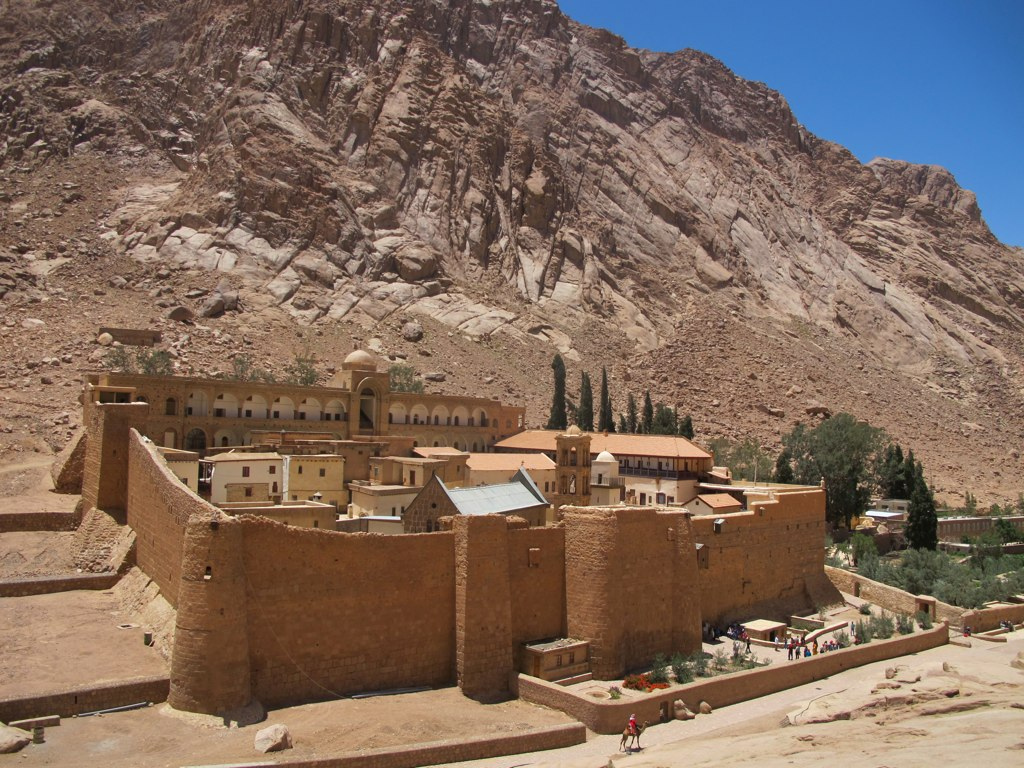
The most durable story in the Sinai inscriptions is not a single name. It is the birth of a writing system that changed how human beings recorded speech. Debates about whether one inscription can be linked to Moses continue to attract attention because they attach a famous biblical figure to a dramatic archaeological puzzle.
But the broader significance of the Sinai finds lies elsewhere: in the small group of early alphabetic texts from mining sites and desert routes that preserve the earliest known stages of alphabetic writing, a development that eventually shaped scripts used across much of the world.
1. The Sinai inscriptions belong to the earliest alphabetic tradition ever identified
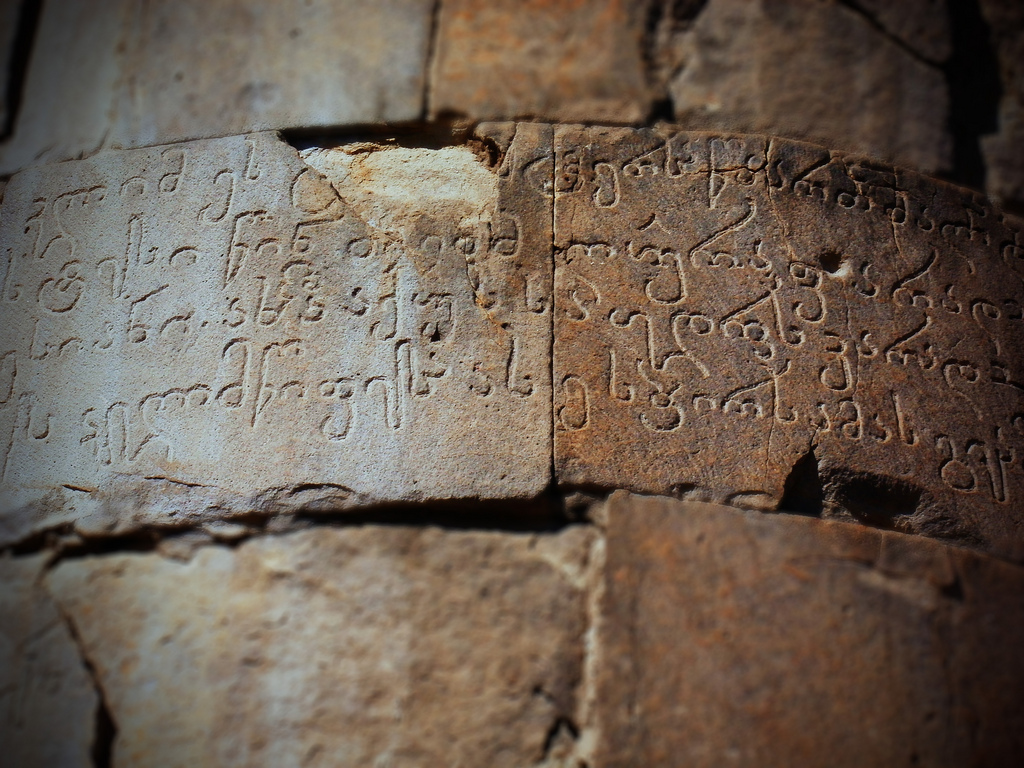
The Proto-Sinaitic corpus is small, but its importance is enormous. Scholars generally describe it as part of the earliest trace of alphabetic writing, with inscriptions dating roughly to the 19th to 16th centuries B.C. The texts from Serabit el-Khadim in Sinai, together with early finds such as Wadi el-Hol in Egypt, preserve the moment when writing began to move away from large sign inventories toward a more economical system. That matters more than any one disputed reading because the alphabet was a structural breakthrough. It reduced complexity, made sound-based writing more portable, and left a legacy far beyond the local religious or ethnic identities of the people who scratched these signs into stone.
2. The real story is how Egyptian imagery became a Semitic sound system
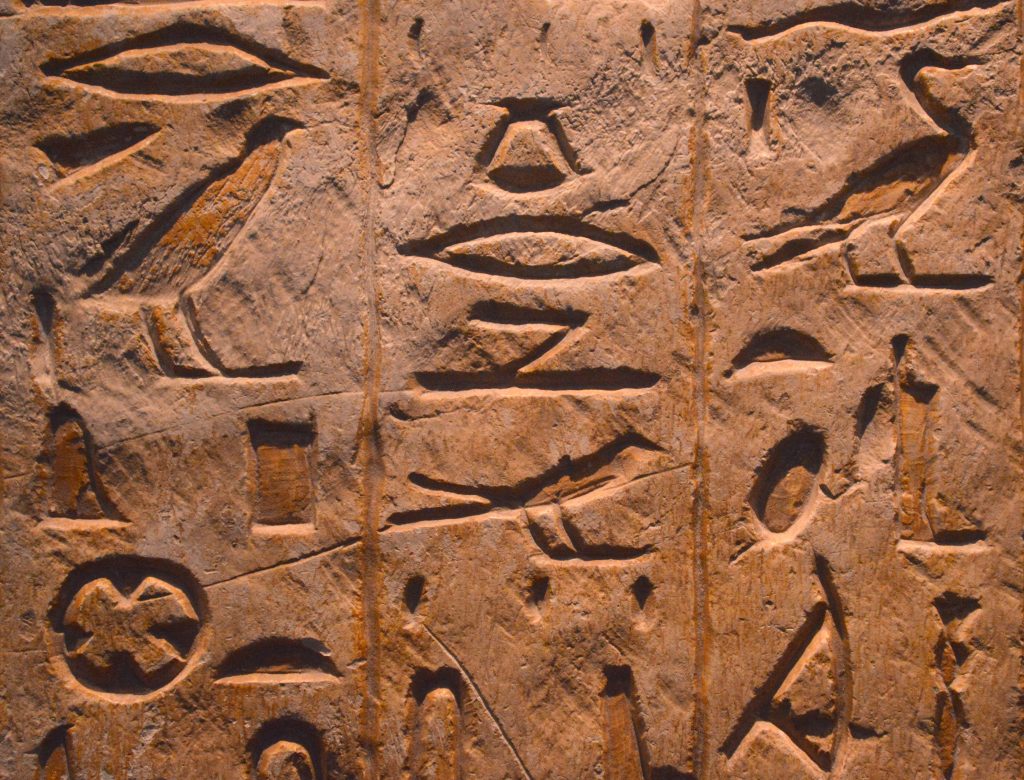
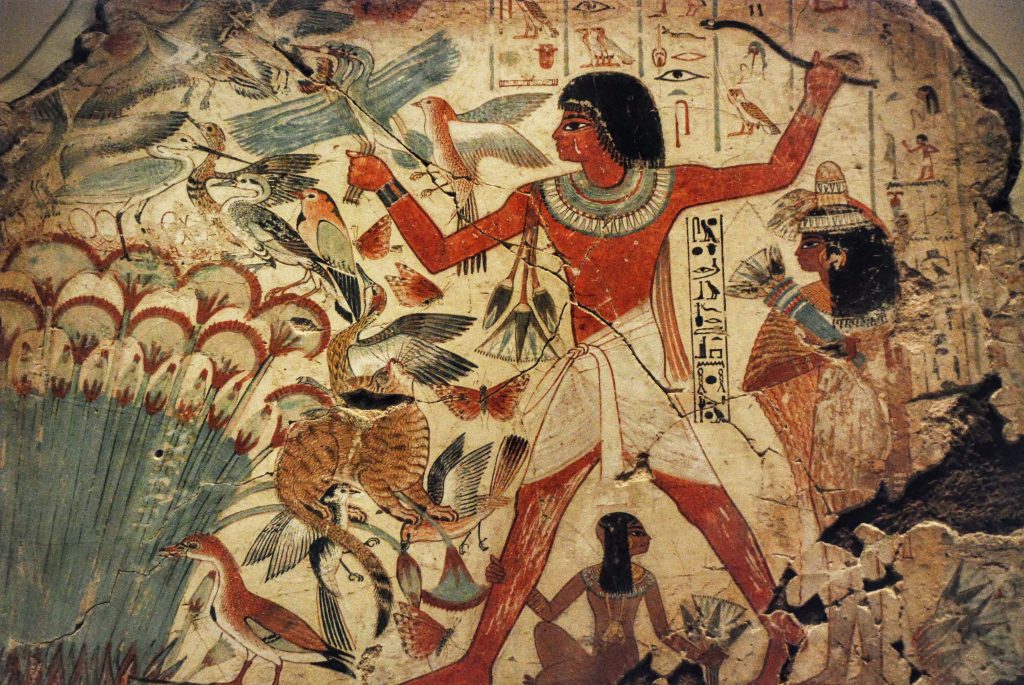
The early alphabet did not appear out of nowhere. The strongest long-term insight from Sinai is the way Semitic speakers adapted Egyptian hieroglyphic forms into a new method of writing. Instead of preserving the Egyptian system as-is, they repurposed recognizable images by the acrophonic principle: a picture stood for the first sound of the Semitic word for that object. This is why an ox head could become the ancestor of aleph, a house could yield a sound behind later bet, and water signs could feed the history of mem. At Serabit el-Khadim, scholars have long pointed to recurring pictographs such as ox heads, snakes, fish, water signs, and human heads. The result was not just another script. It was a conceptual simplification with consequences that far exceeded the Sinai mines.
3. Serabit el-Khadim shows that alphabetic writing grew in a working landscape, not only in royal courts
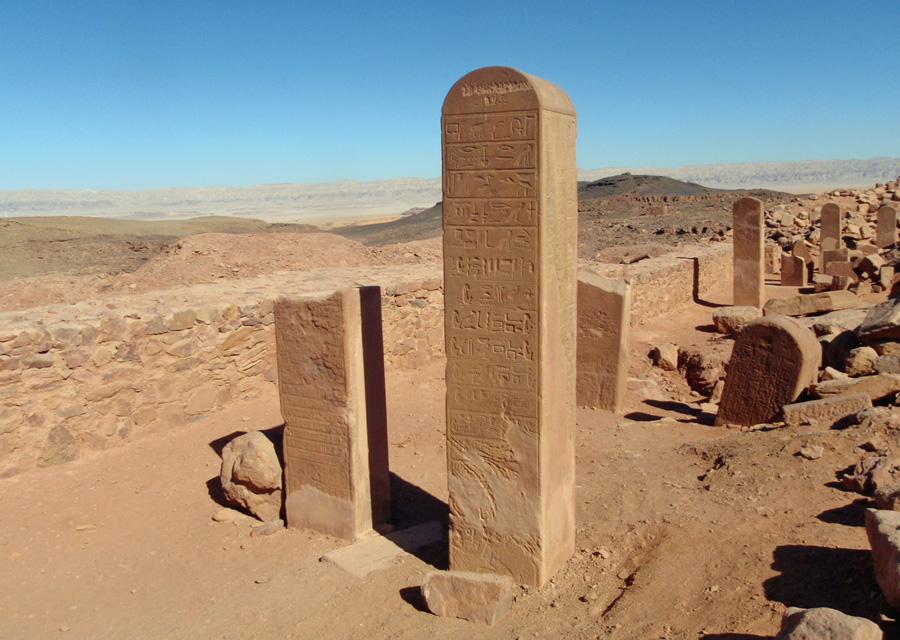
The mining complex at Serabit el-Khadim was tied to turquoise extraction and to a temple of Hathor, “Lady of the Turquoise.” Inscriptions were found near mines, roads, rocks, statues, and temple spaces rather than in a single polished archive. That setting matters. Flinders Petrie drew a lasting conclusion from the site, writing in 1906 that “common Syrian labourers, who could not command the skill of an Egyptian sculptor, were familiar with writing at 1500 B.C.” Even if later scholarship has refined parts of the historical picture, the point still resonates: early alphabetic writing appears in places connected to labor, movement, devotion, and cultural contact. That gives the alphabet a social history, not just a philological one.
4. The inscriptions matter even when their full readings remain uncertain
One reason sensational claims spread quickly is that many of these texts are fragmentary and difficult. Direction of reading is not always obvious. Some signs are eroded. Scholars often agree more on letter identities than on complete translations. Yet uncertainty does not reduce the value of the inscriptions. It sharpens it. The durable fact is that these texts document an early alphabetic system in formation. One frequently accepted reading, lbʿlt, usually rendered “to Baalat,” shows that at least some inscriptions had a votive or religious character. But even where individual words remain debated, the script itself still testifies to an intellectual leap: language could be broken into a compact set of signs and reused flexibly.
5. The alphabet’s ancestry reaches directly into later scripts
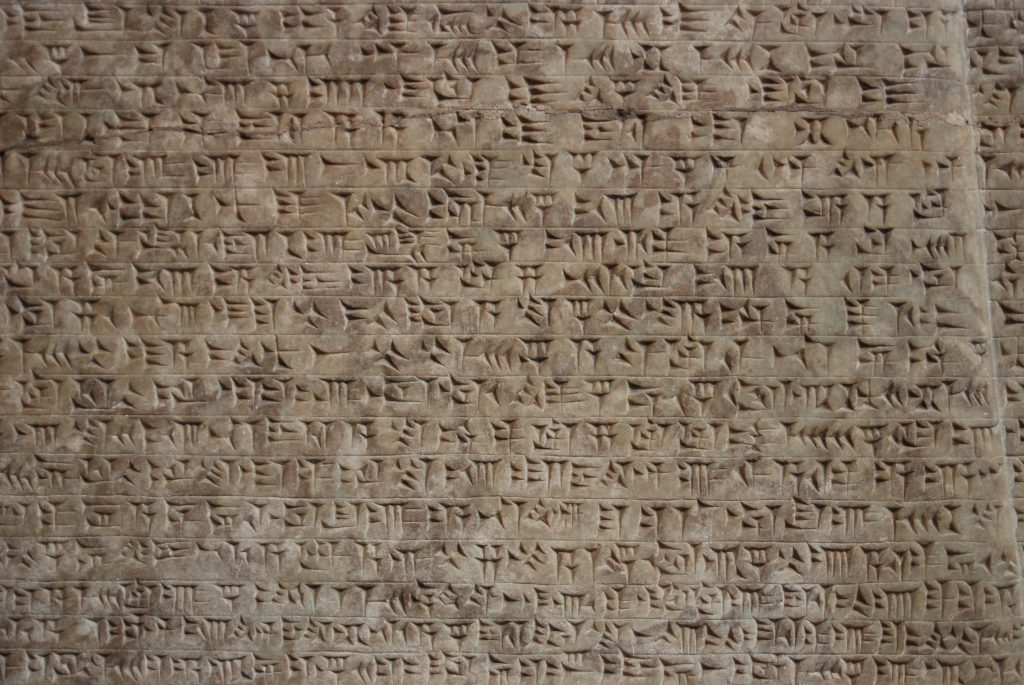
The Sinai material matters because it sits near the headwaters of a vast family tree. Proto-Sinaitic is widely treated as ancestral to later Canaanite and Phoenician writing, which in turn fed the Greek and then Latin traditions. That long chain is why these rough carvings matter far beyond biblical archaeology. In practical terms, the significance is civilizational. The modern alphabet used for English stands at the far end of a development to which the Sinai inscriptions belong. A disputed claim about one famous name would be remarkable if confirmed. The emergence of a system that helped lead, through later stages, toward scripts used across continents is far larger.
6. Sinai captures a cultural meeting ground, not a single identity label
The inscriptions emerged in an environment crowded with Egyptian and Semitic contact. Egyptian officials, miners, local cult practice, and Semitic-speaking workers all appear in the site’s broader context. That mix is precisely what makes the finds so significant.
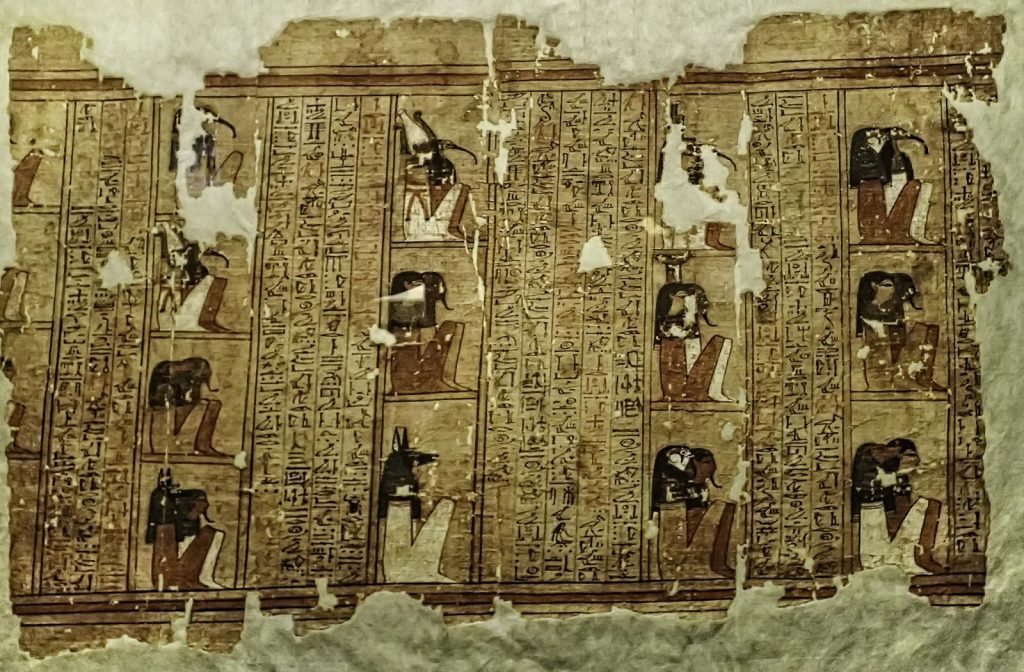
Some scholars emphasize Canaanite speakers, others stress particular biblical connections, and still others focus on the script’s Egyptian setting. The more secure takeaway is that early alphabetic writing formed in a multilingual, intercultural world. That background explains why the inscriptions are so valuable: they reveal innovation happening at a frontier where administrative power, religious imagery, labor, and language met each other daily.
7. The Moses question is narrower than the alphabet question
Recent popular treatments have highlighted possible readings of “Moses” in specific inscriptions, especially around Mine L. Those proposals have drawn interest, but they remain part of an ongoing interpretive dispute rather than an established consensus. The alphabet question is broader and more secure. There is stronger scholarly grounding for the importance of the Sinai texts as evidence for early alphabetic writing than for any single identification of a biblical individual. A name, if ever confirmed, would illuminate one episode. The alphabet illuminates a turning point in the history of communication.
That is why the Sinai alphabet matters more than the Moses inscription debate. The deepest significance of these markings is not celebrity identification, but the record of a new idea taking shape in stone: that a small set of signs could carry speech, memory, prayer, labor, and culture across generations. Long after debates over one inscription are revised, the larger fact remains. In Sinai, the alphabet was still young, experimental, and uneven. Even so, it had already begun to change the world.

