
A cruise cancellation usually lands with very little warning for the traveler who already picked dates, lined up flights and started counting down. That is why Carnival Cruise Line’s decision to remove a block of late-2026 sailings from one ship stands out, even in an industry where itinerary changes do happen.
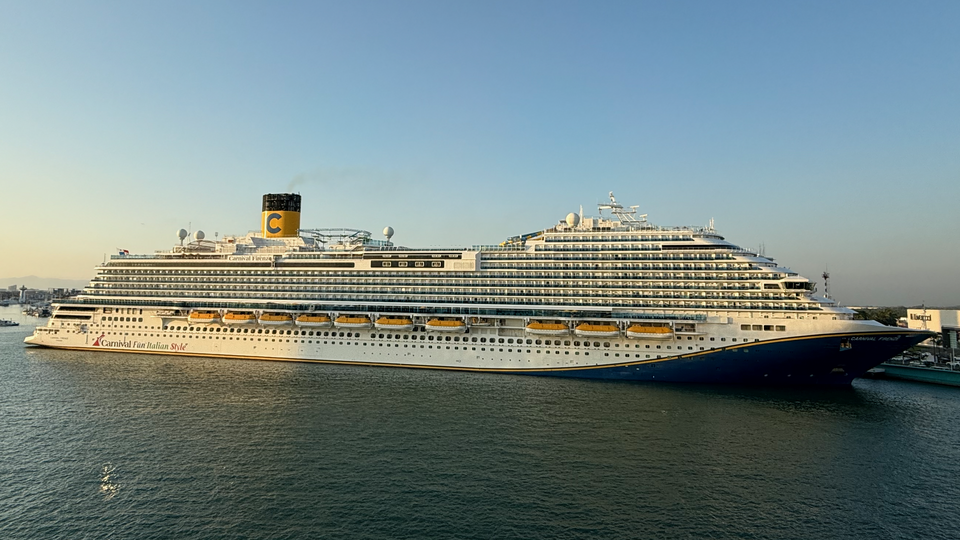
The affected voyages are all tied to Carnival Firenze, a ship scheduled for short Baja Mexico trips from Long Beach, California. Carnival said 11 sailings were canceled, and the change covers departures from October 12, 2026, to November 16, 2026.
1. The canceled cruises are all on one ship
The disruption is limited to Carnival Firenze rather than the broader fleet. That matters because passengers are not dealing with a linewide schedule shake-up, but a concentrated change affecting one vessel’s calendar.
Carnival said, “Due to changes to itinerary plans, we have cancelled sailings aboard Carnival Firenze scheduled between October 12, 2026, and November 16, 2026.” For booked guests, the practical issue is simple: a reservation that was once locked in is no longer operating on the original date.
2. The affected trips were short Baja Mexico getaways
The removed voyages were not long, once a year expedition style sailings. They were 3 and 4 night Baja Mexico itineraries sailing from Long Beach, which are often chosen by travelers looking for a quick break rather than a major vacation block.
That makes the cancellations especially disruptive for people who may have planned around a long weekend, school schedule or limited time off. Short cruises often work because of precise timing, and when those dates disappear, replacing them can be harder than it sounds.

3. Every impacted departure falls within a five week stretch
The removed sailings cluster tightly together rather than being spread across the year. According to the schedule cited in guest notices, the departures were set for October 12, 16, 19, 23, 26 and 30, followed by November 2, 6, 9, 13 and 16.
That pattern shows a full run of regularly scheduled departures being wiped from the booking calendar. For travelers, the issue is not just one missed date but an entire stretch of fall availability disappearing at once.

4. Carnival is offering two paths for booked passengers
The company told affected travelers they can either move to another cruise or receive their money back. Carnival said, “We have apologized to our impacted guests and are offering them the option to rebook another Carnival cruise with their cruise fare protected on a comparable sailing in similar accommodations, along with an onboard credit.”
It also said, “Guests who choose not to reschedule will receive a full refund of their cruise fare and any pre-purchased items to the original form of payment.” That includes add-ons many travelers buy early, such as excursions or beverage packages.

5. Rebooking comes with fare protection and a limited onboard credit
For travelers who still want to sail, the rebooking option is designed to soften the blow. Coverage of the guest advisory says passengers moving to comparable Long Beach departures on other ships can keep their original rate in similar accommodations and receive US$50 per person, up to US$100 per stateroom in onboard credit.
That does not erase the inconvenience of a changed vacation plan. It does, however, offer a clearer fallback for travelers who want to avoid starting over from scratch.

6. Refunds are available even for some travelers who assumed deposits were locked in
One notable detail is that the refund option is not framed as a narrow exception. The advisory described in coverage says a full refund applies to cruise fare and pre-purchased items, including for bookings that carried non-refundable deposits.
That distinction matters because cruise travelers often book under fare rules that seem final. In a line initiated cancellation, the rules shift, and passengers regain options they may not expect to have.
7. Carnival has not given a detailed public reason beyond itinerary changes
The official explanation remains broad. Carnival attributed the move to changes in itinerary plans, but it did not publicly provide a technical breakdown of why this section of the schedule was removed.
In the cruise industry, that is not unusual. Schedule changes can be tied to port access, operational planning, charter commitments or maintenance windows, and companies do not always spell out the exact internal trigger.
8. Cruise cancellations are uncommon, but they are not rare enough to shock the industry
Most sailings depart as scheduled, which is why cancellations get attention when they happen. Still, cruise lines do occasionally pull voyages for dry dock work, refurbishments, redeployments or route adjustments.
That broader context helps explain why travelers are often told to focus less on the missing sailing itself and more on the replacement choices. A cancellation is disruptive, but it is also one of the built-in risks of booking travel far in advance.

9. The schedule change lands close enough to departure to feel personal for travelers
Coverage of the cancellations noted that some guests were caught off guard because the sailings were only about seven months away. In travel planning terms, that is late enough for people to have arranged time off, childcare, transportation and pre-cruise hotel stays.
That is the part many travelers feel most sharply. A canceled cruise is not only a missing reservation; it can unravel several connected bookings around it.
10. The ship’s future deployment adds context to the disruption
Reporting on the canceled block pointed to Carnival Firenze’s upcoming repositioning. The ship is expected to begin a new phase with sailings tied to Miami and New York after a South America route in early 2027, giving the late 2026 gap extra significance.
That does not amount to a confirmed explanation for the cancellations. It does place the move within a larger scheduling transition, which often affects how cruise lines use time for maintenance, refurbishment and route preparation.
For travelers, the main lesson is practical rather than dramatic: even short, familiar cruise itineraries can disappear from the calendar when a ship’s plans change. In this case, the disruption is concentrated, clearly dated and paired with defined rebooking or refund options.
The affected guests are not left guessing about whether the voyages are still operating. They are left deciding whether to move quickly to another sailing or step away and take the refund.

