
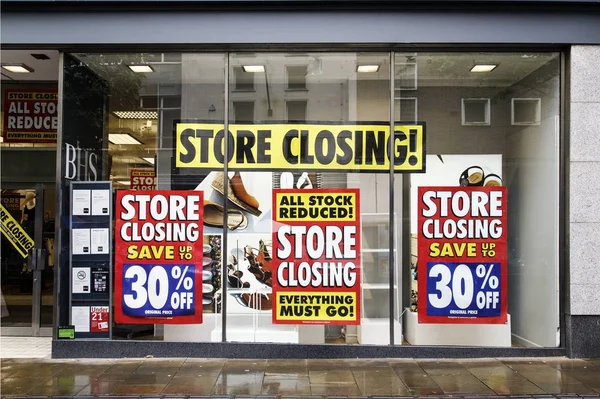
The vanishing storefront has become one of the clearest visual signs of how fast American shopping habits are changing. In 2025, closures spread across craft chains, pharmacies, restaurants, department stores, and mall-based retailers, turning what once looked like isolated business problems into a much broader reset.
The pattern is bigger than a few struggling brands. More than 8,100 stores closed across the U.S. in 2025, while separate industry tracking showed thousands more locations disappearing in the first half of the year alone. The result is a retail map that looks less crowded, more selective, and far less dependent on keeping every familiar location open.

1. Bankruptcy is wiping out entire chains, not just weak locations
Some of the most visible disappearances came from companies that did not simply trim a few underperforming stores. They shut down almost everything. Joann closed all of its U.S. stores after a second bankruptcy filing, ending a long run for a chain that had been a staple for sewing and craft shoppers. Party City also closed hundreds of locations after bankruptcy, though the brand continued in altered form online and through a limited number of independent franchise stores.
Rite Aid followed a similar path. After filing for bankruptcy again in 2025, the chain wound down all of its locations, leaving former customers to transfer prescriptions and records elsewhere. These cases turned closures into something more final than the usual retail downsizing cycle.

2. Chains are cutting stores to protect profits, even when they are not collapsing
Not every disappearing storefront belongs to a company in bankruptcy court. Several national brands used 2025 to shrink their physical footprints as part of broader profitability plans. Kohl’s said it would close 27 underperforming stores, Macy’s moved ahead with dozens of closures, and Kroger announced plans to shut about 60 stores over 18 months while focusing on stronger markets.
This is a different kind of retreat. Instead of trying to save a failing business at the last minute, companies are treating store portfolios as something to constantly rework, removing locations that no longer justify rent, labor, and operating costs.

3. Online competition keeps making physical stores harder to justify
For apparel and accessories chains in particular, digital rivals continued to reshape the math. Forever 21 directly cited pressure from overseas fast-fashion platforms, saying competitors were able to use the “de minimis exemption to undercut our brand on pricing and margin.” Claire’s also faced growing competition from low-cost online sellers while dealing with weakening mall traffic.
That pressure hits stores from both sides. Consumers can compare choices instantly, and chains that once relied on impulse shopping in malls or strip centers now face rivals without the same real-estate burden.
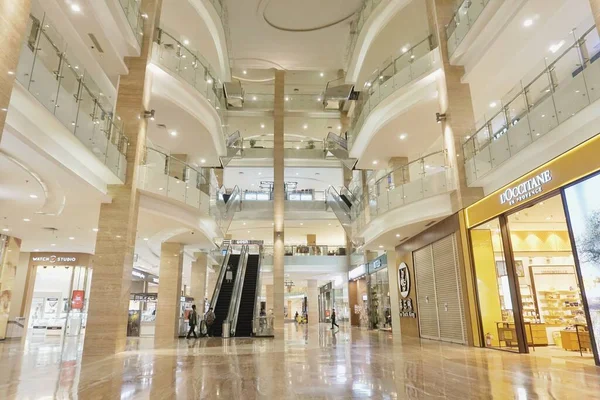
4. Mall traffic is no longer strong enough to support every legacy brand
Mall-based retail has been under strain for years, but 2025 made that shift harder to ignore. GameStop said it planned to close a “significant number” of stores after an optimization review, continuing a long contraction. Inditex, the parent of Zara and other fashion brands, reported 132 fewer stores as of October 31 than a year earlier across its portfolio.
The backdrop is larger than any one chain. U.S. malls ended 2024 with an 8.7% vacancy rate, and the country’s mall count has been declining for years. When anchor tenants weaken and foot traffic softens, smaller in-line retailers often lose the casual visits they once depended on.

5. Rising costs are punishing chains with large store networks
Running thousands of physical locations has become more expensive at the same time that demand has grown less predictable. Rent, labor, logistics, and inventory carrying costs all matter more when sales are uneven. That dynamic showed up across categories, from grocery to home goods to apparel.
A long stretch of dense physical expansion is now being reevaluated. Industry analysis found roughly 6,000 stores closed in the first half of 2025, vacating 123.7 million square feet of retail space. For chains with overextended footprints, closing stores has become one of the fastest ways to cut fixed costs.

6. Some store formats no longer fit how customers want to shop
The closures were not only about whole brands disappearing. In some cases, companies decided that a particular format was no longer working. Starbucks moved away from its pickup-only model and also disclosed hundreds of broader closures, saying some stores were places where it had been “unable to create the physical environment our customers and partners expect” or where it did not “see a path to financial performance.”
That language points to a larger issue: location strategy now depends on more than traffic counts. Chains are reassessing whether a store’s design, convenience, and customer experience still match current habits.

7. Consumers have become less loyal to place and more loyal to convenience
A familiar storefront once carried its own advantage. In 2025, that advantage looked weaker. Industry observers pointed to shoppers choosing speed, value, and ease over attachment to a specific chain or physical location. Deborah Weinswig, CEO of Coresight Research, said, “Not only do they want the best prices, but they also have no patience for stores that are constantly disorganized, out of stock, and that deliver poor customer service.”
That shift leaves little room for middling stores. A location does not need to be terrible to close; it only needs to feel less useful than the alternatives.
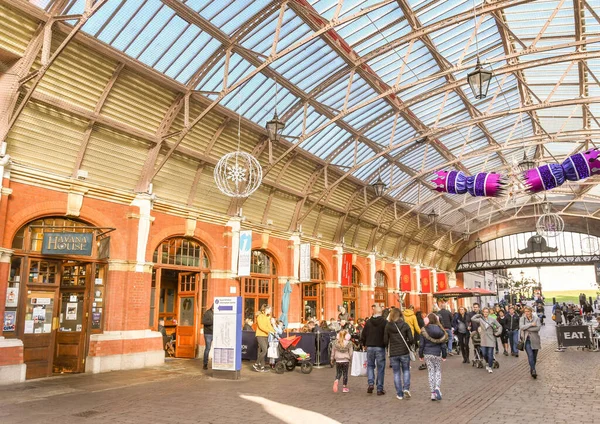
8. Empty retail space is increasingly being repurposed instead of refilled by similar stores
One of the clearest signs that this is a structural shift is what happens after a closure. Vacant spaces are not always being replaced by another apparel chain, craft store, or department store. Former mall and big-box properties are being turned into mixed-use centers, sports facilities, self-storage, health facilities, housing, and distribution-oriented spaces.

That means a disappearing storefront is often not temporary. It can mark a permanent change in how a neighborhood uses commercial space, especially when a site no longer fits the economics of traditional retail. The 2025 closures do not point to the end of in-person shopping. They show a narrower future for it. Physical retail remains important, but chains are concentrating on locations that do more than exist on a map. For many familiar names, that has meant fewer doors, fewer malls, and less room for stores that once survived on habit alone.

