
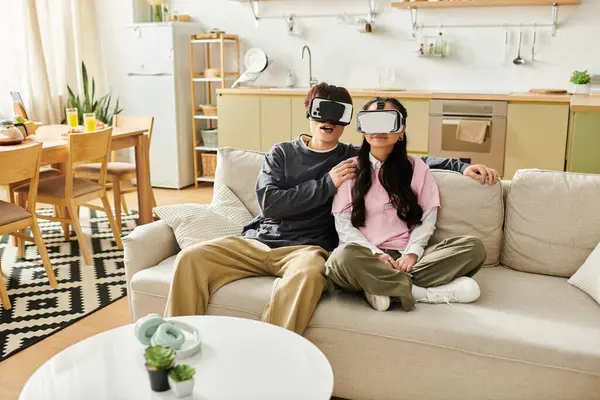
Science fiction has always done more than predict gadgets. Its sharper trick is exposing what those tools can do to attention, privacy, identity, and daily life once they stop feeling futuristic and start feeling normal.
That is why some of the genre’s oldest ideas land differently now. The devices may not look exactly like they did on the page or screen, but the social patterns around them often feel startlingly familiar.
1. The screen that watches back
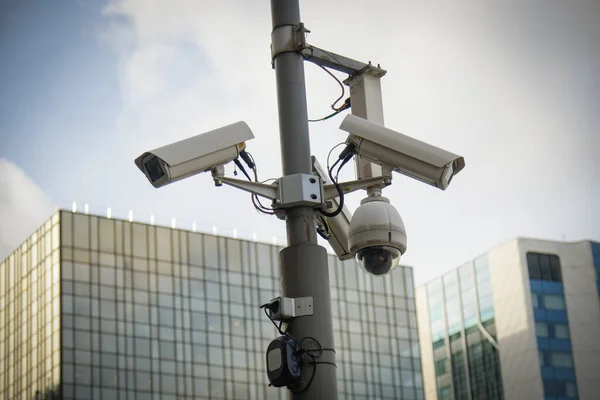
George Orwell’s Nineteen Eighty-Four imagined “telescreens” that delivered information while also turning private life into something observable. The modern version is less centralized and more ambient. Phones, watches, speakers, cameras, and connected appliances have created a culture in which convenience and monitoring often arrive bundled together.
The unease comes from scale. One analysis of Orwell’s legacy argued that today’s surveillance environment is driven not only by governments but by private platforms that “monitor, monetize and manipulate” behavior, while smartphones and connected household devices extend that reach into ordinary routines. Meanwhile, major cities now operate dense CCTV networks that make continuous observation feel infrastructural rather than exceptional.

2. Personalized advertising that knows too much
Long before algorithmic feeds became background noise, Philip K. Dick’s The Minority Report pictured ads that recognized people and changed in real time. That once looked flashy. Now it reads as an early sketch of targeted marketing, recommendation systems, and behavioral profiling.
Streaming platforms sort taste, map apps infer intent, and online ads follow browsing habits across devices. The disturbing part is not just relevance. It is the sense that software can build an intimate model of preferences, moods, and routines, then use that model to shape what appears next.

3. The always-on digital world that swallows attention
William Gibson popularized “cyberspace” in Neuromancer, but the larger warning was never just about logging on. It was about life reorganized around a permanent network where information, identity, work, and escape all blur together.
That warning no longer feels abstract. The public web helped turn the internet into a place where, as one overview notes, people can access nearly the sum total of human knowledge, entertainment, and social life, while economies and societies are reshaped at unusual speed. What reads as familiar now is the cost of permanent connection: fractured focus, endless stimulation, and the feeling that leaving the network means stepping away from modern life itself.

4. Machines that talk like companions
From friendly computer voices to emotionally responsive operating systems, sci-fi repeatedly tested the idea that people would grow attached to software that speaks naturally. That dynamic has moved much closer to daily reality with multimodal generative AI systems and voice assistants that can answer questions, create text and images, and sustain conversational exchanges.
This is where the warning turns personal. Fiction often treated machine conversation as a doorway to dependence: people outsourcing memory, judgment, creativity, or companionship to systems that feel responsive without actually being human. The appeal is obvious. So is the discomfort.

5. Smart homes that become behavioral maps
E.M. Forster’s The Machine Stops imagined a life mediated by automated systems, remote communication, and technologically managed interiors. It now looks eerily aligned with the rise of connected homes, where lights, thermostats, speakers, locks, and cleaning devices quietly collect patterns about the people using them.
Home automation can reduce friction, but it also changes what a home is. A private space becomes a measurable environment, full of usage logs, voice inputs, motion data, and routines that can be analyzed. The old warning was not that houses would become evil machines. It was that dependence on seamless systems could make people less aware of how much autonomy they had handed over.

6. Video calling that erases distance but not fatigue
Science fiction loved visual communication. It treated face-to-face contact across distance as a triumph of technical progress, and it was. Today, video calling became commonplace across work, school, and personal life, especially after its rapid normalization during the pandemic era.
Yet the warning buried inside many futuristic communication systems was subtler: constant reachability changes social expectations. Once seeing someone instantly becomes easy, absence can look like avoidance, and every space starts to feel semi-public. The miracle of connection can quietly become the pressure of perpetual availability.

7. Wearables and handhelds that turn the body into a data stream
Sci-fi frequently imagined communicators, wrist devices, and pocket computers as symbols of freedom and mobility. In reality, smartphones and smartwatches did deliver that portability. They also created a new intimacy between the body and the network.
Modern wearables can track movement, sleep, heart-related metrics, and performance, while phones serve as camera, navigator, payment tool, identity token, and social portal. A person does not merely carry technology anymore; a person generates a continuous trail through it. The warning here is not about a single device but about a life increasingly interpreted through dashboards, notifications, and recorded behavior.
8. Virtual worlds that compete with the physical one
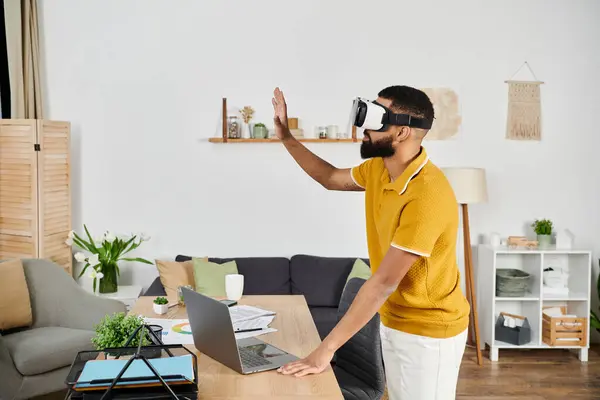
Holodecks, immersive simulations, and shared digital realms were often portrayed as wondrous escapes. They were also written as places people might prefer to ordinary life. That tension feels newly relevant as virtual reality headsets, persistent online communities, and avatar-based social spaces keep improving.
Science fiction’s warning was never just about realism. It was about substitution. When simulated environments become emotionally compelling, socially meaningful, and economically active, the line between enrichment and withdrawal gets harder to see. Virtual spaces do not need to trap people physically to reshape where attention, intimacy, and identity are invested.
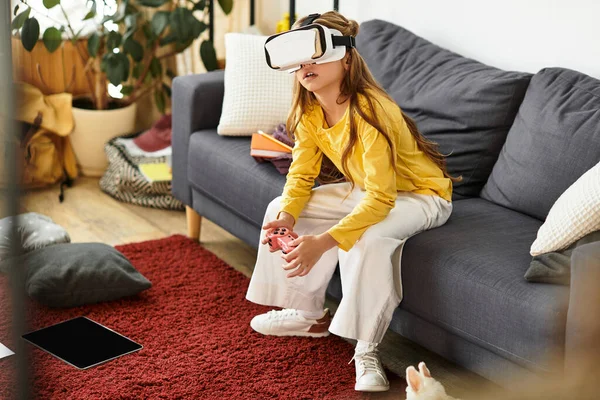
What makes these old warnings feel current is not that fiction predicted every device perfectly. It is that many writers understood the pattern: a tool arrives as convenience, delight, or status, then gradually reorganizes behavior.
That is why sci-fi remains useful. As Brian David Johnson’s work on science fiction prototyping argues, fiction can function as a way to explore the real-world implications of emerging technology before society fully commits to them. The gadgets may change. The human questions stay stubbornly familiar.

