

Science fiction has a habit of looking exaggerated right up until ordinary life catches up. Devices now used on commutes, in kitchens, at work, and during video calls were often sketched out decades earlier in novels, films, and television.
What makes that overlap interesting is not just prediction. Fiction gave shape to habits before engineers could build the hardware, which is why so many modern tools feel familiar the moment they arrive.

1. Smartphones began as communicators, pocket receivers, and “wireless telephones”
The modern phone sits at the center of daily life, but its outline appeared long before app stores and touchscreens. Science fiction repeatedly imagined portable communication, from the “wireless telephone” listed in 1928 fiction to the hand-held communicator carried by the crew of Star Trek. That connection was not just aesthetic.
Martin Cooper, who made the first handheld cellular phone call in 1973, publicly linked his thinking to Captain Kirk’s communicator. The result was not a prop made real in a single leap, but a long convergence of portability, battery power, wireless networks, and interface design. What once looked like a futuristic badge of mobility is now the object that carries maps, messages, cameras, calendars, banking access, and identity verification in one place.

2. Video calls were imagined before television became normal
Seeing a face on a call can now feel routine, which makes its fictional history easy to miss. Early writers were already picturing videophones in the early 20th century, including Hugo Gernsback’s telephot and later screen-based communication in film and television. That early instinct turned out to be remarkably durable.
The idea survived changes in display technology, network speeds, and social behavior because it answered a simple human desire: hearing someone was useful, but seeing them felt closer. Today’s work meetings, family catch-ups, and telehealth appointments look less like a radical future than the delayed arrival of an old science-fiction promise.
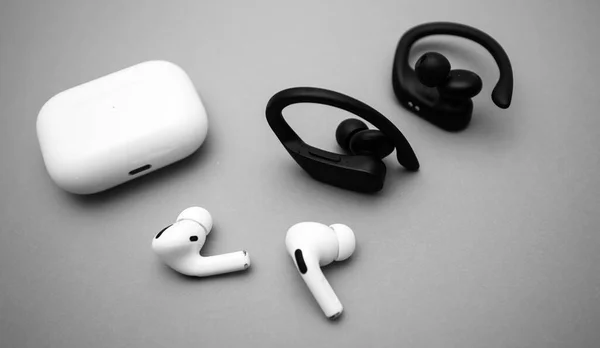
3. Earbuds were once a warning about constant audio immersion
Tiny wireless audio devices often get framed as sleek modern accessories, yet fiction anticipated both the hardware and the behavior around it. In Ray Bradbury’s Fahrenheit 451, the “Seashell” earpieces described a person enclosed in an endless stream of sound. That cultural detail matters as much as the gadget itself.
Earbuds did not simply miniaturize speakers; they changed how public space feels, turning walking, commuting, exercising, and even grocery shopping into curated audio environments. Science fiction recognized early that personal sound would not just entertain people. It would create private mental rooms inside crowded daily life.
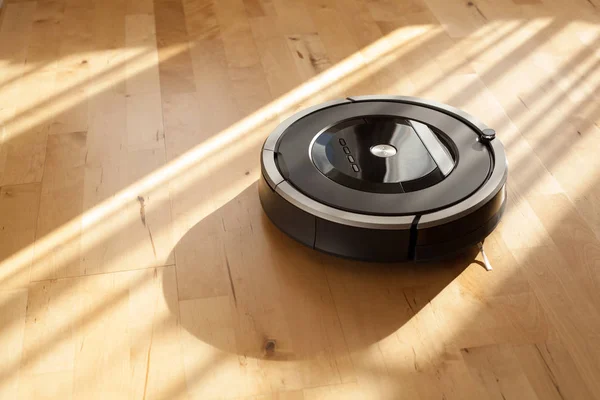
4. Robot helpers arrived quietly, starting with one task at a time
Fiction often presented household robots as full personalities: maids, nannies, companions, or all-purpose domestic assistants. Real homes took a less dramatic path. Instead of one humanoid machine doing everything, households got specialized tools that handle narrow chores well. The robotic vacuum is a clear example.
Wikipedia’s record of sci-fi predictions ties automated home help to stories such as “There Will Come Soft Rains” and “The Door into Summer”. That vision now appears in compact cleaners that map rooms, avoid furniture, and return to charging docks with little oversight. The broader lesson is that science fiction often imagined the social role correctly even when the physical form changed. The dream was assistance inside the home; reality delivered it as a fleet of narrow, useful machines.

5. Smart homes were imagined as systems, not gadgets
Before voice assistants and connected thermostats, fiction was already exploring homes that responded automatically to the people inside them. E.M. Forster’s “The Machine Stops” and later mid-century stories described domestic environments where communication, entertainment, and control were embedded into the surroundings.
That systems thinking now defines everyday convenience. Lights can be scheduled, doors monitored remotely, appliances coordinated, and media controlled by voice or phone. The important shift is not any single device. It is the home becoming a digital environment, where once-separate functions are tied together into routines that work in the background.
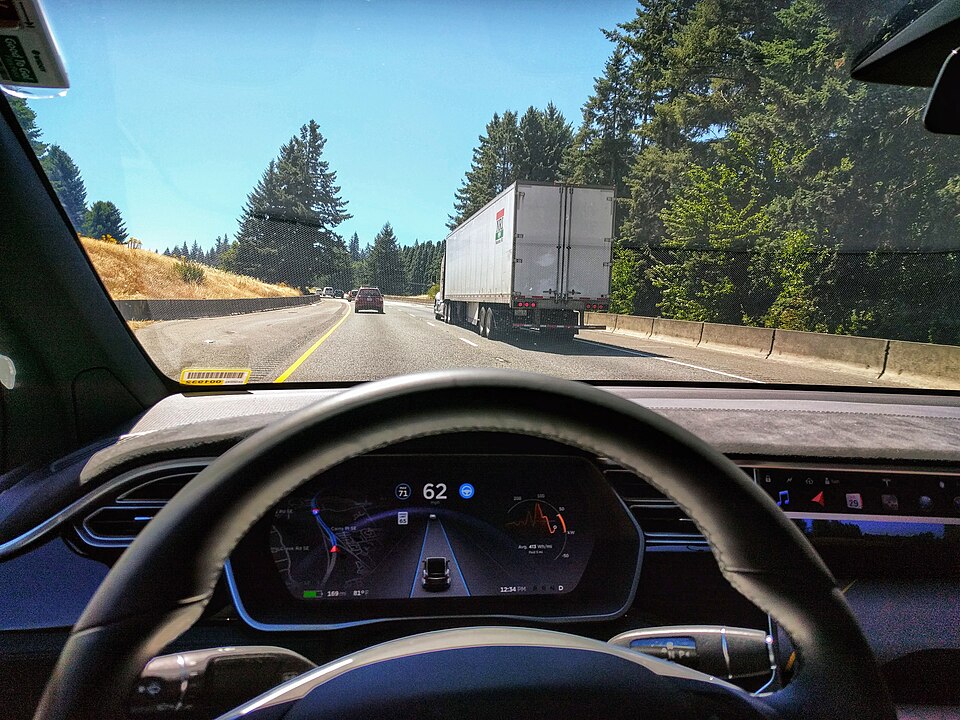
6. Self-driving cars were foretold as relief from human limitation
Autonomous driving has not become invisible infrastructure yet, but the concept is no longer speculative culture. It has become an engineering and regulatory reality with visible everyday effects, from driver-assistance systems to robotaxi testing and advanced navigation features.
Isaac Asimov gave the idea a memorable formulation in 1964 when he wrote, “Much effort will be put into the designing of vehicles with ‘robot-brains.’” That phrasing now sounds less theatrical than descriptive. Even partial automation has shifted expectations around lane keeping, adaptive speed, parking, and route awareness. The fantasy was never just a car without a driver’s hands on the wheel. It was transport that reduced strain, distraction, and error.
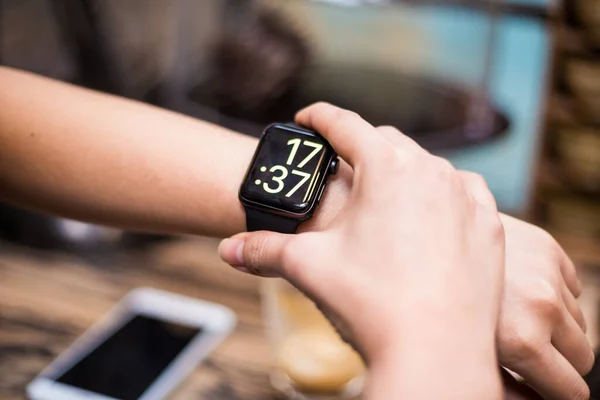
7. Smartwatches made wrist communication real, just in a different form
The wrist radio and video watch from Dick Tracy looked flamboyant when they first appeared, but the core idea was simple: communication and information should be instantly glanceable. That premise now lives in wearables that deliver calls, messages, health alerts, maps, and payment access from the wrist.
Science fiction once treated the wrist device as a symbol of efficiency. Modern use broadened that meaning. Today, the watch is as much a health interface as a communication tool, tracking sleep, movement, heart rate, and workouts while remaining less intrusive than a phone. A fictional crime-fighter’s gadget became an everyday wellness screen.
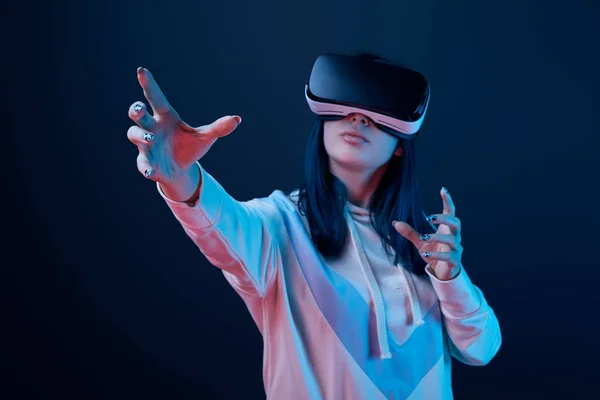
8. Virtual and augmented reality moved from spectacle to practical use
Head-worn digital experiences were imagined early, especially in Stanley G. Weinbaum’s Pygmalion’s Spectacles, which anticipated immersive viewing through goggles. Later fiction expanded that into fully navigable digital worlds. Reality has developed along two tracks.
Virtual reality creates enclosed environments for training, therapy, gaming, and simulation, while augmented reality overlays directions, data, or visuals onto the physical world. That split makes the technology more useful than a single science-fiction label suggests. It is not only about escape into fantasy; it is also about reducing friction between information and action in the real world.

9. Lab-grown meat was imagined before food innovation had the tools
One of the more surprising sci-fi predictions was synthetic meat. Long before cellular agriculture became a serious research and food-industry topic, fiction had already separated the idea of meat from the need to raise and slaughter an animal.
That distinction now carries practical significance. Reference material tracing sci-fi predictions points to an 1880 story describing chemically prepared meat, showing how old the concept really is. Today’s version is different in method, using cultivated cells rather than imaginative chemistry, but the cultural leap is the same: food can be re-engineered without abandoning the familiar experience people expect from it.
The most striking thing about these technologies is not that fiction guessed correctly every time. It is that the stories often understood the human use case before the hardware existed. Phones became extensions of presence. Earbuds created portable privacy. Smartwatches turned health into ambient data. Home automation made comfort programmable. The future did not arrive with chrome walls and flying commutes for everyone. It arrived as ordinary behavior, wrapped around tools that once belonged to science fiction.

