
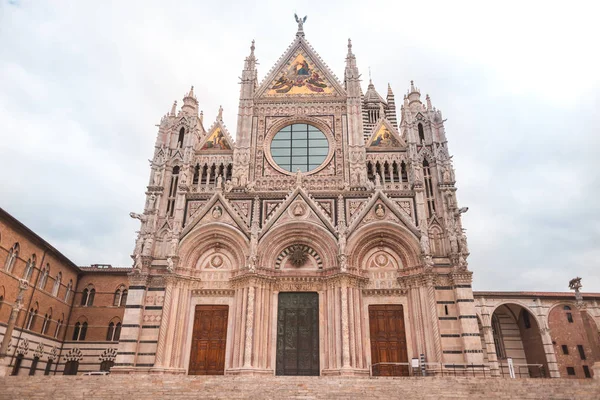
Few Christian practices reveal the weight of history quite like prayer for the dead. In some churches it remains part of public worship and private grief. In others it is treated as a serious mistake, not because death is unimportant, but because the gospel is understood to settle a person’s standing before God in this life.
The disagreement endures because the issue touches several questions at once: which books carry authority, what happens after death, how judgment works, and what the church has done across the centuries. The result is not a single debate but a cluster of them.
1. Christians do not agree on which biblical books should settle the question
A major fault line appears before the argument even reaches interpretation. Roman Catholic and Eastern Orthodox traditions read 2 Maccabees 12:40–46 as part of the scriptural conversation, while many Protestants do not treat that book as canonical Scripture.
That difference matters because the passage explicitly describes a sacrifice offered for the dead and concludes, “It is therefore a holy and wholesome thought to pray for the dead, that they may be loosed from sins.” For traditions that receive 2 Maccabees as authoritative, the text has obvious weight. For traditions that do not, it can still serve as evidence of ancient Jewish belief, but not as a binding rule for Christian practice.
2. The same passage in 2 Maccabees is read in sharply different ways
Even where 2 Maccabees is taken seriously, Christians do not read it uniformly. One line of interpretation sees the passage as straightforward support for intercession on behalf of the dead, especially because it links prayer to resurrection hope. Another line argues that the author mainly commends belief in resurrection, not the practice itself.
That is why the same text can function as evidence for continuity in Jewish and Christian devotion, or as a disputed example that proves less than it first appears. The disagreement is not only over the text’s authority but over what the text is actually praising.
3. Early church witness strengthens the practice for some Christians
Those who defend prayer for the dead often point to the church’s long memory. Augustine wrote that “the whole Church is wont to supplicate for the departed,” and in On the Care of the Dead he treated such prayer as meaningful, while also insisting that it does not overturn divine judgment. He argued that these prayers benefit only those whose earthly life made them capable of receiving such help.
That patristic witness matters because it shows the practice was not a medieval novelty. For Catholics and Orthodox Christians, the testimony of the early church is not decorative background. It is part of the church’s living continuity.

4. Protestant objections usually begin with the finality of judgment
Many Protestants resist prayer for the dead because they believe the New Testament presents death as the close of earthly decision. In that frame, intercession after death appears to threaten the sufficiency of Christ’s atonement or to blur the urgency of repentance in this life.
That concern explains why some Protestant writers respond so strongly. The issue is not simply liturgical preference. It is tied to whether salvation is understood to be decisively settled before death, with no postmortem purification or release from sin.
5. Purgatory and prayer for the dead are related, but they are not identical
Popular discussions often collapse these topics into one. Historically, however, prayer for the dead and purgatory are connected without being interchangeable. A church may pray for the departed because it believes the dead remain within the communion of saints and can be commended to God, while debates over purgatory concern the nature of purification after death.
That distinction matters because Christians may reject a developed doctrine of purgatory and still retain some form of prayer for the departed. Others reject both because they see no scriptural basis for either.
6. Key New Testament texts are interpreted in competing ways
One of the most contested passages is 1 Corinthians 3:15, where Paul says a person “will be saved, but only as through fire.” Some have connected that language to post-death purification. Others argue that Paul is speaking about the testing of ministerial work, not the cleansing of souls after death.
Reformed interpreters have pressed this point strongly. A similar reading appears in a devotional treatment of the passage that says Paul is describing the evaluation of work built on Christ’s foundation, not a place or process of purgatorial punishment. Once that text is read in opposite directions, disagreement about prayer for the dead becomes harder to resolve, because one side sees a biblical pattern where the other sees a category mistake.
7. The debate is also pastoral, not only doctrinal
Prayer for the dead often arises in the presence of grief. Families want to do something faithful with love that has not ended. Augustine recognized that burial customs and memorial places often comfort the living, even while he argued that what truly matters for the departed is prayer, almsgiving, and the church’s intercession rather than the physical location of the body.
This is one reason the subject never stays abstract for long. It touches funeral rites, remembrance, hope, and the bonds believers feel with those who have died in Christ.
8. Different traditions define the communion of saints differently in practice
All major Christian traditions confess that believers are united in Christ. The dispute comes in how that unity is expressed after death. Catholics and Orthodox Christians commonly see prayer for the departed as one expression of the church’s shared life across death. Many Protestants affirm communion with all believers in Christ but do not believe that this communion includes intercession intended to aid the dead.
That difference in practice reflects a deeper difference in spiritual imagination. One tradition emphasizes continued mutual remembrance within the church across heaven and earth. Another emphasizes trustful release of the dead into God’s hands without petitions for their state.
The disagreement has lasted because it is carried by Scripture, tradition, worship, and grief all at once. Christians are not merely arguing over one verse or one custom. They are working from different assumptions about authority, judgment, and the church’s relationship to its dead.
That is why the question remains unsettled across the Christian world. Prayer for the dead sits at the meeting point of doctrine and devotion, where convictions formed in the study also surface at the graveside.

