
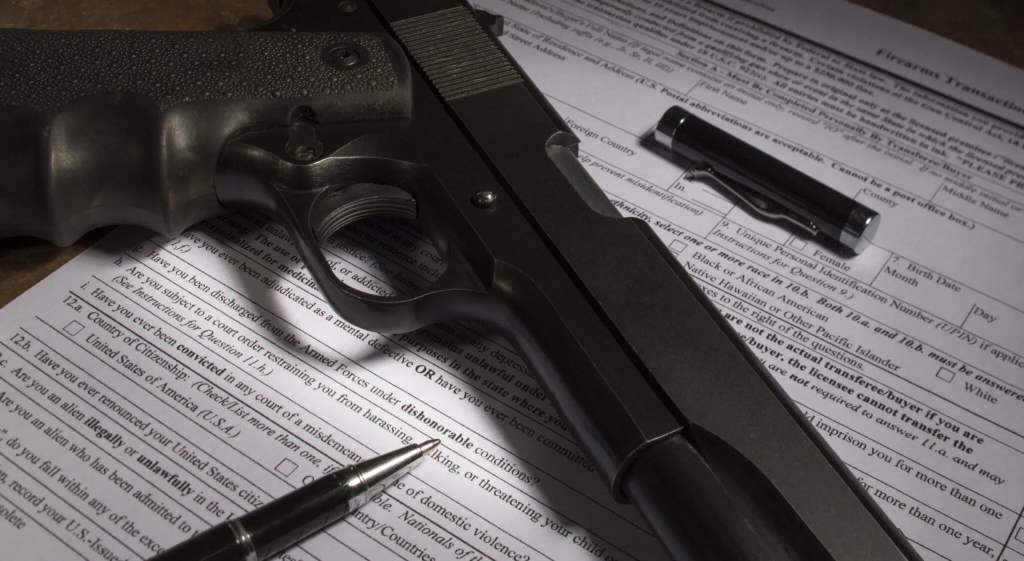
Gun laws often turn on details that many owners assume are minor: where a firearm is carried, how it is stored, when a loss is reported, and whether a permit is valid in the state where a person is standing. Those details can separate routine possession from a criminal case.
For gun owners, felony exposure does not always begin with violent conduct. In many situations, it starts with an overlooked sign, a bad assumption about reciprocity, or a firearm left unsecured at home or in a vehicle. These are some of the most common mistakes that can create severe legal consequences.

1. Carrying into a prohibited place without checking location rules
One of the most common errors is treating a carry permit like universal permission. It is not. Federal buildings, courthouses, post offices, many school properties, airport security areas, and a range of state-defined sensitive places can trigger criminal charges if a firearm is brought inside.
The risk grows when an owner assumes that a legal firearm is legal everywhere. The Gun-Free School Zones Act of 1990 makes it a federal offense in certain circumstances to knowingly possess a firearm within 1,000 feet of a K-12 school, with limited exceptions. State laws can be even stricter in particular locations, and some states broadly restrict carry in sensitive areas.

2. Assuming out-of-state permits work the same way everywhere
Reciprocity mistakes are easy to make and hard to undo. A permit that is valid at home may not be recognized elsewhere, and even when it is recognized, the conditions can be narrow.
Colorado offers a clear example. The state recognizes some out-of-state permits only when the issuing state honors Colorado permits, the holder is a resident of that issuing state, the ID matches that residency, the holder is at least 21, and the permit remains valid. According to Colorado reciprocity rules, a Colorado resident also cannot legally carry concealed in-state using a nonresident permit from another state. A paperwork assumption can quickly become an unlawful carry case.

3. Leaving a firearm unsecured where a child can access it
Storage errors can become criminal cases when a child gets access to a gun that was left out, left loaded, or left somewhere predictable. The laws vary sharply by state, but the pattern is clear: unsecured firearms create legal exposure even inside a private home.
Twenty-six states have adopted secure storage or child access prevention laws, and several impose consequences when a child may gain access, not only after harm occurs. Other state summaries show that some laws are triggered by injury, death, threatening display, or criminal use after a minor accesses the weapon. What looks like a household oversight can be charged as a serious offense.

4. Failing to secure a firearm from prohibited users
Child-access laws get most of the attention, but they are not the whole picture. In some states, storage rules also address access by people who are legally prohibited from possessing firearms.
That means the legal question is not only whether a child found the gun. It can also be whether an owner left a firearm available to someone barred from having it. In those states, unsafe storage can move beyond negligence claims and into criminal liability, especially if the firearm is later used in a crime or to cause injury.

5. Not reporting a lost or stolen firearm when state law requires it
Some gun owners delay reporting because they want to keep looking, cannot locate the serial number, or are unsure whether the firearm was truly stolen. That hesitation can be costly in states that require prompt reporting.
Research cited by Everytown states that 17 states have adopted lost-and-stolen reporting laws. These laws are designed to help law enforcement identify trafficking patterns and recover firearms diverted into illegal use. One study referenced there found that lost-and-stolen reporting laws reduced illegal gun movement by 46%. Missing the reporting window can create criminal exposure on top of the original loss.

6. Treating dealer and licensee reporting duties like optional paperwork
For federal firearms licensees, theft or loss reporting is not a courtesy. It is a legal requirement with a deadline. The ATF states that any FFL who discovers a theft or loss from inventory must report it to ATF and local law enforcement within 48 hours of discovery. The process includes a phone report and written submission. If missing inventory is brushed off as a clerical issue and not timely reported, the consequences can extend far beyond an audit problem.
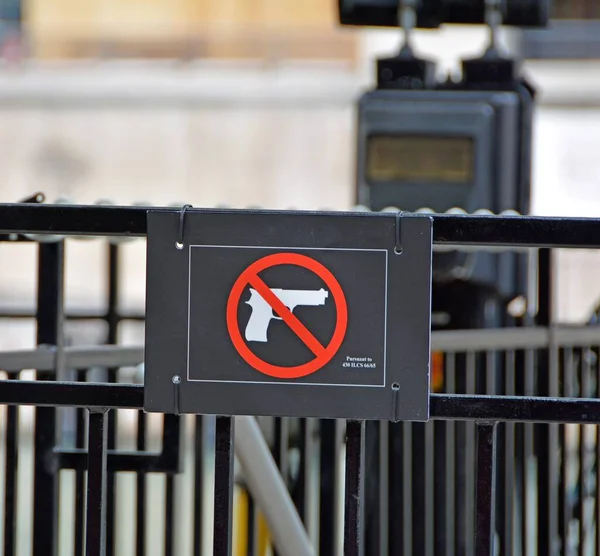
7. Ignoring posted restrictions at private property and public venues
A “No Guns” sign does not carry the same legal force in every state, but dismissing it outright is a mistake. In some jurisdictions, posted businesses, entertainment venues, hospitals, and apartment properties can create criminal liability for armed entry or refusal to leave.
This is where gun owners often get tripped up by habit. A person may lawfully carry in one state after seeing a sign and merely need to depart if asked, while another state can treat the same conduct much more seriously. The result is that familiar routines from home become risky the moment state lines are crossed.

8. Believing lack of intent is a defense by itself
Many owners assume that accidental violations are treated leniently because there was no bad intent. That is not a safe assumption. Some firearm laws focus on possession, location, or access rather than motive. That means a person can face charges after carrying into the wrong building, entering a restricted school zone, or storing a firearm carelessly, even when there was no plan to break the law.

The legal system often examines the act first and the explanation second. The common thread in these mistakes is not recklessness in the dramatic sense. It is overconfidence in memory, routine, and assumption. For gun owners, the higher-risk moments are often the quiet ones: packing for travel, locking up at night, noticing a firearm is missing, or stepping through a doorway without reading the rules attached to that place. Those routine decisions are where felony exposure often begins.

