

Etiquette no longer revolves around thank-you notes, formal titles, or answering every ringing phone. In many homes, offices, and group chats, the modern version of being polite is less about ceremony and more about boundaries, consent, and not hijacking someone else’s time.
That helps explain why behavior one generation sees as warm or normal can land as intrusive to another. Research and workplace reporting have increasingly framed the shift as one from formality to efficiency, with 81% of U.S. adults believing people today are less polite than 20 years ago, even as many younger adults define good manners in a very different way.

1. Calling without sending a text first
For many older adults, a phone call still signals care and directness. For younger adults, an unscheduled call often feels like an interruption that demands immediate attention. The split is rooted in how each generation learned to communicate: boomers grew up treating a ringing phone as something important, while younger groups came of age with messaging, notifications, and asynchronous replies.
That difference shows up in hard preference patterns. Communication reporting has found that about 75% of adults ages 18 to 34 prefer texting as their primary communication method. In practice, modern etiquette often treats a quick “Free for a call?” text as more respectful than dialing first.

2. Leaving long voicemails for simple things
Voicemail used to be the polite fallback when someone did not answer. Now it often creates extra work, especially when the message only contains a basic request that could fit in one line of text.
Younger adults frequently prefer written messages because details are easier to scan, save, and answer later. A rambling voicemail about arrival time, a grocery item, or a callback request can feel less considerate than a brief text with the actual point.
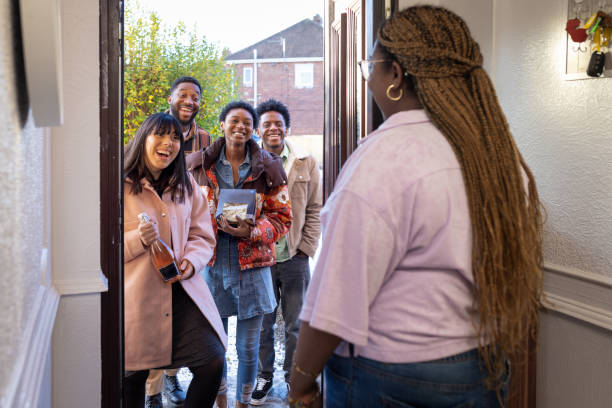
3. Dropping by someone’s home unannounced
Once, a surprise visit could read as neighborly. In many households now, it reads as pressure. Work-from-home schedules, smaller living spaces, childcare routines, and the simple expectation of private downtime have changed what hospitality looks like.
Modern etiquette increasingly treats the home as an opt-in space, not a casual stop. A quick check-in message before coming over has become the safer norm because it gives the host control over timing, energy, and privacy. What used to signal closeness can now feel like being cornered.

4. Posting other people’s photos without asking
Older relatives often treat social media like a digital scrapbook. Younger adults are more likely to see it as a public archive with privacy consequences. That gap becomes even sharper when children are involved.
Current etiquette leans heavily toward consent. Asking before uploading a family photo, a party snapshot, or an image of someone’s child is now widely understood as basic respect. The image may seem harmless to the poster, but the person in it may not want their face, location, or family life circulating online.

5. Commenting on weight or appearance as small talk
Remarks that once passed as compliments do not land the same way anymore. Telling someone they look thinner, healthier, tired, or “better” can pull attention to health issues, stress, eating disorders, or insecurities that are not visible from the outside.
This is one of the clearest examples of etiquette shifting from intention to impact. Younger adults often read body comments as invasive, even when they are meant kindly. Compliments tied to effort, style, or achievement tend to feel safer and more welcome.

6. Forcing hugs, kisses, or other physical affection
Traditional family manners often treated physical affection as proof of warmth. Newer norms place more weight on bodily autonomy, especially for children. A wave, smile, or high-five now counts as a complete and respectful greeting.
That shift is less about becoming cold and more about normalizing consent early. When a child does not want to hug a relative, modern etiquette increasingly sees honoring that boundary as more important than preserving an old ritual.

7. Using speakerphone or video calls in public
Some etiquette changes are abstract. This one is loud. Public speakerphone use has become a flashpoint because it turns everyone nearby into an unwilling audience, whether they are on a bus, in a checkout line, or washing their hands in a restaurant restroom.
A vivid account of a speakerphone conversation in a restaurant bathroom captured why the habit bothers so many people: it collapses privacy, space, and attention all at once. Modern etiquette increasingly treats headphones and private spaces as the minimum standard for calls others should not have to hear.

8. Ignoring digital RSVPs and group chat norms
Invitations, planning, and coordination now happen on apps, email links, and shared chats. When someone replies verbally instead of using the event link, or floods a group thread with one-word messages, the result is not charming informality. It is administrative clutter.
Younger adults tend to see digital systems as part of the etiquette, not separate from it. The RSVP link helps hosts track numbers and dietary needs. A reaction emoji in a busy group chat prevents dozens of unnecessary alerts. Efficiency has become a form of consideration.

9. Treating remote workers as if they are available all day
One of the newest etiquette gaps appears inside families. People working from home are still often interrupted for errands, chats, deliveries, or household requests because older assumptions tie “being home” to “being free.” That assumption does not match how modern work functions. Digital workplaces run on scheduled meetings, focused work blocks, and constant online collaboration. Respecting remote work hours has become its own social rule, and ignoring them can feel no different from barging into someone’s office uninvited.
Many of these tensions are less about one generation having better manners than another. They reflect a deeper change in what politeness is supposed to protect. Older etiquette often prioritized formality and visible gestures. Newer etiquette tends to prioritize attention, privacy, consent, and control over time. The friction is real, but so is the pattern: manners have not disappeared. They have been rewritten around modern life.

