

What if what you believed about dying wasn’t the whole tale? Science is now looking behind the curtain of near-death experiences (NDEs), and what it’s finding is a universe of bright visions, emotional epiphanies, and even spikes of brain activity once the heart has stopped. For anyone intrigued by the collision of neuroscience and spirituality, these discoveries are as head-spinning as they are reassuring.
Thanks to improvements in brain monitoring and increased willingness to listen to patients’ accounts, scientists are now finally able to reconstruct what actually occurs during those enigmatic moments at the threshold of life. From life reviews to out-of-body experiences, here’s what the science now indicates you may see, feel, and experience as you die.

1. The Brain’s Last Hurrah: A Burst of Activity After Death
Surprisingly, it appears that the brain doesn’t simply go black upon cardiac arrest. Recent research has actually revealed a paradoxical burst of brain activity in the immediate period before and after clinical death. Dr. Ajmal Zemmar, the head of a pioneering study, clarified, “Just before and after the heart stopped functioning, we observed changes in a particular band of neural oscillations, so-called gamma oscillations, but also in others like delta, theta, alpha, and beta oscillations.” These gamma waves are associated with memory recall, dreaming, and even meditative states, suggesting that the brain may be planning a final, deliberate experience.

2. Life Review: Your Greatest Hits in Fast-Forward
Perhaps the most frequently reported NDE feature is the so-called “life review.” Survivors tend to report that they saw their entire life flash before their eyes, sometimes in intense detail and at breathtaking velocity. One of the participants in a study of survivors of cardiac arrest described the experience as so vivid that “if he had likened it to the world’s fastest computer, the computer would have been slow in comparison” (the experience was distinct and vivid, with memories and individuals from his past brought to life). Researchers suspect this may be a product of the brain’s last burst of activity, playing back stored memories in rapid succession as some sort of final mental trip.

3. Out-of-Body Experiences: Floating Above It All
Another signature of NDEs is the feeling of floating above one’s body and viewing the event from above. These out-of-body experiences are so universal across cultures and ages that scientists have homed in on the right temporoparietal cortex as the brain region at fault. This region is where the visual, auditory, and sensory systems combine to create a unified sense of self. Under conditions of intense stress or oxygen deficiency, this integration may become “disturbed,” and individuals experience the perception of floating or looking from the outside.

4. The Tunnel and the Light: A Universal Vision
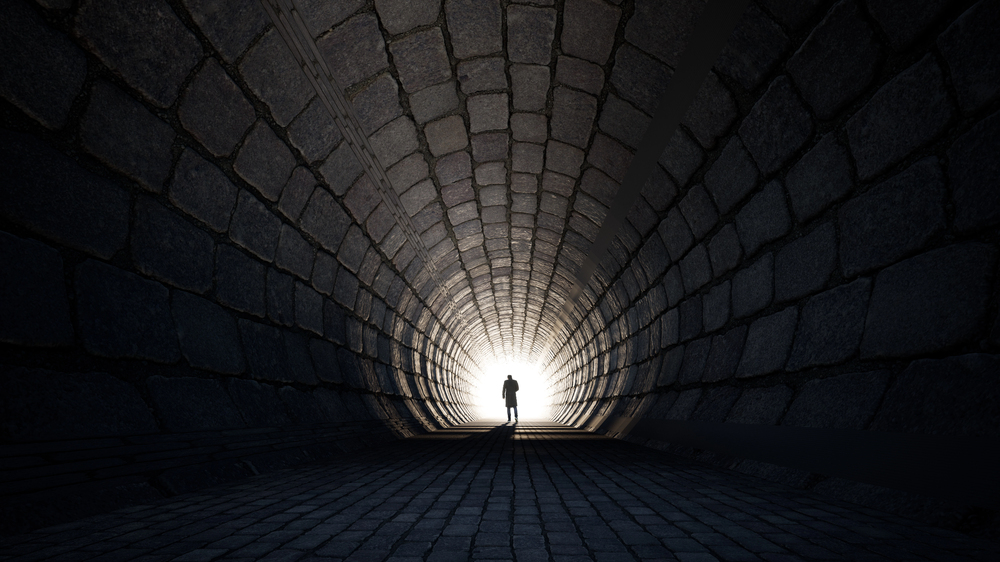
One of the most evocative NDE visions is the tunnel of light. Most survivors report traveling through a dark area to a bright, inviting light, frequently with attendant feelings of peace and love. One of the participants remembered, “He felt like he was totally there with all his consciousness and that he was proceeding ahead within a tunnel of light that he felt to have an ending, but which he never found.” This phenomenon would seem to be cross-cultural and cross-belief, implying the existence of a universal brain process at work, perhaps one prompted by higher levels of serotonin and endorphins that cause euphoria and intense hallucinations.

5. Chemical Bliss: The Brain’s Natural Painkillers
The dying brain is not just revisiting memories, it’s also bathing itself in feel-good chemicals. When the body reaches the point of ‘active dying,’ a cocktail of endorphins, serotonin, and perhaps DMT is released, causing feelings of calm, euphoria, and even mystical sensations. These neurochemicals reduce pain and fear, and can account for why so many NDEs have been reported as peaceful or even blissful.
6. Not All Sunshine: The Dark Side of NDEs
Most NDEs are positive, but a considerable minority experience frightening ones, imagining nightmarish emptiness, feeling lost, or even visions of hellish scenery. According to BBC Science Focus, psychologist Chris French explained, “In terms of what is happening, it’s a very rich hallucinatory experience but it feels incredibly real.” It feels as real as anything you have ever experienced.” Approximately 1 in 5 NDEs belong to this negative camp, sometimes causing long-lasting trauma or greater fear of death.

7. Transformation: How NDEs Change Lives
One of the most amazing consequences of NDEs isn’t what occurs during the experience, but what occurs afterward. Survivors frequently describe fundamental changes in outlook, less fear of dying, greater compassion, and a greater sense of meaning. In research involving survivors of cardiac arrest, survivors who had NDEs were more likely to become more unselfish, less selfish, and more spiritually oriented (near-death experiences are associated with an increase in morality, happiness, satisfaction with life, and even for some, a strengthening of their faith in their religion). For some, meeting head-on the unknown turns into a catalyst for living more intensely.

Science can’t solve every mystery of what happens to us when we die, but it’s obvious that the trip is more intricate and more compelling than previously imagined. Whether or not these visions are the brain’s last fireworks or an image of something else, they leave us with the sheer mystery and majesty at the border of life. For the scientifically curious and the spiritually inclined as well, the research on near-death experiences presents comfort and a glimpse of wonder at what it is like to be alive.

